Quick Answer
Dogs groom each other for three main reasons: to strengthen social bonds and resolve minor conflict through appeasement licking, to clean hard-to-reach spots (eyes, ears, top of the head, upper neck) that a dog cannot reach on its own, and to instinctively investigate scent changes that may signal an infection, wound, or hormonal shift.
The formal name for mutual grooming between the same species is allogrooming, and it is a normal, healthy behavior across pack-oriented mammals including wolves, primates, and domestic dogs.
The chemistry behind allogrooming
When one dog licks another, the physical contact stimulates C-tactile sensory nerves in the recipient's skin. Those nerves trigger the release of oxytocin and endorphins in both animals, lowering heart rate, reducing cortisol, and creating a shared calm state.
Researchers studying wolves and feral dog packs have observed the same chemical bonding response you see in mother-pup licking sessions and in human physical affection. Allogrooming is, at the neurochemical level, a canine hug.
Reason 1: Social bonding and conflict resolution
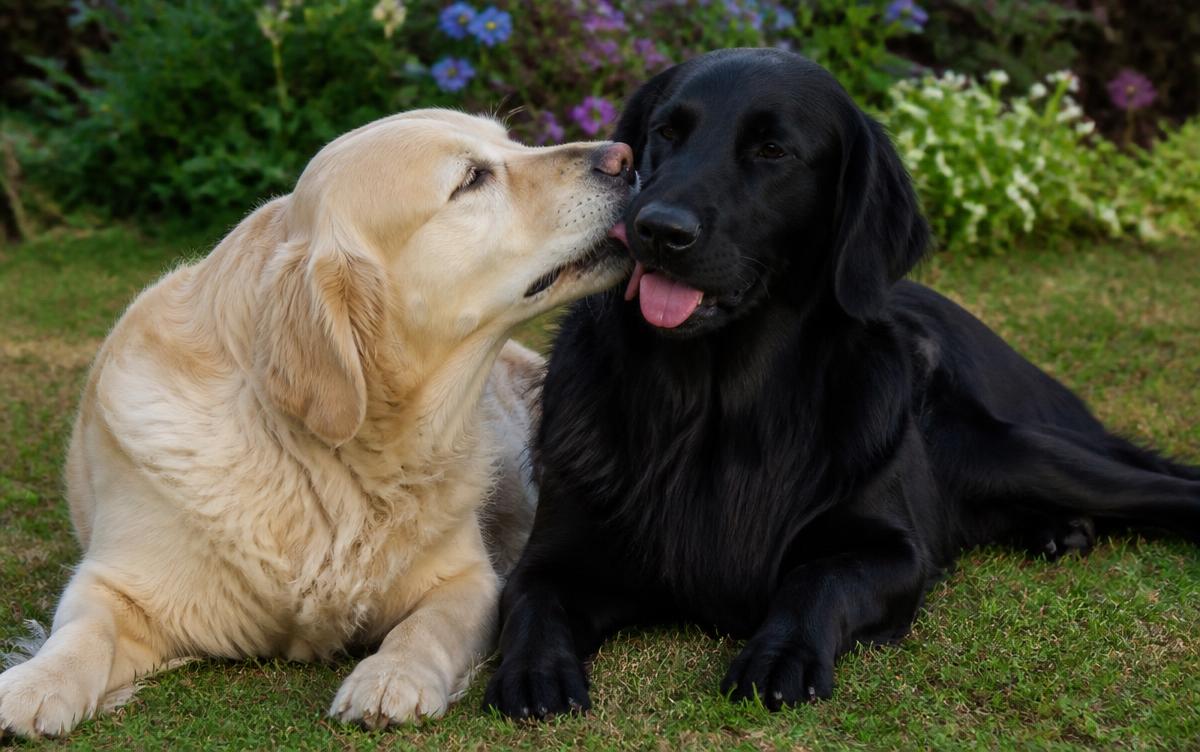
Watch two dogs that live together after a minor squabble over a toy or feeding bowl. The subordinate dog often approaches, lowers its head, and licks the muzzle or chin of the more assertive one. This "muzzle lick" is a formal appeasement gesture inherited from wolf pack behavior; it signals respect, restores group harmony, and de-escalates tension.
The gesture also works in reverse. A confident dog will groom a nervous housemate to reassure them, similar to how a mother dog cleans her puppies.
Reason 2: Cleaning hard-to-reach places
A dog's own grooming range is limited. They cannot reach:
- Their own eyes and eye corners.
- The inside of their ear flaps.
- The top of their head and forehead.
- The upper neck behind the collar line.
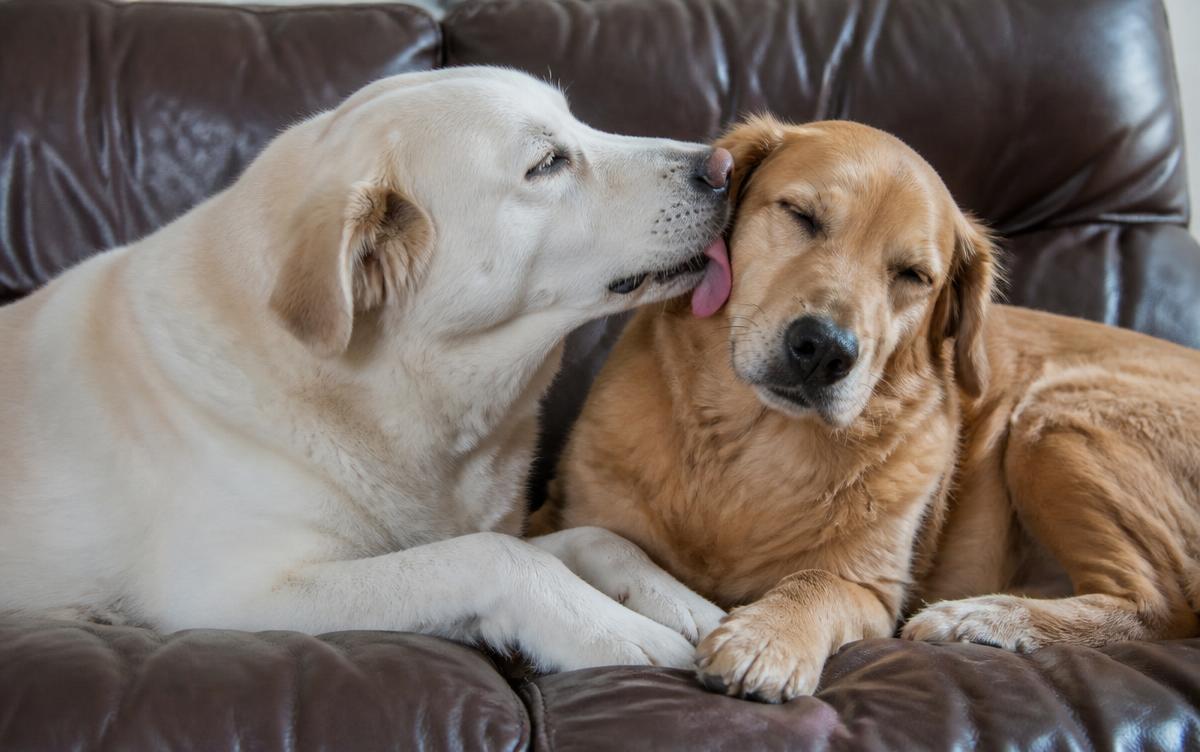
These are exactly the spots you will see two dogs focus on when they lick each other. Dogs that live together often develop a "grooming pair" habit where each cleans the other's face after meals, walks, or naps.
Reason 3: Health screening through scent
Dogs have roughly 220 million olfactory receptors (humans have around 5 million). They can detect microscopic biological changes in another animal long before anything is visible to the human eye. If one dog begins licking a very specific spot on a housemate insistently, especially an ear canal or a hip patch, they may be responding to the scent of:
- Early bacterial or yeast infection.
- A hidden hot spot forming under the coat.
- A small wound, thorn, or embedded burr.
- Hormonal shifts (a nearby female in heat, a hidden tumor).
Insistent focused licking is a signal worth investigating. Part the coat, sniff the spot yourself, and if you notice redness, swelling, or a musty odor, book a vet visit.
When licking is normal versus concerning
Normal signs
- Both dogs are relaxed, ears neutral, tail soft.
- Licking is reciprocal at some point.
- Sessions are short (a few minutes) and end naturally.
- The recipient can walk away easily and the licker respects that.
Warning signs to interrupt
- Non-stop obsessive licking that breaks down the skin barrier and creates a raw hot spot.
- The recipient shows discomfort: pulled-back ears, whale eye, stiff posture, low growl, or "kiss to dismiss" (a quick lick back that says "please stop"). If the licker ignores these signals, gently separate.
- Foul odors or visible redness under the licked spot; time to visit the vet.
- Licking that fixates on one dog's ears for days: check for an ear infection.
Should you allow mutual grooming?
Yes. It is one of the healthiest behaviors two dogs can share, and it is a strong indicator that they trust and enjoy each other's company. The only interventions needed are the ones above: interrupt obsessive licking, respect the "kiss to dismiss," and investigate insistent focused licking on a single spot.
Bottom line
Allogrooming is bonding, cleaning, and health screening all at once. When it looks calm and reciprocal, leave it alone. When it becomes fixated on one spot or one dog looks uncomfortable, step in and check for a physical cause.