
Quick Answer
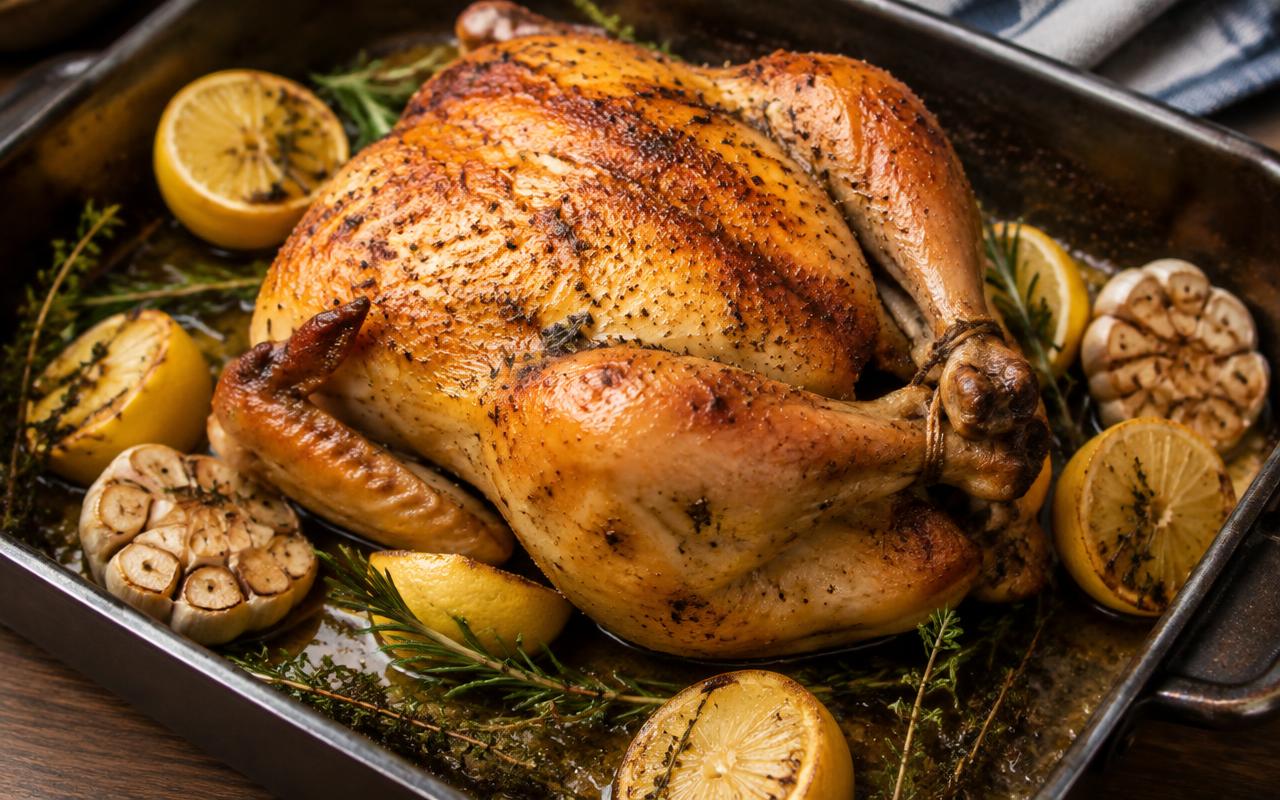
To roast a whole chicken, pat a 4 to 5 pound bird very dry, rub it with salt, pepper and a little oil or butter, and roast it breast side up at 425 F.
It usually takes about 1 hour to 1 hour 30 minutes. The chicken is done when a thermometer in the thickest part of the thigh reads 165 F.
Rest it for 15 minutes before carving. Dry skin plus high heat gives you crispy skin and juicy meat.
What Ingredients Do You Need?
- 1 whole chicken, 4 to 5 pounds
- 1 tablespoon kosher salt (about 3/4 teaspoon per pound)
- 1 teaspoon black pepper
- 2 tablespoons olive oil or softened butter
- 1 lemon, halved
- 1 head garlic, halved crosswise
- A few sprigs of thyme or rosemary
- Optional: 1 sliced onion or chopped carrots and potatoes for the pan
Should You Wash a Chicken Before Roasting?
No. USDA FSIS advises against washing raw chicken. Rinsing does not remove bacteria, and the splashes can spread them to your sink, counters and other food.
Cooking to a safe temperature is what kills bacteria. Just take the chicken out of the package, remove any giblets from the cavity and pat it dry with paper towels. Wash your hands afterward.
How Do You Get Crispy Skin?
Moisture is the enemy of crisp skin. Pat the chicken thoroughly dry, inside and out.
For the best result, salt the chicken and leave it uncovered on a rack in the fridge for 8 to 24 hours. This dry brine seasons the meat deeply and dries the skin so it browns like paper.
High heat finishes the job. 425 F renders the fat under the skin and makes it crackly.
How Do You Roast a Whole Chicken, Step by Step?
1. Prep. Heat the oven to 425 F. Pat the chicken dry and season it all over with salt and pepper, including inside the cavity.
2. Flavor the cavity. Stuff the cavity with the lemon halves, garlic and herbs.
3. Oil and truss. Rub the skin with oil or butter. Tie the legs together with kitchen twine and tuck the wing tips under the body so they do not burn.
4. Set up the pan. Place the chicken breast side up in a roasting pan or cast iron skillet. Add chopped vegetables around it if you like.
5. Roast. Roast for about 1 hour to 1 hour 30 minutes. Start checking at 50 minutes for a 4 pound bird.
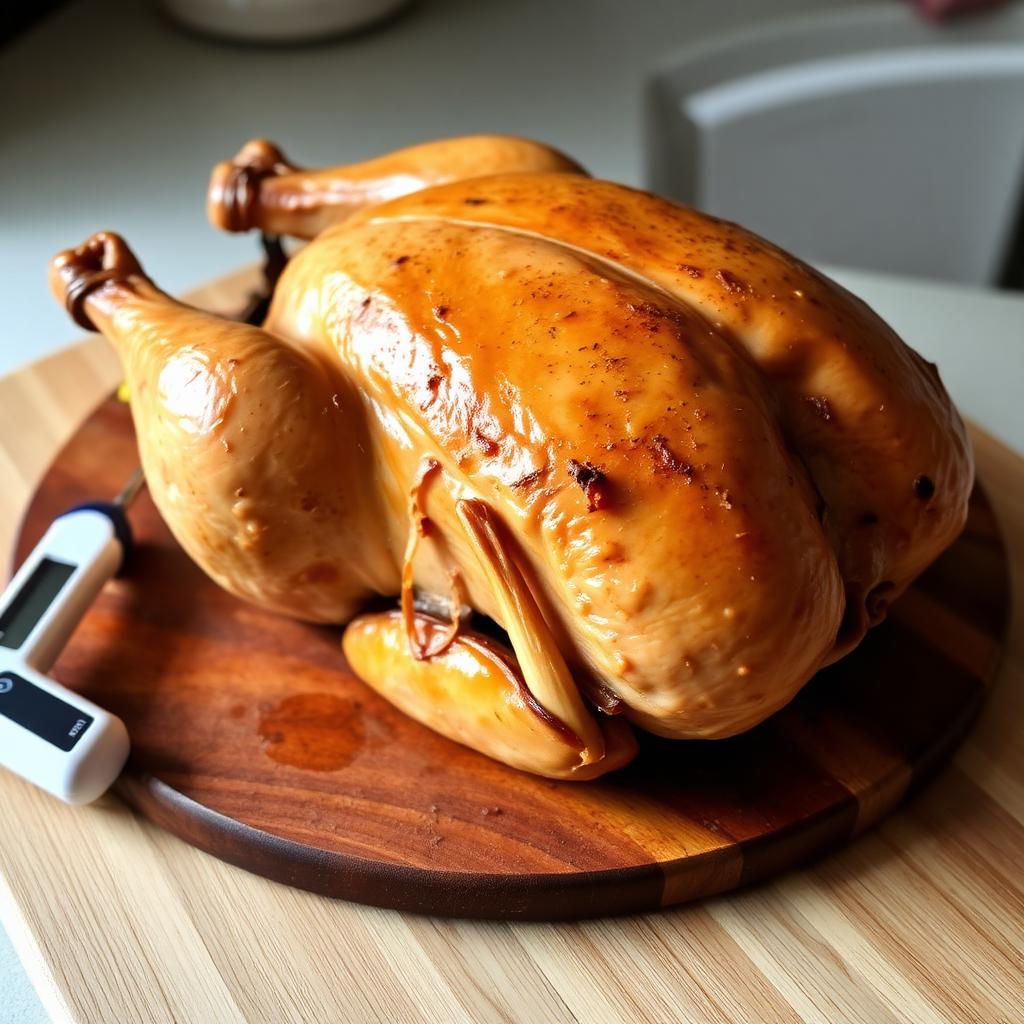
6. Check the temperature. Insert a thermometer into the thickest part of the thigh without touching bone. FSIS lists 165 F as the safe minimum for whole poultry. The breast should read at least 165 F too.
7. Rest and carve. Let the chicken rest for 15 minutes so the juices settle, then carve.
How Long Do You Roast a Chicken per Pound?
At 425 F, plan on roughly 15 to 18 minutes per pound. A 4 pound chicken often takes about 60 to 75 minutes, and a 5 pound chicken 75 to 90 minutes.
These are only estimates. Oven accuracy, how cold the bird is and the pan all change cooking time, so always use a thermometer. Juices running clear are not a reliable sign.
Why Is My Roast Chicken Dry?
- Overcooking. Pull it right at 165 F in the thigh.
- No resting time. Cutting right away lets the juices run onto the board.
- No salt in advance. A dry brine helps the meat hold moisture.
- Roasting at too low a heat for too long.
What Is Spatchcocking?
Spatchcocking means cutting out the backbone with kitchen shears and pressing the chicken flat. It cooks faster and more evenly, often in about 45 to 55 minutes at 425 F.
The skin is all on top, so more of it gets crisp. Save the backbone in the freezer for making broth.
How Do You Thaw a Frozen Chicken?
FSIS recommends thawing in the refrigerator, in cold water or in the microwave, never on the counter. In the fridge, a whole chicken takes about 1 to 2 days.
In cold water, keep the chicken in a sealed bag and change the water every 30 minutes. Cook it right after it thaws. Do not roast a partly frozen chicken, since the inside may not get hot enough.
What Can You Make With the Pan Drippings?
Pour off most of the fat, set the pan over medium heat and add 1 cup of broth. Scrape up the browned bits and simmer for a few minutes.
Whisk in a teaspoon of cornstarch mixed with cold water for a quick gravy, or a pat of butter and lemon juice for a light pan sauce.
How Do You Store Leftover Roast Chicken?
Refrigerate the meat within 2 hours of cooking. Pull it off the bones first so it cools faster. Eat it within 3 to 4 days, or freeze it for up to 4 months.
Use leftovers in chicken salad, soup, tacos or fried rice. Simmer the carcass with onion, carrot and celery for an easy homemade broth.
What Sides Go With Roast Chicken?
Roast potatoes, carrots and onions can cook right in the pan under the chicken, soaking up the drippings. Add them at the start so they finish together.
Mashed potatoes, a green salad, roasted broccoli or buttered green beans also round out the meal.
Frequently Asked Questions
Do I need a roasting rack?
No. Setting the chicken on sliced onions or vegetables lifts it just as well.
Should I cover it with foil?
Only if the skin browns too fast. Covering softens the skin.
Breast up or breast down?
Breast up for crisp skin. Some cooks start breast down to protect the white meat.
Can I stuff the chicken?
Yes, but the stuffing must reach 165 F too. Herbs and lemon are simpler.
The Bottom Line
A great roast chicken needs dry skin, plenty of salt, high heat and a thermometer.
Skip the rinse, roast at 425 F until the thigh reads 165 F and rest it before carving. You will get juicy meat and crisp golden skin every time.