
Quick Answer
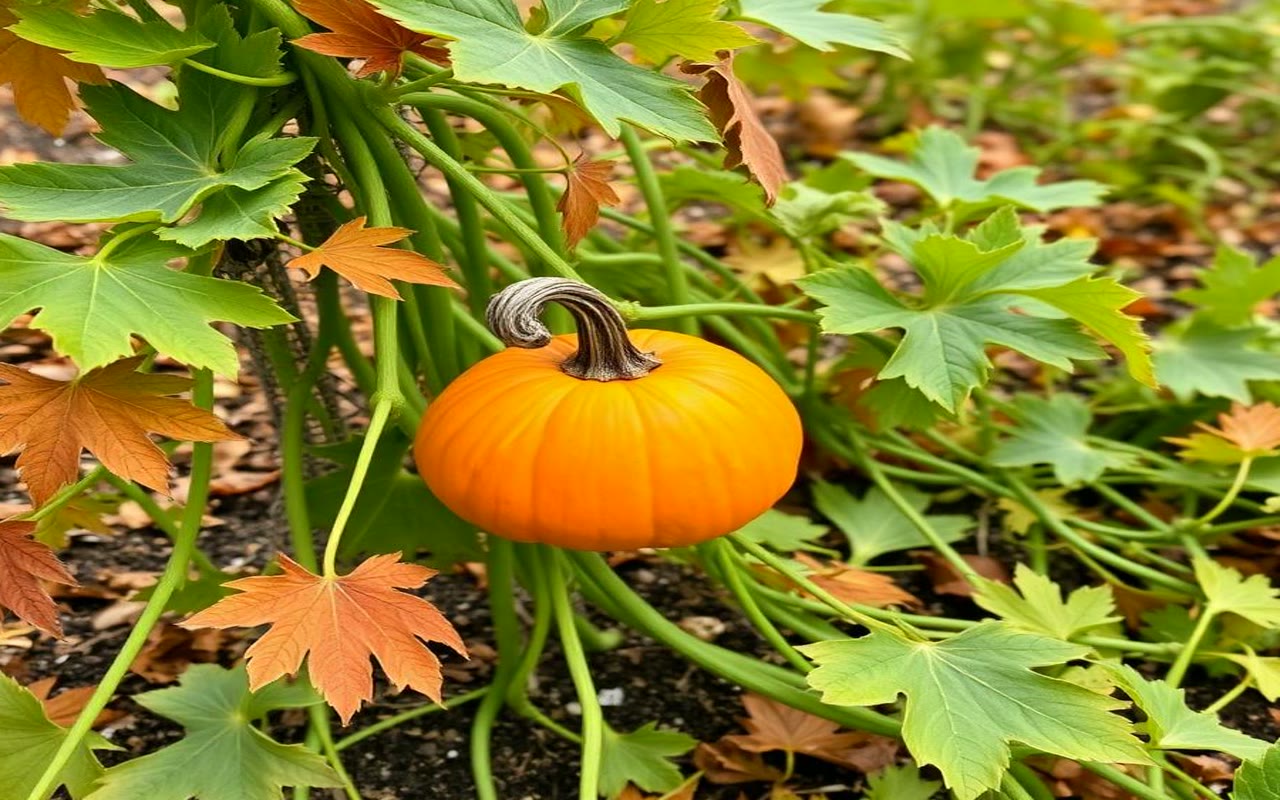
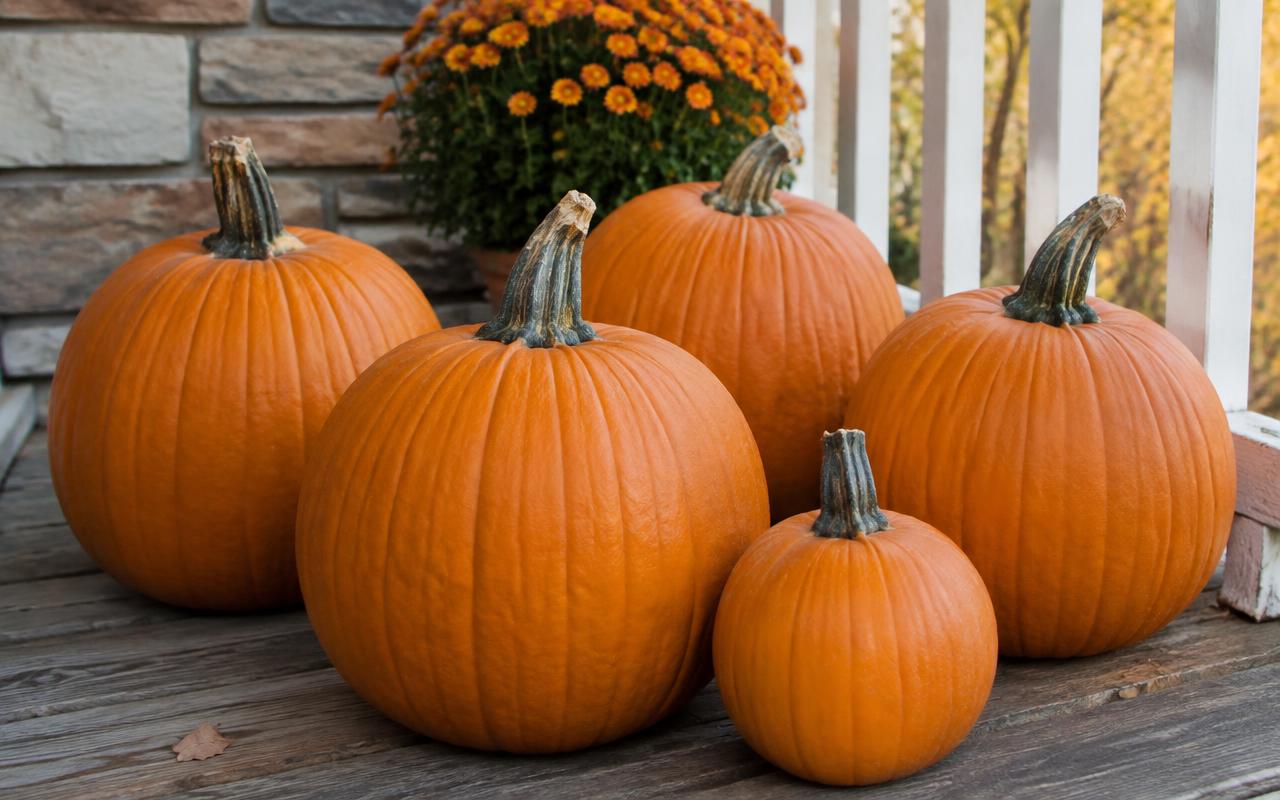
The easiest way to know a pumpkin is ripe: it has a deep, even color for its variety, the rind is hard enough that your fingernail will not dent it, and the stem has started to dry and turn woody.
Cut it from the vine with pruners, leaving 3 to 5 inches of stem, and never carry it by the stem.
Cure it in a warm spot for about 10 days, then store it somewhere cool and dry. Harvest before a hard freeze.
What Are the Signs a Pumpkin Is Ripe?
- Color: deep and uniform, with no green patches on orange varieties.
- Hard rind: press a fingernail into the skin. A ripe pumpkin resists it.
- Stem: turning tan, dry and corky rather than soft and green.
- Hollow sound: a firm knock often sounds hollow.
- Vine: leaves near the fruit are starting to yellow and die back.
Iowa State University Extension says pumpkins can be harvested once they have a deep uniform color and a hard rind. That is the most reliable pair of signs.
How Long Does It Take a Pumpkin to Ripen?
Most pumpkin varieties need about 90 to 120 days from planting to maturity. Check your seed packet for the exact number.
Once the fruit reaches full size, it often needs a few more weeks on the vine to harden and finish coloring. That is when patience pays off.
When Should You Harvest Pumpkins?
In most of the US, pumpkins planted in late spring are ready from mid September through October.
Iowa State notes that mature pumpkins can stay in the garden until a light frost kills the vines. A light frost will not hurt a ripe, hard pumpkin, but a hard freeze can damage the rind and shorten storage life.
If a hard freeze is in the forecast, pick everything that has color and a firm rind.
How Do You Harvest a Pumpkin, Step by Step?
1. Pick a dry day. Wet rinds bruise and rot more easily.
2. Use sharp tools. Cut the stem with hand pruners or loppers. Do not twist or tear it off the vine.
3. Leave a handle. Keep 3 to 5 inches of stem attached. Iowa State notes that pumpkins with stems are less likely to rot and look better.
4. Lift from the bottom. Support the pumpkin with both hands. Stems may snap under the weight.
5. Wipe it clean. Brush off soil and set it on a dry surface.
How Do You Cure a Pumpkin?
Curing hardens the skin and heals small cuts so the pumpkin stores longer.
Iowa State recommends curing at about 80 to 85 F with around 80 percent relative humidity for 10 days. A sunny, sheltered porch or a warm garage often comes close enough.
After curing, store pumpkins at 50 to 55 F in a single layer so they do not touch. Good airflow helps prevent decay, and piles can trap heat and cause rot.
Will a Pumpkin Ripen Off the Vine?
Partly. A pumpkin that has already started to turn color will often keep coloring if you set it in a warm, sunny spot.
A fully green, soft pumpkin rarely finishes. It may change color slightly but usually stays bland and stores poorly. If you must pick early, choose ones that are at least half colored.
How Do You Tell a Ripe Pie Pumpkin From a Carving Pumpkin?
The ripeness test is the same for both. Pie pumpkins are smaller, usually 4 to 8 pounds, with denser, sweeter flesh.
Carving types are bred for size and thin walls. They are edible but watery. Plan your patch so you have both.
How Long Do Harvested Pumpkins Last?
Cured, uncut pumpkins kept cool and dry can last two to three months, sometimes longer for thick skinned types.
Check them weekly and remove any with soft spots so the rot does not spread. Once carved, a pumpkin lasts only days, and Michigan State University Extension notes it should not be eaten after sitting out for more than two hours.
How Do You Protect Ripening Pumpkins in the Patch?
Set each pumpkin on a board, a piece of cardboard or a bed of straw. Lifting it off wet soil prevents the bottom from rotting and keeps the color even.
Stop heavy watering in the last couple of weeks before harvest. Too much water late in the season can lead to cracks and soft spots.
Watch for squash bugs and powdery mildew, which weaken vines and can stop fruit from finishing. Remove badly infected leaves and keep foliage dry by watering at the base.
What Tools Make Harvest Easier?
- Sharp bypass pruners or loppers for thick stems
- Gloves, since pumpkin vines are prickly
- A garden cart or wagon for carrying heavy fruit
- A soft brush for cleaning soil off the rind
A cart saves your back and protects the pumpkins from drops, which can cause hidden bruises that rot later.
What Should You Do With Green Pumpkins?
Green pumpkins left after a freeze still have uses. Set the ones with a little color in a warm, sunny window and some will deepen in shade over a couple of weeks.
Fully green, small fruit can be composted, or used as rustic fall decor on the porch. They often last a while outdoors in cool weather even if they never turn orange.
Frequently Asked Questions
Can I pick a pumpkin too early?
Yes. Early pumpkins are soft, pale and spoil quickly.
Should I turn pumpkins on the vine?
Gently rotating them can even out color, but be careful not to twist the stem.
Why is my pumpkin orange but soft?
It may be overripe or starting to rot. Use it soon or compost it.
Can frost damage pumpkins?
A light frost is fine for ripe fruit, but a hard freeze can soften the rind.
The Bottom Line
Look for deep color, a fingernail proof rind and a drying stem. Those three signs tell you a pumpkin is ripe to pick.
Cut it with a long stem, carry it from the bottom, cure it warm for about 10 days, and store it cool. Your harvest will last well past Halloween.