
Quick Answer
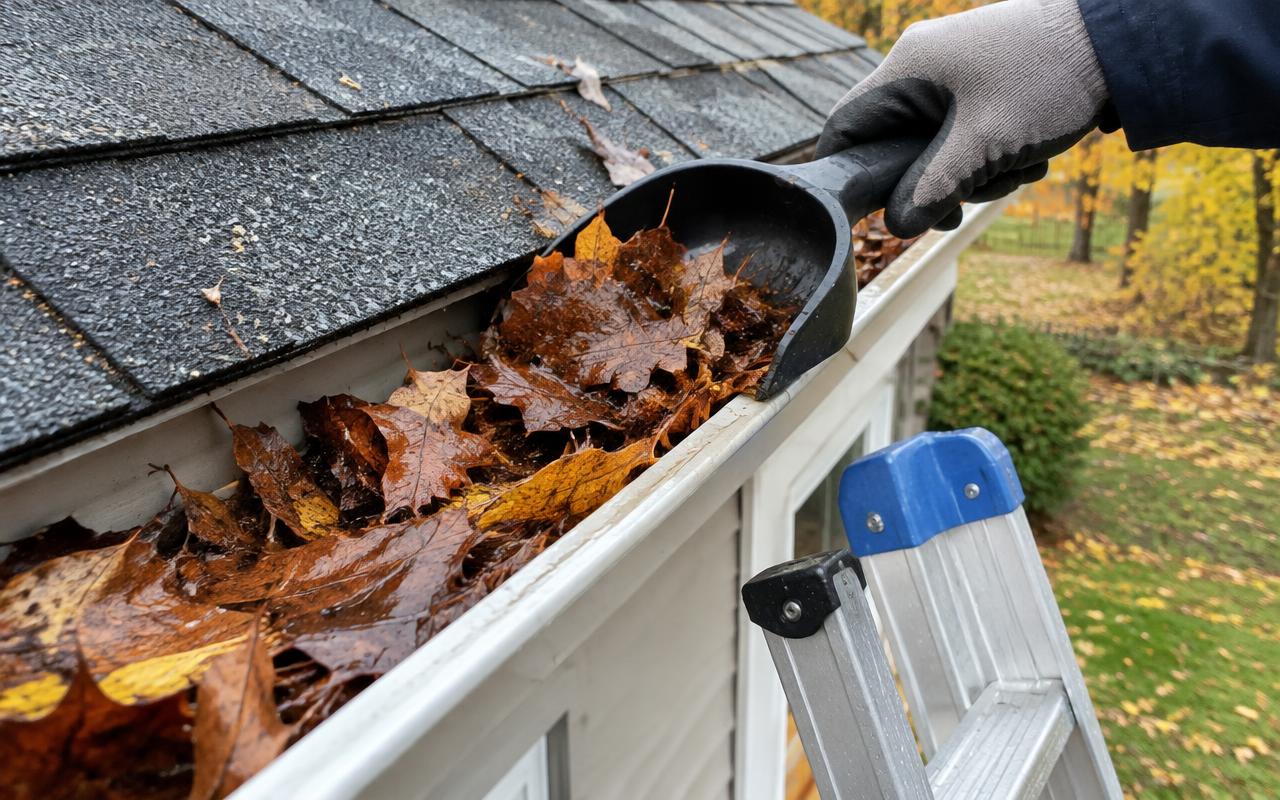
To clean gutters safely, set a sturdy ladder on firm, level ground, wear heavy gloves and safety glasses, and scoop the leaves out by hand or with a plastic gutter scoop.
Work in short sections, moving the ladder often instead of leaning out, then flush the gutters and downspouts with a hose to check that water flows freely.
Plan to clean them at least once in late fall after most leaves drop, and again in spring if you have a lot of trees.
Why Is Cleaning Gutters Important?
Gutters carry rainwater off the roof and away from your home. West Virginia University Extension explains that they protect windows, doors and the foundation by sending water through the downspouts instead of letting it pour down the walls.
Clogged gutters overflow. Water can soak the fascia boards, seep into the basement and wear away soil around the foundation.
The EPA notes that the key to mold control is moisture control, and recommends making sure the ground slopes away from the foundation so water does not collect near it. Clean gutters are a big part of that.
What Tools Do You Need?
- A sturdy extension ladder, or a step ladder for single story homes
- A ladder stabilizer or standoff that rests on the roof, not the gutter
- Heavy work gloves
- Safety glasses or goggles
- A plastic gutter scoop or garden trowel
- A bucket with a hook, or a tarp below to catch debris
- A garden hose with a pistol grip nozzle
WVU Extension stresses gloves for a reason. Gutters often hide sharp screws and torn metal under the leaves.
How Do You Set Up a Ladder Safely?
Place the ladder on a level, firm surface. On soft soil, set the feet on a wide board. Never stand a ladder on a deck table, bucket or uneven step.
For an extension ladder, WVU Extension advises extending it three rungs beyond the roof edge and securing it at the top or base, or having a helper hold it steady.
A common rule for the angle is to set the base 1 foot out from the wall for every 4 feet of height. On a step ladder, never stand on the top two rungs.
Keep three points of contact, two hands and a foot or two feet and a hand, as you climb. Carry tools in a belt or bucket rather than in your hands.
How Do You Clean Gutters, Step by Step?
1. Lay down a tarp. Spread it under the section you are working on to catch debris and protect plants.
2. Start near a downspout. Clear the area around the downspout opening first so loosened debris has somewhere to go.
3. Scoop by hand. Work toward the downspout, scooping leaves into the bucket or dropping them on the tarp. Only clean what you can reach with your belt buckle between the ladder rails.
4. Move the ladder often. Climb down and move it rather than leaning out. Overreaching is one of the most common causes of ladder falls.
5. Flush with water. Run the hose from the far end toward the downspout to rinse out grit and check the slope.
6. Clear the downspouts. If water backs up, spray the hose up from the bottom of the downspout or use a plumber snake to push out the clog.

What Should You Never Do?
- Never crawl out onto the roof. WVU Extension calls it extremely dangerous.
- Never work on a ladder in rain, wind or a storm.
- Never set a ladder near overhead power lines, and use a fiberglass ladder near any wiring.
- Never use a pressure washer from a ladder. The kickback can throw you off balance.
- Never work alone if you can avoid it. Tell someone you are on the ladder.
Can You Clean Gutters From the Ground?
Yes, for single story homes. Telescoping gutter wands attach to a garden hose or leaf blower and reach the gutter from the ground. They work best on dry leaves.
Wet, packed debris still needs hand scooping. If your roofline is two stories or higher, or the ground below is steep, hiring a professional is the safest choice.
Do Gutter Guards Work?
Gutter guards cut down on how often you clean but do not end the job. Mesh guards block most leaves but can still collect pine needles and grit on top.
Foam and brush inserts are cheap and easy to install but can clog over time. Expect to check and rinse any guard system at least once a year.
How Often Should You Clean Gutters?
Most homes need cleaning twice a year, in late spring and late fall. Homes under tall trees, especially pines, may need it three or four times.
Signs you are overdue include water spilling over the edge in rain, plants sprouting in the gutter, sagging sections and stains on the siding below.
What Do You Do With the Leaves?
Gutter debris is mostly leaves, which make excellent compost. Add them to your compost pile or spread them as mulch in garden beds.
How Do You Check Gutters for Damage While You Clean?
As you work, look for loose hangers, gaps at the seams, rust spots and sections that sag or hold standing water after you flush them.
Tighten loose hanger screws and seal small leaks at seams with gutter sealant once the metal is dry. Sagging sections usually mean a hanger has failed or the slope is wrong, and should be fixed before winter.
Make sure every downspout empties at least a few feet from the foundation. A simple downspout extension or splash block is an inexpensive fix.
Frequently Asked Questions
Can I lean the ladder on the gutter?
Use a stabilizer that rests on the roof so you do not dent or pull the gutter loose.
When is the best time?
A dry, calm day after most leaves have fallen.
How long does it take?
About two to three hours for an average single story home.
Is it worth hiring a pro?
Yes for tall homes, steep roofs or anyone unsteady on a ladder.
The Bottom Line
Safe gutter cleaning comes down to a level, secured ladder, gloves and eye protection, and moving the ladder instead of reaching.
Scoop, flush and check the downspouts each fall so rainwater flows away from your home instead of into it.