Quick Answer
In May 2026, Florida resident Jorge Luis Alverio Nunez filed a federal maritime lawsuit against Carnival Cruise Line seeking more than 5 million dollars in compensatory damages. He alleges that on May 21, 2025, he walked roughly twenty barefoot steps across the Lido Deck of the Carnival Magic and suffered severe second-degree burns on the soles of both feet within seconds.
The complaint, filed in the U.S. District Court for the Southern District of Florida, focuses on the synthetic polymer decking material. The plaintiff argues Carnival had "actual or constructive notice" of the hazard, citing 25 prior burn injuries and 42 passenger complaints about scorching decks logged across the fleet during the six years before the filing.
The Incident on the Carnival Magic
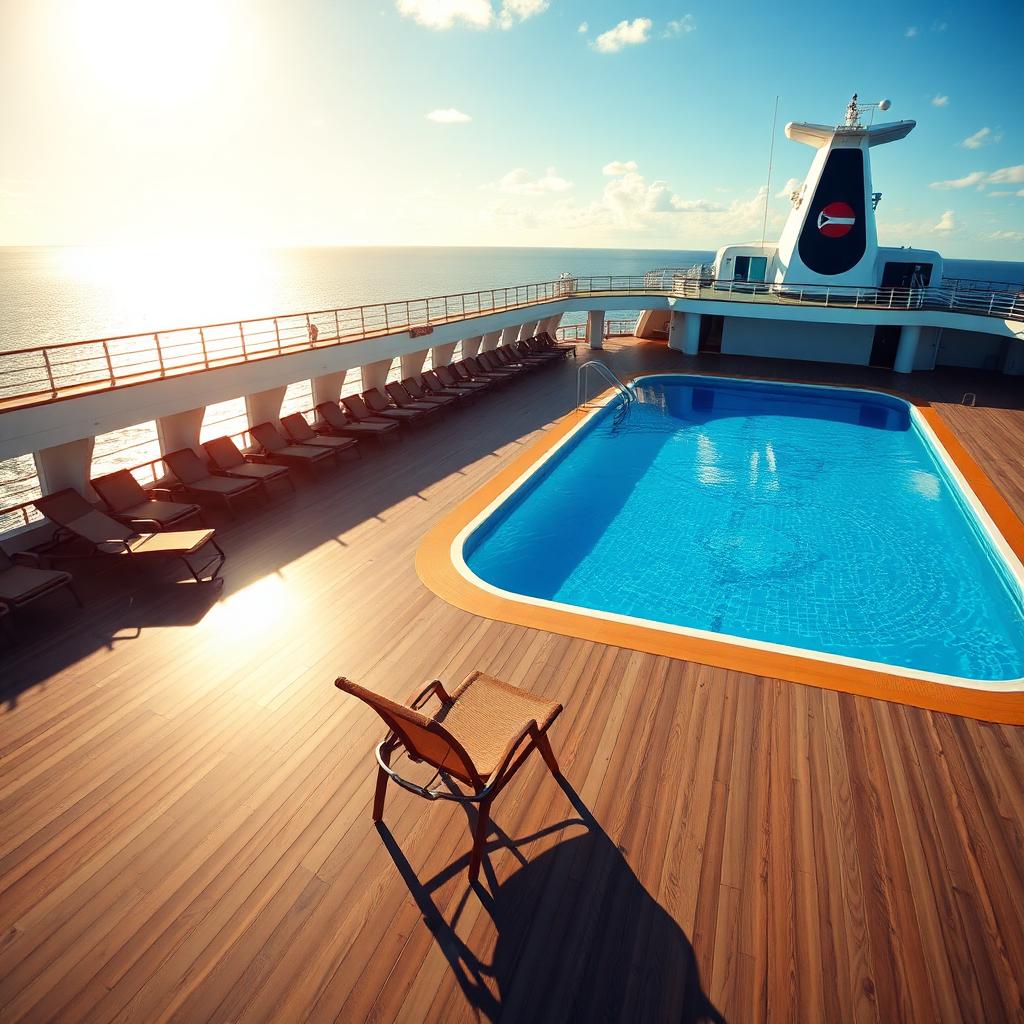
According to the complaint, the trip was an ordinary tropical Caribbean sailing. Nunez was walking back to a lounge chair to retrieve his shoes. The distance was about twenty steps across an open-air pool deck on a sunny afternoon.
By the time he reached his shoes, the soles of both feet were already injured. Shipboard medical staff documented blistering and tissue damage consistent with second-degree burns. He required follow-up emergency treatment after disembarking.
The lawsuit describes the long-term impact as permanent. Filings reference ongoing pain, visible disfigurement on both feet, reduced mobility, and a documented loss of capacity to enjoy normal daily activity. Those long-term elements are what push the damages claim past the 5 million dollar threshold.
Why a Synthetic Deck Can Burn Skin in Seconds
The technical heart of the case is the decking itself. Older cruise ships used natural teak wood for exterior decks. Teak stays comparatively cool because its dense, oily structure reflects and dissipates solar energy efficiently. The problem with teak is cost: it is expensive to source, heavy, and demands continuous sanding and oiling.
Modern cruise lines have largely replaced teak with synthetic composite decking, usually built from polyvinyl chloride (PVC) or polyurethane matrices reinforced with mineral fillers. These materials are inexpensive, slip resistant, salt-water proof, and require almost no upkeep.
The trade-off is thermal. Synthetic polymers have high solar absorptivity and high thermal mass, which means they soak up infrared radiation and hold it. On a typical Caribbean afternoon with ambient air at 88 degrees Fahrenheit (31 degrees Celsius), a dark polymer deck surface can climb to 140 to 158 degrees Fahrenheit (60 to 70 degrees Celsius). Human skin protein begins to denature in under a second above 130 degrees Fahrenheit. That is why twenty unhurried steps can be enough to produce a clinical burn.
Actual and Constructive Notice: The Legal Pivot
Under U.S. federal maritime law, a cruise passenger cannot win a negligence case just by showing they were hurt. The plaintiff has to prove the cruise line knew about the hazardous condition or reasonably should have known. That is the doctrine of actual or constructive notice.
The Nunez complaint builds that notice argument aggressively. It alleges:
- The synthetic decking manufacturer supplied Carnival with thermal test data as early as 2014 warning that the material could reach skin-burning temperatures in direct sun.
- Carnival's own incident logs included at least 25 documented burn injuries on similar decks across the fleet in the six years before this filing.
- Carnival received at least 42 separate written passenger complaints about scorching deck surfaces in that same window.
If those numbers hold up in discovery, the constructive notice question becomes hard to defend. A cruise line that has been told, in writing, dozens of times that its decks burn passengers is on notice in the legal sense, whether or not any single executive ever read a specific complaint.
What Carnival Allegedly Failed to Do
Beyond the notice argument, the complaint lists specific safety steps that were available and inexpensive but, according to the filing, were not taken:
- No prominent warning signs at the pool deck entrances flagging surface temperature risk.
- No digital app push notifications to passenger devices when deck temperatures crossed a defined threshold.
- No continuous structural cooling such as overhead shade sails or freshwater misting systems in the highest-traffic barefoot zones.
- No mandatory footwear policy or staff enforcement in the strip immediately around the pool, where barefoot walking is universal.
Each of those steps has been used on competing ships and at land-based pool decks for years, which weakens any argument that the fixes are exotic or impractical.
What This Could Mean for the Cruise Industry
Carnival has declined public comment, citing standard policy on active litigation. Even before any verdict, cases like this push the industry. Insurers reprice maritime liability premiums based on the volume and severity of pending claims, and that pressure flows downstream into operational changes faster than litigation does.
If the Nunez case is certified for full trial and the prior-incident logs become public, expect three changes across the fleet over the next 12 to 24 months: posted thermal warnings at every pool deck entry, expansion of shade and misting infrastructure, and clearer barefoot zone signage. Some lines are already piloting infrared surface sensors that trigger automated misting when deck temperatures cross a programmed limit.
What Passengers Should Do Right Now
If you are sailing this summer and the pool deck feels hot underfoot, treat it the same way you would treat an asphalt parking lot in July. A few practical habits:
- Wear pool shoes or flip flops anywhere outside the immediate pool edge. The few seconds of style cost is not worth a burn.
- Touch the deck with the back of your hand for two seconds before stepping barefoot. If you cannot hold your hand there comfortably, the surface is not safe for skin.
- Stick to the shaded paths and wet zones, which are dramatically cooler than dry, sun-exposed deck.
- If you or a family member does get burned, get to the ship's medical center immediately, photograph the deck surface and your shoes nearby, and ask for a written copy of the incident report before you disembark.
Documentation is the single most important factor in any later claim. Photos with timestamps, a written incident report, and shipboard medical notes form a chain of evidence that is almost impossible to assemble after the fact.
The Takeaway
The Nunez vs Carnival lawsuit is not just about one painful afternoon on the Lido Deck. It is a stress test of how federal maritime law treats a hazard that the industry has known about for at least a decade. The science is settled: synthetic polymer decking in tropical sun can reach skin-burning temperatures within minutes, and human tissue cannot withstand more than a brief contact above 130 degrees Fahrenheit. The legal question is whether 25 prior injuries and 42 written complaints add up to constructive notice. If a federal jury says yes, every major cruise line will have to redesign its pool deck protocols, and passengers will finally get the warning signs, shade, and misting systems that should have been standard years ago.