Quick Answer
Keep apples cold, humid and unbruised. Just above freezing at high humidity is the target, which in a normal house means the crisper drawer of the fridge rather than a fruit bowl.
Sort them first and store only flawless fruit for the long term. One bruised or punctured apple releases enough ethylene and rot to take a whole crate with it.
Late-season varieties bred for keeping will hold for months in the right conditions. Early-season soft varieties will not, no matter how well you store them.
Why Apples Spoil
Apples keep respiring after picking. They consume oxygen, release carbon dioxide and produce ethylene, the ripening hormone, and every one of those processes speeds up as temperature rises.
Cold slows respiration dramatically, which is why the difference between a cool room and a cold fridge is measured in months rather than days. Humidity matters almost as much, because a dry environment pulls moisture out through the skin and leaves you with a wrinkled, mealy apple long before it actually rots.
Ethylene is the third factor and the one people miss. Apples produce a lot of it, they are sensitive to it themselves, and it accelerates ripening in almost everything stored nearby.
Sort Before You Store
This is the step that decides everything, and it takes ten minutes.
- Set aside any apple with a bruise, a puncture, a bird peck, a soft spot or insect damage. Those go in the eating basket or the cooking pot this week.
- Keep the stem attached where possible. A pulled stem leaves an open wound where rot starts.
- Do not wash apples before storage. The natural bloom on the skin helps retain moisture, and added surface water encourages mould. Wash them as you eat them.
- Handle them like eggs. Bruising happens invisibly, and a bruised apple looks perfect until three weeks later.
Where to Store Them
| Location | Typical keeping time | Notes |
|---|---|---|
| Fridge crisper drawer | One to three months | Best option in a normal home, keep humidity high |
| Unheated garage or shed | Two to five months | Only if it stays cold without freezing |
| Root cellar or cold basement | Three to six months | Ideal if you have one |
| Kitchen counter | One to two weeks | Ripens fast at room temperature |
| Freezer, sliced and treated | Eight to twelve months | Texture changes, best for baking |
The target conditions are just above freezing with humidity around 90 percent. Apples freeze at a slightly lower temperature than water because of their sugar content, but a garage that drops well below freezing will damage them, so a thermometer is worth the few dollars.
Keeping the Humidity Up
A fridge is a drying environment, which is why apples stored loose on a shelf go rubbery. Two easy fixes work well.
Store them in a perforated plastic bag in the crisper, which holds moisture while letting some gas exchange happen. Or line a box with a damp towel in a cellar or garage, checking it occasionally so it stays damp rather than wet.
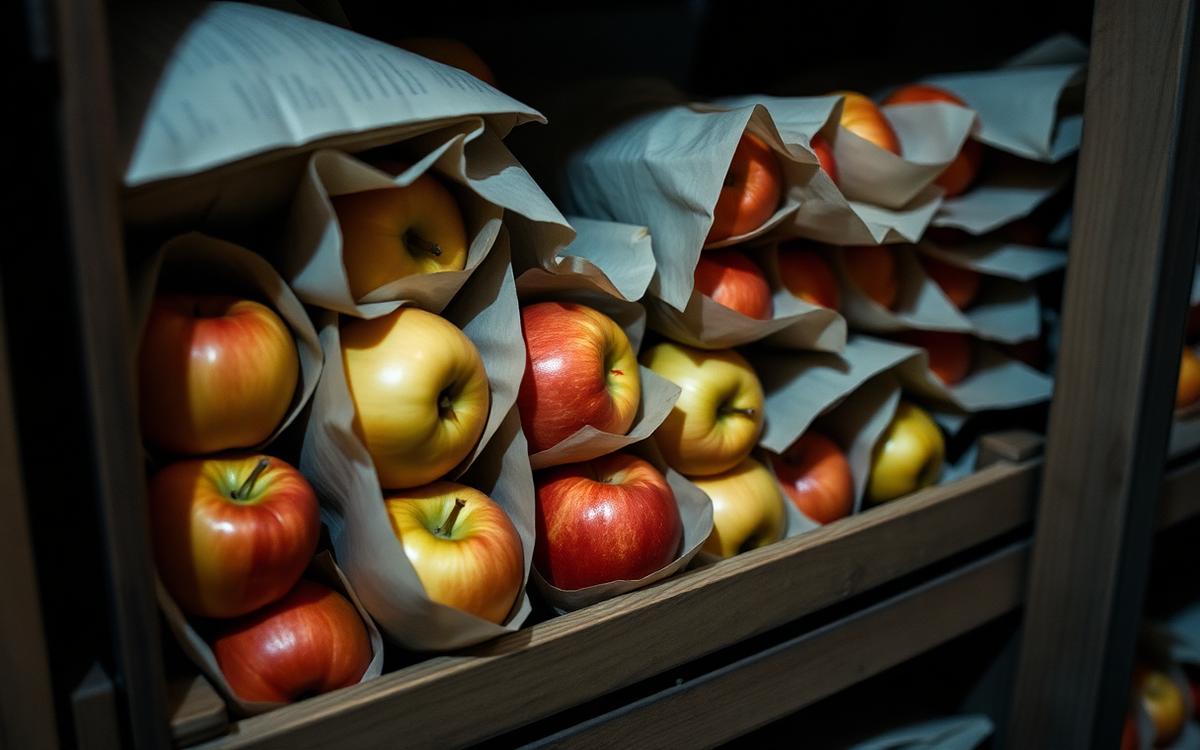
Wrapping individual apples in newspaper is the traditional method and it still works. It keeps moisture in and, more usefully, stops a rotting apple touching its neighbours.
Keep Them Away From Everything Else
Apples will ripen and spoil the produce around them. Store them away from potatoes in particular, since apple ethylene encourages potatoes to sprout, while potatoes give apples an earthy taste.
The same applies to leafy greens, carrots, broccoli and most other vegetables in the fridge. Keep apples in their own drawer if you have two.
The one time this is useful rather than annoying is when you want fruit to ripen faster. An unripe avocado, pear or banana in a paper bag with an apple will get there in a day or two.
Which Varieties Keep Longest
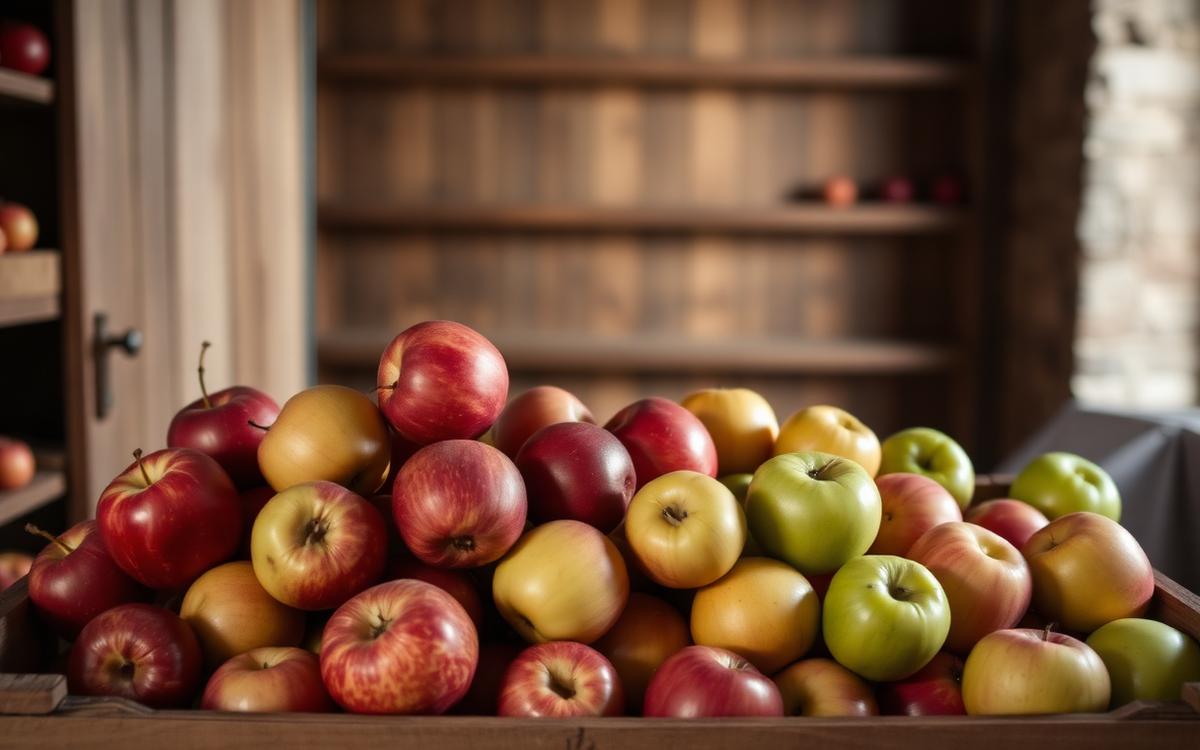
Keeping quality is a property of the variety, not the storage. Firm, dense, late-harvest apples hold for months. Soft, early-season apples are bred for eating in the weeks after picking.
- Long keepers include Fuji, Granny Smith, Braeburn, Rome, Idared, Northern Spy and Winesap.
- Medium keepers include Honeycrisp, Pink Lady and Golden Delicious.
- Short keepers include Gala, McIntosh, Paula Red and most early summer varieties.
If you picked a mix, eat the short keepers first and reserve the storage space for the varieties that will still be worth eating in January.
Check the Crate Monthly
Set a monthly reminder to look through stored apples and pull anything soft, wrinkled or showing brown spots. The old saying about one bad apple is a genuine description of what happens: rot spreads by contact and the ethylene from a decaying apple speeds up everything near it.
A single layer per box, or apples individually wrapped, makes this check far quicker and stops one failure becoming five.
What to Do With the Ones That Will Not Keep
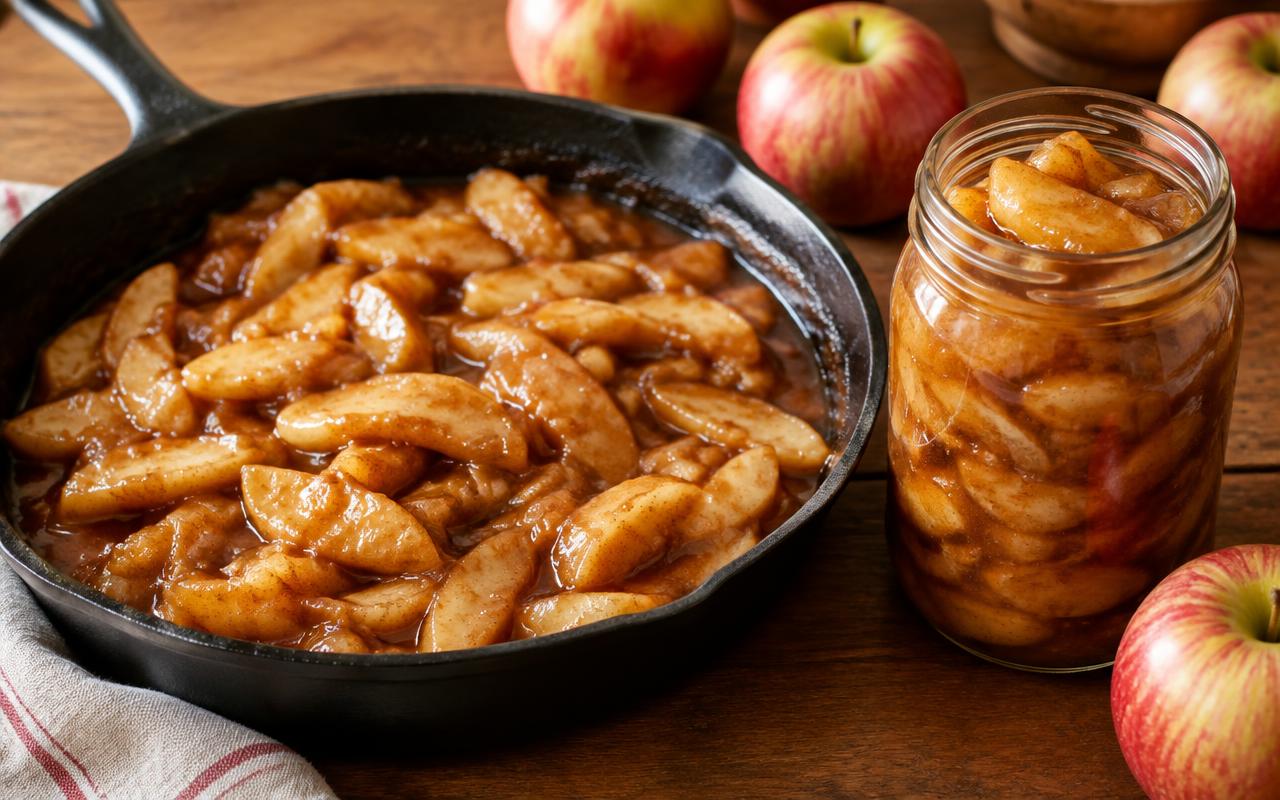
Bruised and early-variety apples are the ones to process. Applesauce freezes well and takes almost no effort. Slices tossed with lemon juice or an ascorbic acid solution then frozen on a tray keep well for baking. Dehydrated rings store for months without refrigeration.
Windfalls and soft apples also make good cider or juice, provided you cut away any damaged flesh first rather than pressing rot into the batch.
The Bottom Line
Sort ruthlessly, do not wash, keep them cold and humid, wrap or separate them, store them away from other produce and check the box monthly.
Do that with a late-season variety and you will still be eating your own apples well after the trees are bare.
Frequently Asked Questions
Should apples be refrigerated?
Yes for long storage. The crisper drawer keeps them roughly ten times longer than a counter fruit bowl.
Should I wash apples before storing them?
No. Washing removes the protective bloom and adds surface moisture that encourages mould. Wash them before eating.
Why do apples make other produce spoil faster?
They release ethylene, the ripening hormone, which accelerates ripening and decay in nearby fruit and vegetables.
Which apples last longest in storage?
Firm late-season varieties such as Fuji, Granny Smith, Braeburn, Rome and Northern Spy.
Can I store apples in the garage?
Yes if it stays cold without dropping below freezing. Use a thermometer and check the fruit monthly.
Can apples be frozen?
Sliced and treated against browning, yes, for eight to twelve months. Texture softens, so use them for baking rather than eating raw.