Quick Answer
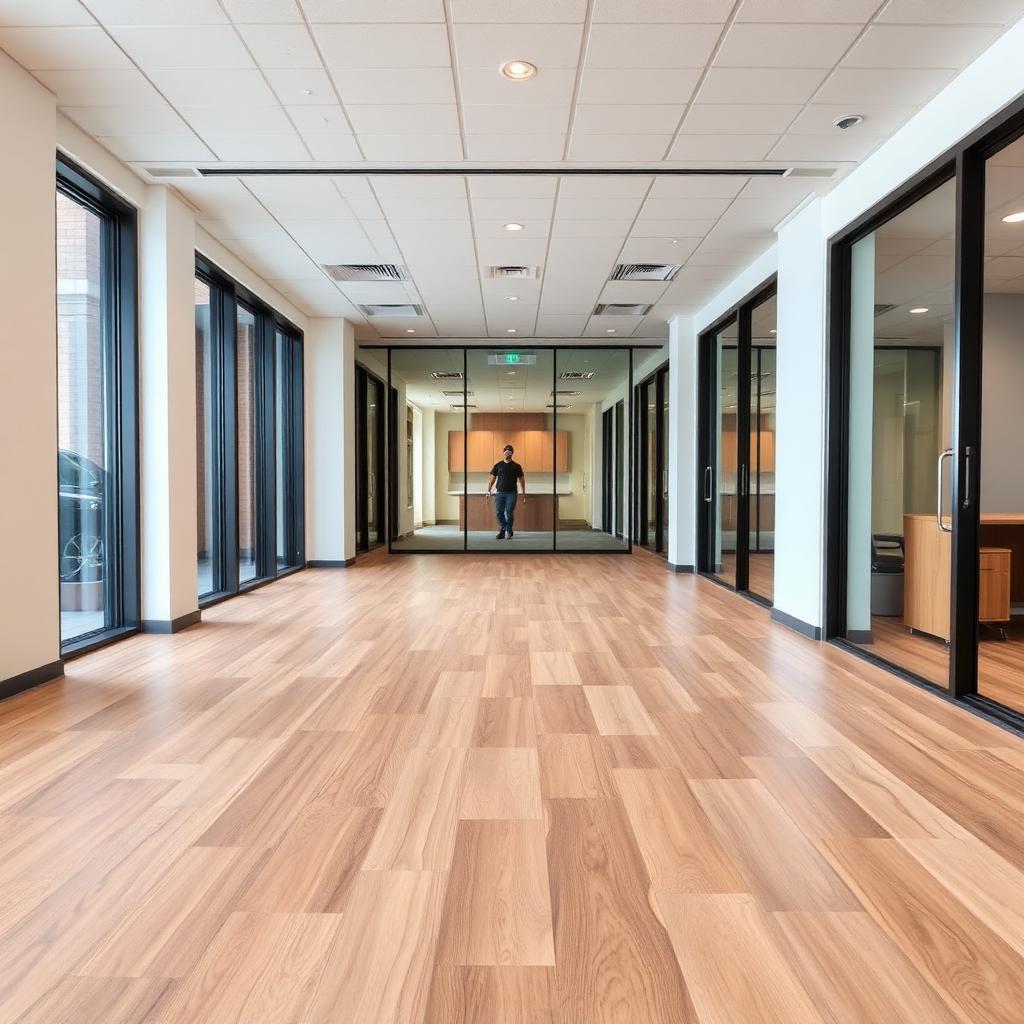
Yes. When a tenant installs flooring in a leased commercial space at their own expense, that flooring is a leasehold improvement (also called a tenant improvement) for accounting and US tax purposes. It is capitalised on the balance sheet and depreciated, not expensed.
If the landlord installs the flooring as part of the lease, it is the landlord's asset, depreciated over building life. The tenant's only expense in that case is the rent.
How the IRS Treats It
Under current US tax rules, qualified improvement property (QIP) made to the interior of nonresidential real property after the building was placed in service is depreciated over 15 years using straight-line, with no salvage value, and is eligible for bonus depreciation. Flooring fits the QIP definition as long as it is not structural and not an enlargement.
Bonus depreciation for QIP placed in service in 2026 is at 40 percent (down from 60 percent in 2025, per the current phase-down schedule). Section 179 expensing is also available up to the annual cap if business income supports it.
What Counts as Flooring Leasehold Improvement
- New tile, LVT, carpet tiles, hardwood, laminate in a leased commercial space.
- Subfloor levelling done as part of the install.
- Custom inlays, logos, brand elements built into the floor.
- Underlayment and acoustic mats.
What Does Not Count
- Repairs to existing flooring (patch a section, polish, deep clean), these are deductible repairs, not capitalised improvements.
- Removable rugs and runners, these are furniture/fixtures, not leasehold improvements.
- Flooring installed by the landlord as part of the lease, landlord's asset, not yours.
UK and IFRS Treatment
Under IFRS and UK GAAP (FRS 102), tenant-installed flooring is capitalised as part of leasehold improvements and depreciated over the shorter of the lease term and the asset's useful life. A 10-year lease with no renewal option means a 10-year depreciation life for the floor, even if the manufacturer warrants it for 20.
When the Lease Ends
If you move out and surrender the property with the floor still in place, any undepreciated basis in the floor can be written off as a loss on abandonment in the year of surrender. Keep the original invoice and depreciation schedule on file, IRS auditors look for this.
Tenant Improvement Allowance (TIA)
If the landlord gave you a cash allowance to install the floor, the accounting splits:
- The floor is still a leasehold improvement on your books.
- The TIA is recorded as a deferred lease incentive and amortised against rent expense over the lease term.
- You still depreciate the gross cost of the floor, the TIA does not reduce the capitalised value.
Common Mistakes
- Expensing the whole floor in year one. Only legitimate repairs can be expensed.
- Depreciating over 39 years (building life). 15 years is correct for QIP.
- Forgetting to take bonus depreciation in the year placed in service.
- Failing to write off the remaining basis when surrendering the lease.
Bottom Line
Tenant-installed flooring in a leased commercial space is a leasehold improvement, capitalised and depreciated over 15 years (US tax) or the shorter of lease term and useful life (IFRS/UK GAAP). Talk to your CPA about bonus depreciation and Section 179 before year-end, those choices materially change your tax bill.
FAQ: Flooring as a Leasehold Improvement
Can I expense flooring under Section 179?
Yes, QIP including flooring is Section 179 eligible up to the annual cap (1.22 million dollars in 2024, indexed for 2026). Talk to your CPA about Section 179 vs bonus depreciation election.
What if the landlord installs the floor for me?
It is the landlord's asset, not a leasehold improvement on your books. Any tenant improvement allowance you receive in cash is recorded as a deferred lease incentive.
Can the tenant remove the floor at lease end?
Almost never, by the time the lease ends the floor is essentially welded to the building. Most commercial leases require tenant improvements to remain.
Does the rule differ for triple-net leases?
The accounting is the same. Triple-net just shifts maintenance cost to the tenant, the capitalisation and depreciation treatment of the install does not change.
Final Tips
- Capitalise the floor over 15 years (QIP) for US tax.
- Use bonus depreciation (40 percent in 2026) and Section 179 to accelerate the deduction.
- Track the depreciation schedule for write-off at lease end.
- Keep the invoice for at least 7 years.
Practical Accounting Walkthrough
A tenant in a US commercial space spends 30,000 dollars on new LVT and underlayment in year one of a 10-year lease, receiving a 10,000 dollar tenant improvement allowance from the landlord. The accounting splits like this:
- Capitalise 30,000 dollars as leasehold improvement on the balance sheet.
- Record the 10,000 dollar TIA as a deferred lease incentive liability.
- Depreciate the 30,000 dollar leasehold improvement over 15 years (QIP), straight line, 2,000 dollars per year, plus any bonus depreciation taken in year one.
- Amortise the 10,000 dollar TIA over 10 years (lease term) against rent expense, 1,000 dollars per year reduction in rent expense.
The result is a higher early-year deduction via bonus depreciation, lower rent expense for 10 years, and a clean write-off at lease end of any remaining basis on the floor.