Quick Answer
Learn dog grooming as a beginner by choosing between two clear paths: a 2 to 4 month professional grooming academy with a formal curriculum, or a paid bather-to-groomer apprenticeship at a corporate or independent salon. Both work; the difference is time, cost, and how quickly you get on the table.
Master three foundation skills in order: canine anatomy and breed knowledge, safe handling and body language, then precision scissor and clipper mechanics.
Path A: Grooming academy
Formal grooming schools (like Nash Academy, Paragon, or state-approved programs) run 2 to 4 months full-time with tuition ranging from 4,000 to 8,000 US dollars. You get:
- Structured lectures on canine anatomy, dermatology, and safety.
- Mandatory practical hours on dogs of varying breeds and coat types.
- Certification that some employers require or prefer.
- Fast timeline (fully working in 3 to 6 months).
Downside: tuition and no income during training.
Path B: Salon bather-to-groomer apprenticeship
Corporate salons (PetSmart, Petco) and many independent boutiques hire beginners as dedicated bathers. You earn an hourly wage while learning:
- Bathing and blow-drying for the first 3 to 6 months.
- De-shedding and coat prep next.
- Nail trims, ear cleaning, and sanitary work under supervision.
- First haircuts on cooperative dogs with a senior groomer coaching each pass.
Full timeline: 12 to 24 months to reach solo groomer status. Slower than academy but you earn as you learn.
The three foundation skills every beginner must master
1. Canine anatomy and breed knowledge
You need to know the skeletal landmarks (elbow, hock, stifle) that define breed-standard silhouettes, and how coat structure differs across double coats, curly coats, wire coats, and smooth coats. A poodle cut on a doodle looks wrong because you ignored the coat texture, not the pattern.
2. Safe handling and canine body language
Read stress signals early: whale eye (whites showing), lip licking, stiff posture, ears pinned back, tail tucked. When you see them, slow down, restart the desensitization, or take a break. A dog that has a bad session at 12 weeks old can be reactive on the table for life.
3. Scissor and clipper mechanics
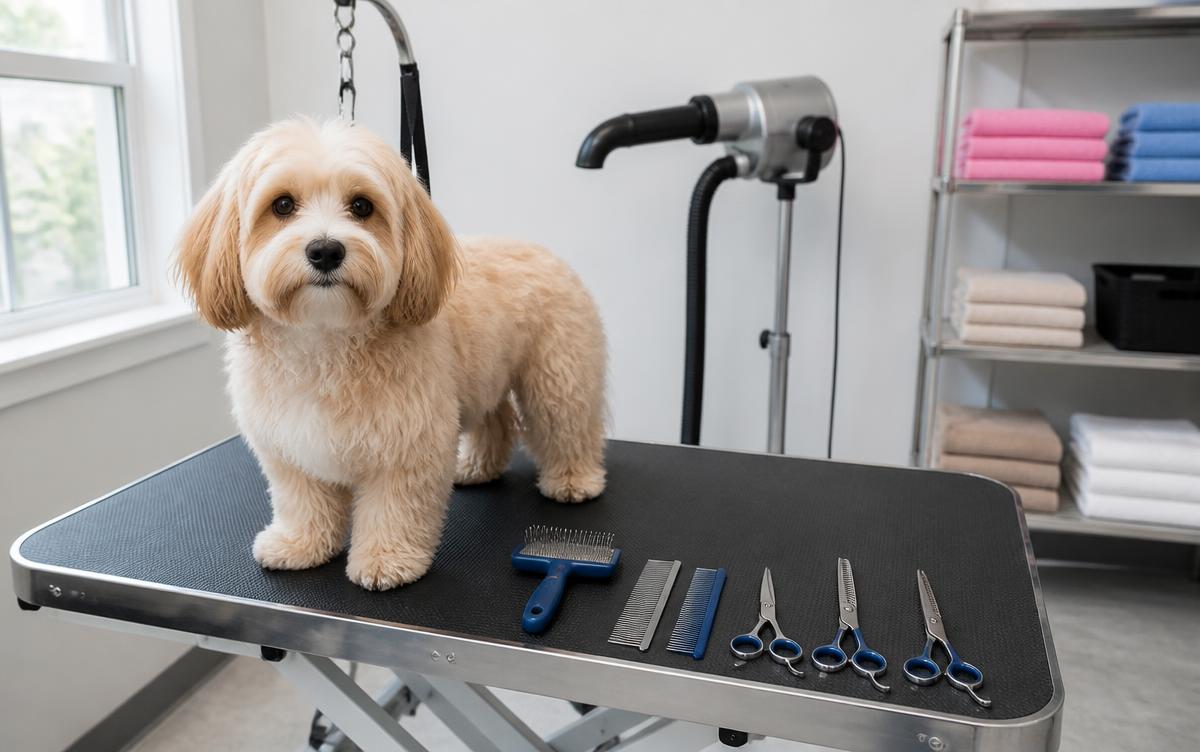
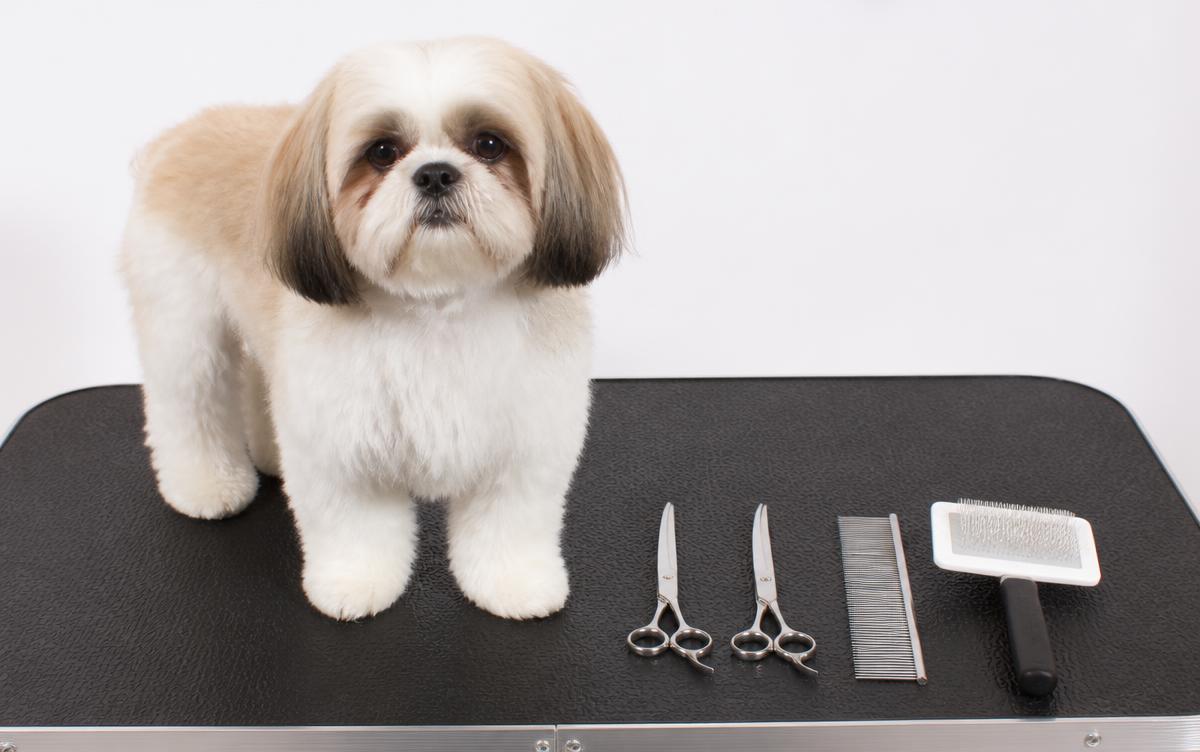
Hold shears with your thumb barely inserted (first knuckle only), ring finger seated fully, index and middle fingers stabilizing the shank. This is the "shear grip" that prevents hand fatigue and lets the blade lead each cut. Practice on wefted fake hair or a piece of yarn on a mannequin head before touching a real dog.
A practical 90-day beginner plan
- Weeks 1 to 4: Read Notes from the Grooming Table (Melissa Verplank) and Theory of 5 (Melissa Verplank). Practice slicker brushing and combing on your own dog daily.
- Weeks 5 to 8: Practice nail grinding and ear cleaning with veterinary supervision. Watch every video in the National Dog Groomers Association of America (NDGAA) library.
- Weeks 9 to 12: Take a bather job or enroll in an academy. Start scissor practice on wefted training hair.
- Ongoing: Groom your own dog every 4 weeks. Photograph each finish so you can track progress.
Certification worth pursuing
- NDGAA National Certified Groomer (NCMG): the industry-recognized credential; earned through breed-specific practical exams.
- International Professional Groomers (IPG) certification: similar breed-focused standard.
- Fear Free Grooming Certification: covers low-stress handling and is now expected at high-end salons.
Common beginner mistakes
- Buying premium shears too early. Start with a decent 200 US dollar pair; you will drop your first set.
- Ignoring body language. A bite is almost always preceded by 30 seconds of warning signs.
- Copying styles without understanding coat structure. The same "teddy bear head" looks different on a doodle vs a shih tzu because the coat behaves differently.
- Rushing the finish. Symmetry checks belong every 90 seconds, not at the end.
Bottom line
Pick academy for speed, apprenticeship for income. Read the two Verplank books, master handling before styling, and photograph every finish. The pros who last 20 years in this trade are the ones who never stop learning.