Quick Answer
To groom a Persian cat's face, soften the tear tracks with a warm damp cotton pad for 30 seconds, wipe outward and downward with an eye-safe feline cleanser, comb the cheeks and muzzle with a fine stainless steel facial comb, snip long stained hair with blunt-tip safety scissors, and finish by drying the deep folds bone dry so yeast has nothing to feed on.
Persian face care is more about hygiene than styling. Flat brachycephalic faces trap tears, food, and moisture inside their folds. Skip the routine for a week and you end up with hardened porphyrin crusts, sour odors, and painful skin-fold dermatitis.
Why the Persian face needs daily care
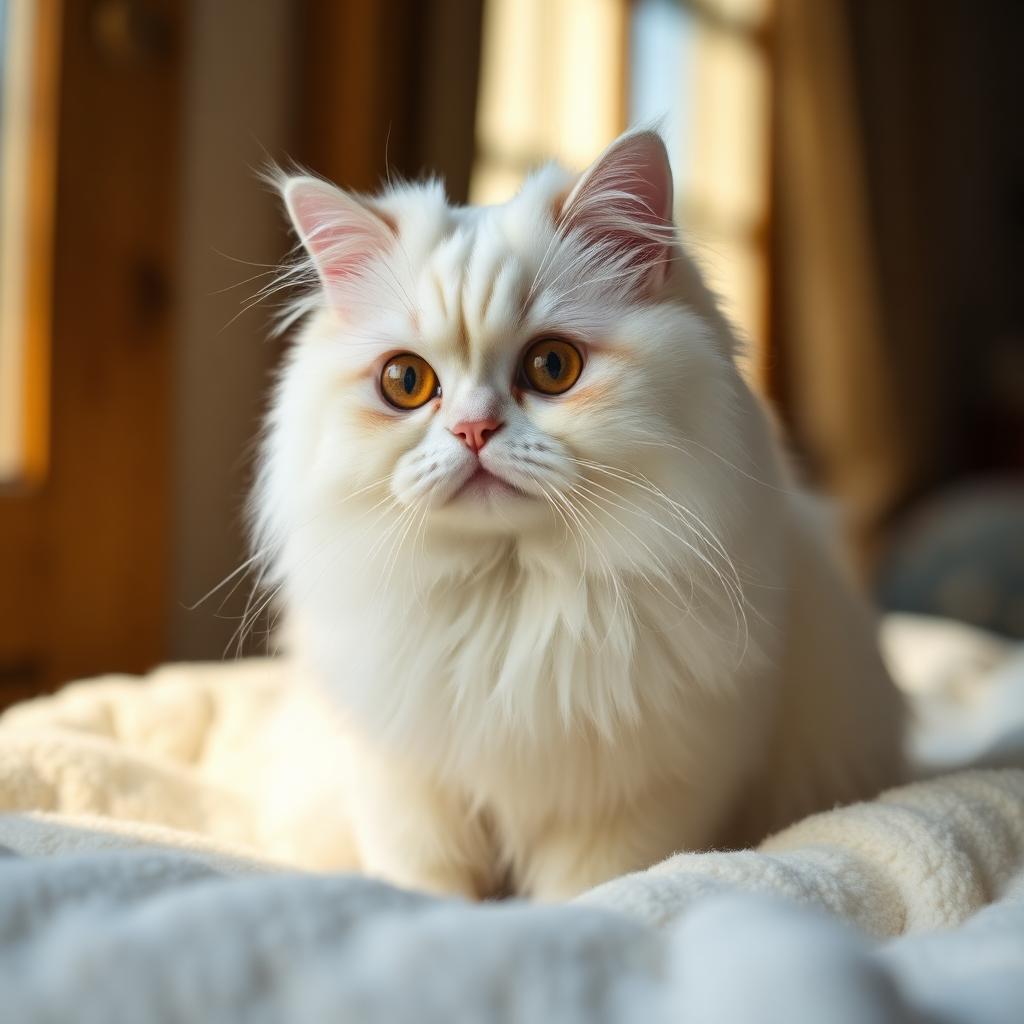
Persian cats have shortened facial bones and shallow eye sockets. That famous flat expression compresses the tear ducts, so tear fluid overflows the eye rim instead of draining internally. This constant weeping is a condition called epiphora, and it is normal for the breed rather than a disease on its own.
Tear fluid contains iron-rich molecules called porphyrins. Once the fluid hits the fur and reacts with air, the porphyrins oxidize into a stubborn reddish-brown stain that bonds tightly to hair shafts. In the deep creases beside the nose the fluid also stays warm and damp, an ideal environment for Malassezia yeast and bacteria.
Tools that actually help
- Fine-toothed 5-inch stainless steel facial comb. Narrow, rounded teeth to lift dried debris out of short muzzle fur without catching whiskers.
- Pre-moistened feline eye wipes. Look for boric-acid-free formulas with witch hazel, chamomile, or micellar water. No fragrance, no alcohol.
- Blunt-tip safety scissors. Small ball-tip shears for trimming stained tufts under the eye without any risk of a puncture.
- Soft microfiber cloths. One damp, one bone dry. Cheap enough to change daily.
- Optional: shielding powder. A light water-repellent grooming powder brushed onto dry fur to slow re-staining.
Ingredients to avoid near a cat's eye
- Hydrogen peroxide and household bleach. They lighten stains but burn the cornea if a single drop rolls into the eye.
- Tylosin-based supplements without a vet. That antibiotic (sold in tear-stain products decades ago) has real risks and is not first-line for a well cat.
- Human eye makeup remover. Alcohol, sulfates, and fragrance are common. Not safe for feline skin.
- Cotton buds inside the eye socket. Use flat cotton pads. Buds slip if the cat moves.
Step by step: daily Persian face routine
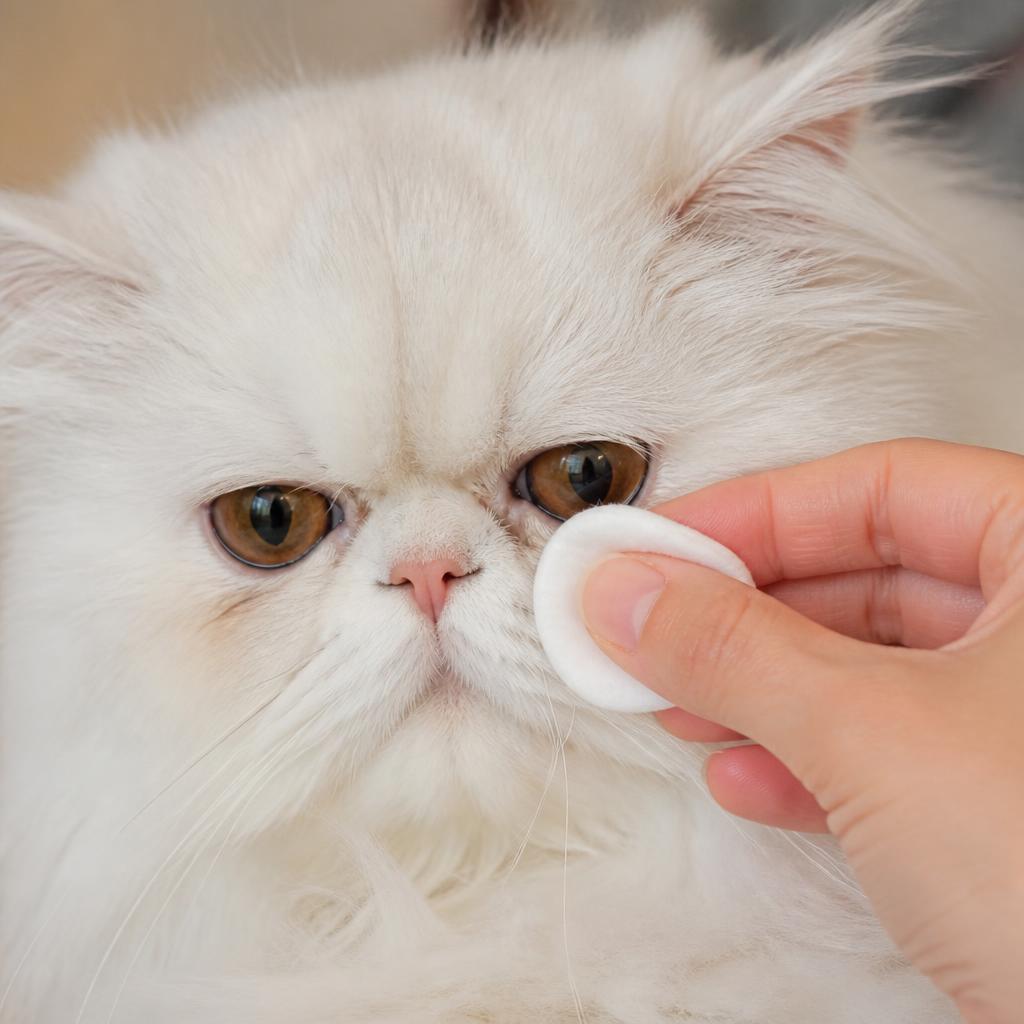
- Warm and soften. Dampen a cotton pad with warm (not hot) water or a feline eye wipe. Press it gently against the tear track for 20 to 30 seconds so hardened crusts dissolve.
- Wipe outward and downward. One direction only, away from the eye. Use a fresh part of the pad for each pass. Never scrub in circles; you push debris toward the eye.
- Clear the nose fold. Spread the fold open with your thumb and index finger. Wipe out trapped tears, food, and grease with an antiseptic wrinkle-safe wipe.
- Comb the muzzle and cheeks. A fine steel comb separates fine hairs, catches loose whisker roots gently, and lifts small crusts.
- Trim overgrowth if needed. Blunt-tip safety scissors, parallel to the skin, to snip long stained hairs curling toward the eye.
- Dry the folds. A clean dry tissue or microfiber cloth. Bone dry is the goal.
- Optional finishing dust. A pinch of shielding powder brushed lightly through the muzzle fur to repel fresh tears.
How often to groom
- Daily. Warm damp wipe of the tear tracks and nose fold. Two minutes.
- Every 2 to 3 days. Fine comb through the ruff, ears, and cheeks.
- Every 4 to 6 weeks. Full bath with a tearless feline shampoo.
- Every 6 to 8 weeks. Sanitary trim of overgrown facial tufts by you or a groomer.
Diet and water can change the staining
Some staining is genetic and structural: you cannot brush away a compressed tear duct. But a few small changes reduce porphyrin load and slow the re-staining rate.
- Filtered or bottled water. Iron and mineral content in tap water can worsen staining. A simple carbon pitcher often helps.
- Stainless steel or ceramic bowls. Plastic scratches, harbors bacteria, and irritates chins. Wash bowls daily.
- Grain-free or single-protein diets can reduce food-allergy tear overflow. Ask your vet before switching.
- Fresh flowing water sources. Fountains encourage drinking, which flushes the system.
Warning signs that need a vet, not a wipe
- Yellow or green discharge instead of clear tears.
- Squinting, pawing at the eye, or a cloudy cornea.
- Redness in the whites of the eye that lasts more than a day.
- A raw, bleeding, or foul-smelling nose fold.
- Sudden increase in tearing that was not there last week.
These can point at corneal ulcers, entropion (eyelid rolled inward), or a bacterial infection. Cleaning wipes make them worse, not better.
Common mistakes
- Wiping toward the eye instead of away from it.
- Using human tear-stain products or human eye drops.
- Skipping the drying step. Damp folds grow yeast in 24 hours.
- Trimming with pointed scissors near the eye.
- Bathing weekly hoping to "fix" the staining. It dries the skin and makes it worse.
Bottom line
Grooming a Persian's face is a two-minute daily habit: warm soak, outward wipe, comb, dry. Use feline-safe eye wipes and blunt-tip scissors, never human products or sharp shears near the eye. Filtered water, ceramic bowls, and a full bath every 4 to 6 weeks handle the rest. If discharge changes color or the eye looks painful, that is a vet visit, not a grooming problem.