Quick Answer
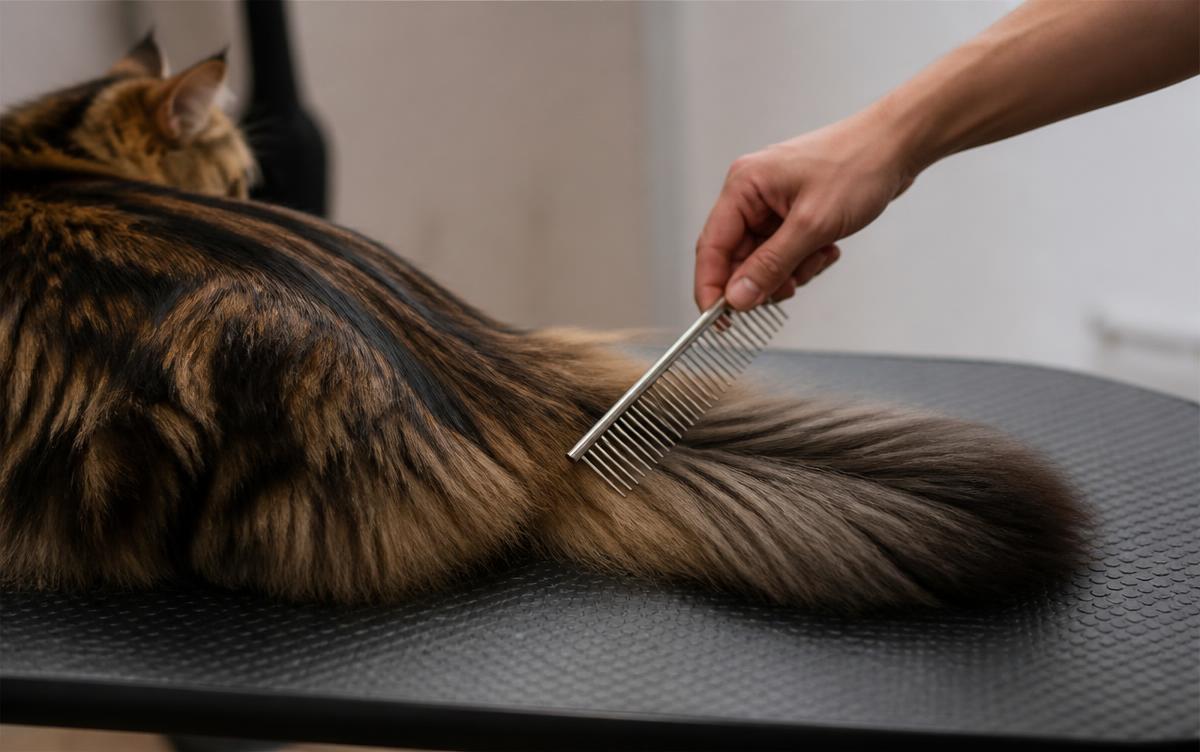
To groom a Maine Coon's tail, mist the plume lightly with a leave-in feline detangler, work from tip to base with a wide-toothed pin brush, pinch the hair at the root to absorb pulling force, part small 2-inch sections to clear the undercoat, spot-treat stud tail grease at the base with a degreasing wash, and finish with a coarse stainless steel comb to check for missed knots.
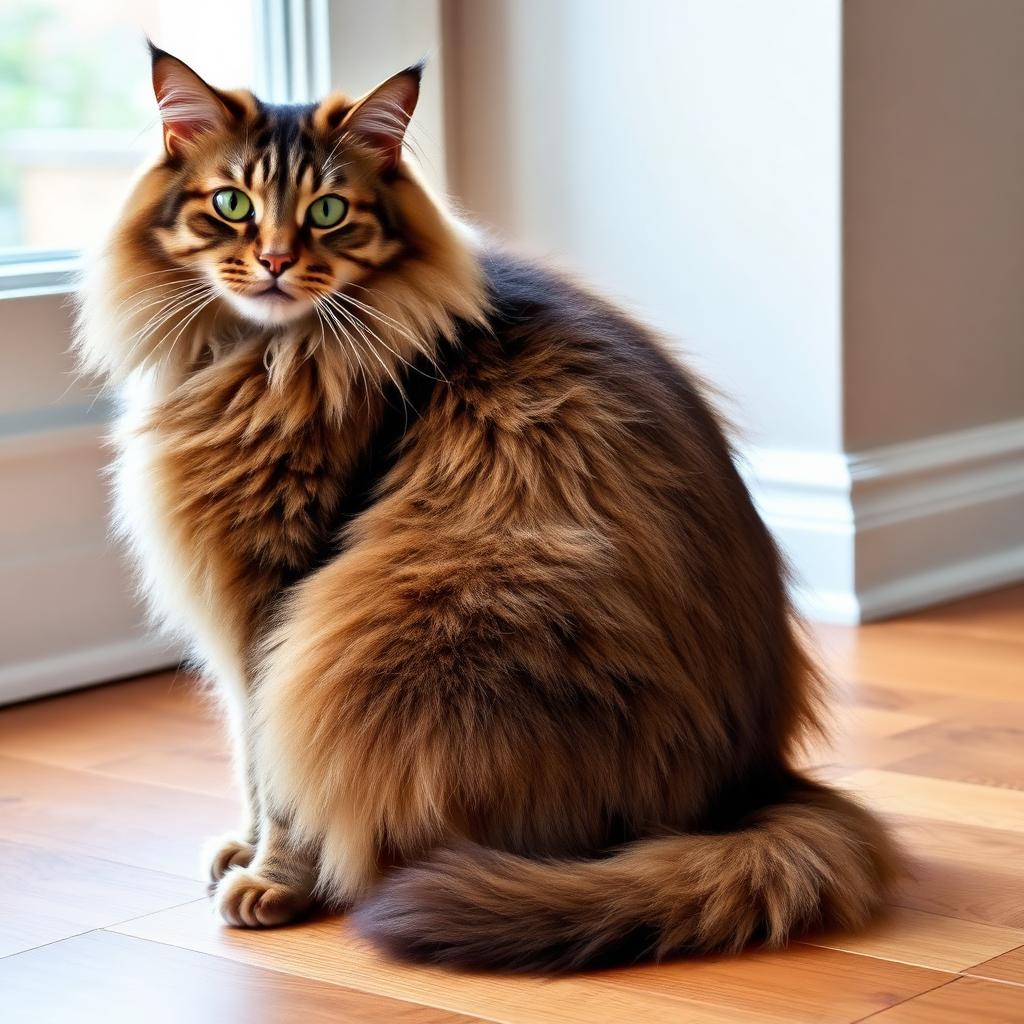
The plume tail is what makes a Maine Coon look like a Maine Coon. Yank at it aggressively with a slicker and you can pull out the long guard hairs by the root. Those hairs grow back slowly and leave a thin, bare tail for months.
Why the tail is different from the body coat
A Maine Coon's body carries a shaggy, water-resistant coat with a soft undercoat and long guard hairs. The tail carries even longer guard hairs, packed densely around a highly innervated tailbone. The hair grows outward like a bottlebrush, which is beautiful when clean but a magnet for litter dust, food crumbs, and dead undercoat.
Two extra problems show up at the tail base: stud tail (overactive sebaceous glands producing a waxy, greasy patch along the top of the tail near the spine) and tail-base sensitivity (the nerves that run along the spine make hard pulling actually painful, not just uncomfortable).
Tools that respect the plume
- Wide-toothed pin brush with a rubber cushion. Long, smooth pins mounted in a soft base. It flexes with the hair instead of ripping it.
- Coarse stainless steel greyhound comb. Wide teeth for detangling, fine teeth for a final smoothing pass.
- Feline detangling mist. Light, silicone-optional formula. Sprayed onto the coat, not directly at the cat.
- Degreasing paste or clarifying shampoo. For stud tail. Chin acne washes work here too.
- Cornstarch or feline grooming powder. Dries greasy sections so the comb slides through.
Tools to skip on the tail
- Standard wire slicker brushes. They rip guard hairs. Use only on the body flanks if at all.
- Deshedding blades. Any tool with a fine cutting edge shortens or splits the plume.
- Electric clippers. Never clip a Maine Coon tail. Clipped guard hairs may not grow back to the original texture.
- Human dry shampoo. Fragrance and alcohol, not cat-safe.
Step by step: full tail grooming session
- Inspect the base for stud tail. Slide your fingers along the top third of the tail near the spine. If the fur feels waxy, sticky, or clumps into dark, greasy separations, you have stud tail.
- Spot-treat grease. Massage a small amount of degreasing paste or a cat-safe clarifying shampoo into the greasy patch. Let it sit 5 minutes. Rinse thoroughly with lukewarm water. Skip this step if the base is clean.
- Mist the plume. Spray a light detangling mist onto your hands, not the tail itself; then smooth it through so the hair is barely damp.
- Support the tail. Hold the tail gently in your non-dominant hand near the base. Do not lift it high above the cat's body; that stresses the tailbone.
- Brush tip to base. Start at the very tip. Take a small section, pinch the base of the hair against the tail with your fingers, and brush the length with the pin brush. Repeat in short strokes.
- Move up in 2-inch sections. Work slowly toward the body. Part the outer hair to expose the inner tail leather and brush the undercoat outward.
- Finish with a comb check. A coarse steel comb should slide from base to tip cleanly. Anywhere it catches is a knot you missed.
- Reward and rest. Tail grooming is more sensitive than back grooming. High-value treat, end on a win.
How often to groom the tail
- Every 2 to 3 days. Quick brush through the length. Two minutes.
- Weekly. Detangler mist plus a full section-by-section pin brush and comb pass.
- Every 4 to 6 weeks. Full bath. Focus on the tail base with a clarifying wash if stud tail is present.
- During spring and autumn coat blows. Add an extra short session every day for two weeks.
Managing stud tail long term
Stud tail is caused by sebaceous glands at the top of the tail producing more oil than the coat can absorb. Both intact and neutered cats can develop it. Long-haired breeds show it most because the oil coats a lot of hair.
- Weekly clarifying wash on the base only. Do not degrease the whole tail; you strip the coat's shine.
- Wipe the base with a chlorhexidine wipe on non-bath days. Keeps bacterial folliculitis from developing.
- Sanitary trim. A groomer can shorten the fur only on the greasy patch so oil has less hair to coat. This is a scissor trim, not clippers.
- Vet visit if you see blackheads, scabs, or hair loss. That is folliculitis and needs medicated shampoo.
Common mistakes
- Brushing base to tip. Pulls every knot into a bigger knot before it hits the comb.
- Using a slicker brush on the plume.
- Clipping mats out with straight scissors held perpendicular to the tail. Very easy to cut skin.
- Skipping the base check for stud tail; it turns into folliculitis in weeks.
- Grooming a wet tail without brushing first. Wet mats tighten as they dry.
Bottom line
A Maine Coon tail wants a wide-toothed pin brush, a coarse steel comb, a light detangler, and patient tip-to-base sectioning. Pinch the hair at the root every time you brush. Check the top of the tail base weekly for stud tail grease and clarify only that patch when needed. Never clip the plume, and you will keep the tail that made you pick the breed in the first place.