Quick Answer
Groom a Border Collie undercoat by brushing the outer guard coat every 2 to 3 days with a long-pin slicker, raking the undercoat weekly with a rotating-pin undercoat rake, and blowing the whole coat out seasonally with a high-velocity pet dryer. Never shave a Border Collie double coat, extract the loose undercoat instead so fresh air can reach the skin.
The breeches on the back thighs and the ruff around the chest are the two areas that mat first. If you have five minutes, work those zones.
Why Border Collies shed non-stop
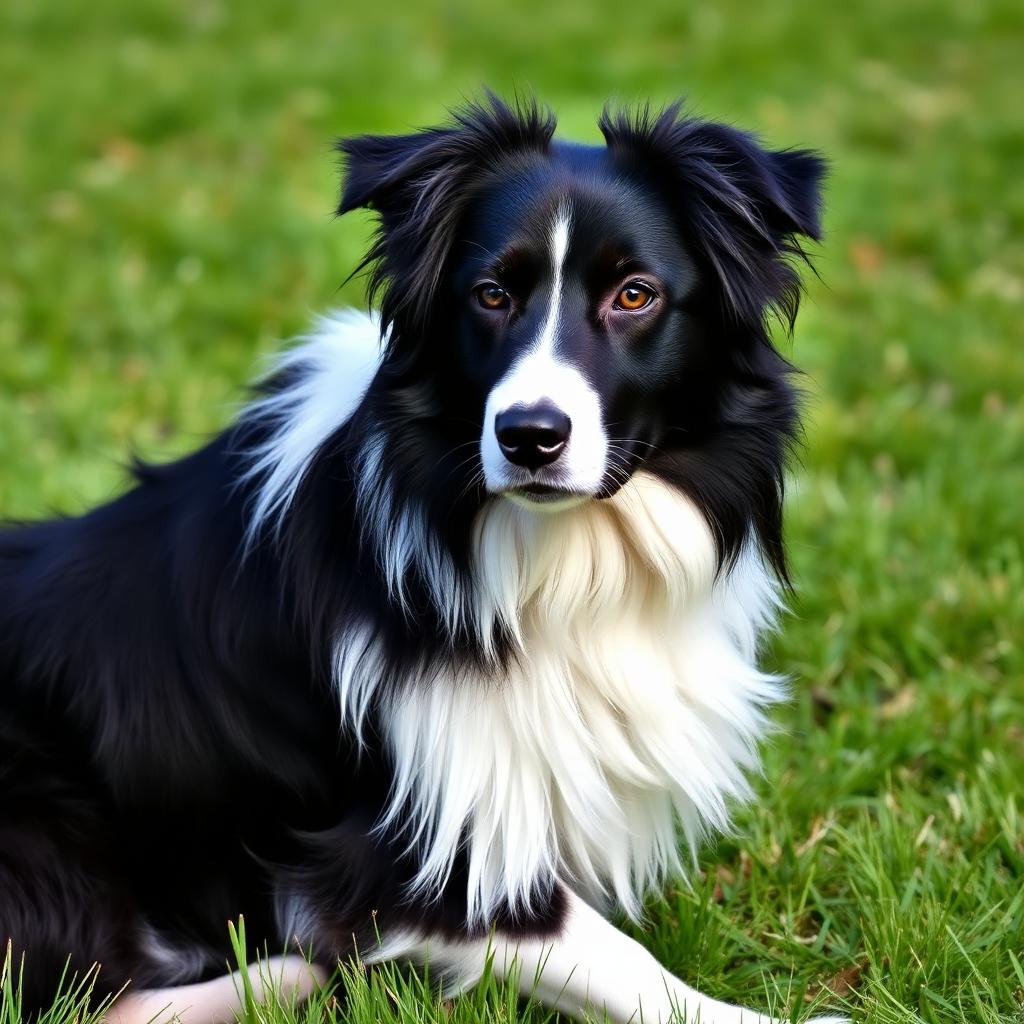
The Border Collie has one of the most efficient working double coats in the herding group. A coarse weather-resistant outer guard coat sheds water and burrs, while a dense soft undercoat insulates against wind, cold, and (counterintuitively) heat. Two coat types exist: rough (medium length with feathering on chest, legs, and tail) and smooth (short and coarse throughout).
Both shed continuously and blow the undercoat twice a year, in spring and autumn. Rough coats are far more prone to matting because loose undercoat catches in the long feathering.
The shaving mistake
A hot summer tempts owners to shave a Border Collie short. Do not. The trapped undercoat between guard hairs is your dog's natural insulation, blocking summer heat radiation as effectively as winter cold. Shaving removes that thermal layer, exposes pink skin to sun, and often ruins coat texture on regrowth.
The correct summer plan is aggressive undercoat extraction. A cleanly raked-out coat lets air flow directly to the skin, which is the actual cooling mechanism.
Essential Border Collie tools
- Long-pin slicker brush. Firm-bristle with 25 to 30 mm pins for daily maintenance and long feathering.
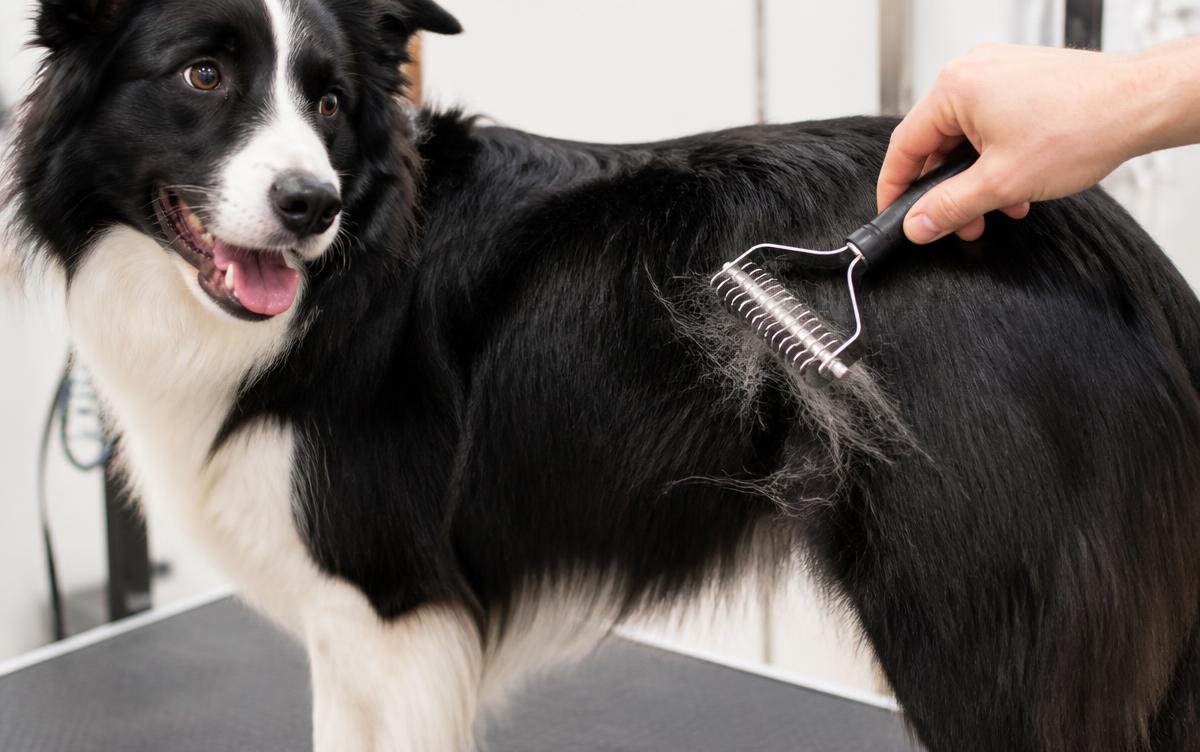
- Rotating-pin undercoat rake. A single-row rake with smooth spinning teeth that glide through dense coat without snagging skin.
- High-velocity forced-air pet dryer. The single most efficient deshedding tool. Blows out dirt, dead undercoat, and mud in minutes.
- Wide-tooth stainless steel comb. Verifies the coat is clear after brushing.
- Thinning shears. Neaten leg feathering and paw hair without leaving hard scissor lines.
The weekly routine
- Every 2 to 3 days: Slicker brush the whole body in the direction of hair growth. Focus on flanks, chest, and behind the ears where surface dust gathers.
- Weekly: Undercoat rake the ruff, breeches, and armpits. Use short, light strokes. Pressing hard drags the skin and hurts the dog.
- Monthly: Trim leg feathering with thinning shears to reduce mud pickup, and clear the hair between the toes with round-tip scissors.
- Seasonally (spring and autumn): Full high-velocity blowout in the bath. This clears the loosening undercoat in one session what takes weeks of raking.
Bathing and blowing out
- Brush out the coat dry first. Bathing over any mat locks it in permanently.
- Wash with a deshedding dog shampoo, lather deeply into the coat, and let sit five minutes before rinsing. This releases undercoat.
- Apply a light conditioner focused on tips and rinse until water runs clean.
- Towel blot and start with the high-velocity dryer while the coat is still damp. The airflow forces loose undercoat outward in visible tufts.
- Finish with a slicker and a long-tooth comb through the feathering.
Zones that mat first
- Breeches (back thighs). Dogs sit here all day. Loose hair packs into tight knots at the sitting surface. Rake weekly.
- Behind the ears. Long feathering catches burrs from field runs. Comb through daily.
- Armpits and belly. Skin friction plus long hair equals fast matting. Line-brush weekly.
- Feet and toes. Mud packs between toes and clumps overnight. Trim monthly.
Common Border Collie grooming mistakes
- Shaving in summer. Extract the undercoat instead.
- Brushing only the top coat. The undercoat rake reaches what a slicker cannot.
- Skipping the breeches. The dog sits on this area constantly; it mats fastest.
- Bathing without a full blow-out. Air-drying a dense coat traps moisture near the skin and can cause hot spots.
- Rushing the rake. Fast, hard pressure drags the skin. Short and light is faster than deep and rough.
Signs it is time to book a groomer
Book a professional if you find a solid mat you cannot rake out in a minute, if the coat looks dull and stops shining after brushing, or if seasonal coat blow is producing tumbleweeds in your house daily. A pro high-velocity bath and rake takes an hour and clears more undercoat than a month of home brushing.
Bottom line
Border Collie undercoat care is a slicker brush every 2 to 3 days, an undercoat rake weekly on the ruff and breeches, and a full high-velocity blowout twice a year. Never shave; extract dead undercoat instead so fresh air cools the skin directly. Follow this rhythm and both the working coat and the shed volume around your house stay under control.