Quick Answer
To deep clean shower tiles, run the shower hot for five minutes to open grout pores, apply a paste of baking soda and hydrogen peroxide along the grout lines, let it sit for 15 minutes, scrub with a stiff bristle grout brush, then rinse and squeegee dry. For soap scum on tile faces, use a degreasing dish soap solution. For hard water scale, use white vinegar or citric acid. Never mix vinegar with hydrogen peroxide in the same step.
Why shower grime is so stubborn
Three different chemistries are fighting for space on a shower wall. Soap scum is an organic fatty residue from body oils and bar soap. Hard water scale is alkaline mineral deposits, mostly calcium and magnesium. Mildew is living fungal growth that digs into the porous grout. Each one needs a different cleaning chemistry. Spraying one product on all three almost always fails on at least one.
Step 1: soften everything with steam
Turn the shower on hot, close the bathroom door, and let the room steam up for five minutes. The heat softens surface crusts and opens the microscopic pores in the grout, which makes everything you apply next significantly more effective.
Step 2: the baking soda and hydrogen peroxide paste
Mix equal parts baking soda and 3 percent hydrogen peroxide into a thick paste. Apply it directly along the grout lines and across any visibly mildew stained tile, using a small brush or even just your gloved fingers. Let it sit for 15 minutes, undisturbed. The peroxide oxidizes the fungal pigments, the baking soda gives the mild abrasion needed to lift them out of the grout.
Step 3: scrub with the right brush
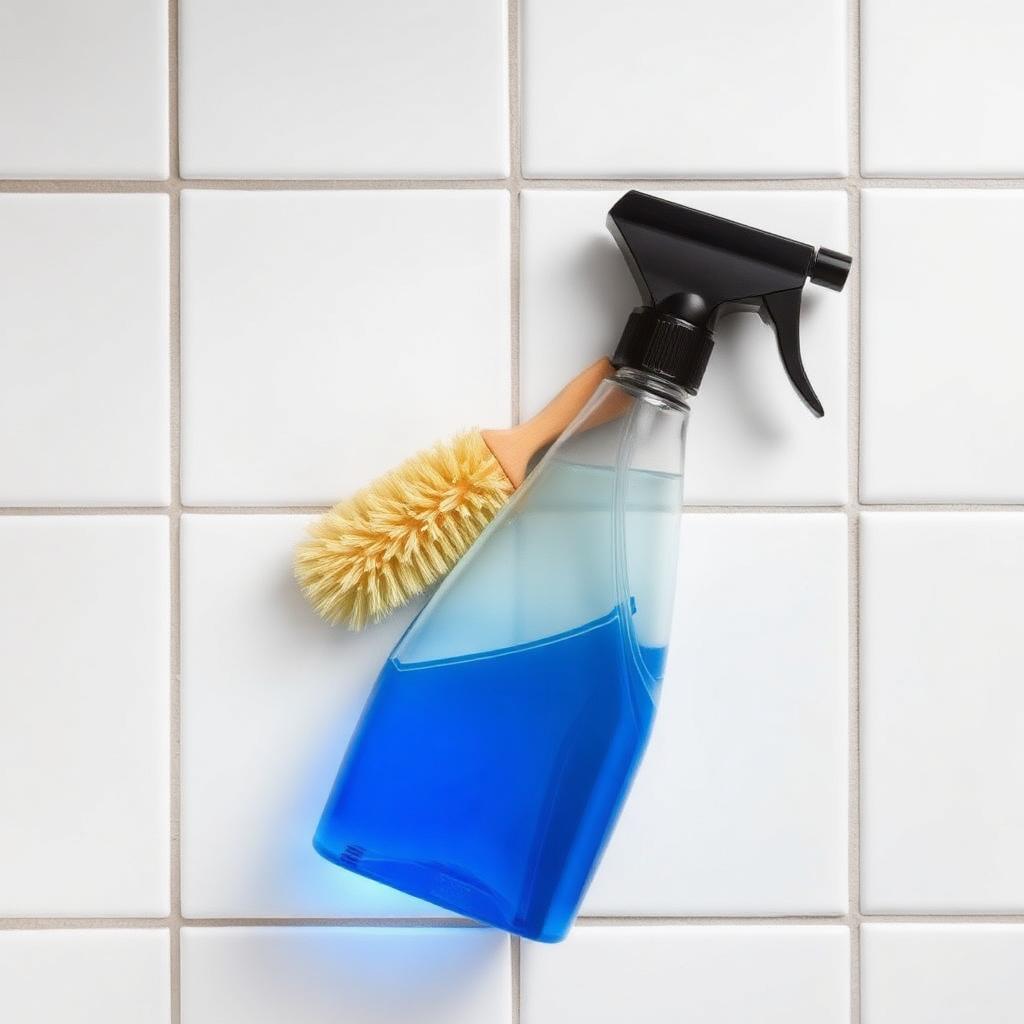
Use a stiff bristle grout brush, an old toothbrush for tight corners, or a battery powered cleaning brush for large showers. Scrub the grout lines in firm circular motions. On the tile faces themselves, switch to a softer sponge to avoid scratching glazed ceramic.
Never use wire brushes on shower tile. They scratch glaze, mar polished stone, and on older grout they will actively crumble the surface.
Step 4: target the remaining problems
- For lingering soap scum: spray a solution of 1 tablespoon grease cutting dish soap in a cup of warm water, let it sit five minutes, scrub with a sponge, and rinse.
- For hard water scale: rinse the wall first to remove all peroxide residue, then spray with plain white vinegar or a citric acid solution. Let it dwell ten minutes and rinse.
- For natural stone tile: never use vinegar or citric acid. They etch marble, travertine, and limestone. Use a pH neutral stone cleaner instead.
Step 5: rinse and dry completely
Rinse the entire shower thoroughly with warm water. Use a squeegee on the tile and a dry microfiber cloth on the grout lines and corners. Leaving the shower completely dry after cleaning is the single most effective way to slow regrowth of mildew and prevent fresh scale.
How often is enough
A quick squeegee after every shower keeps things manageable. A spray and wipe with diluted dish soap once a week prevents soap scum buildup. The full deep clean with the peroxide paste once a month is usually enough for a household shower in a hard water area.
Related reading
For more cleaning routines around the home see my approach to cleaning grout on tile floors and the monthly dishwasher filter routine.
The takeaway
The trick to shower tile is matching the chemistry to the problem. Peroxide for mildew, dish soap for soap scum, vinegar for hard water, neutral cleaner for stone. Get the matching right and a stubborn shower wall comes back to looking new in under an hour.
Frequently asked questions
Can I use bleach on shower grout?
Yes for white grout, but it can lighten colored grout and damage some sealers. Hydrogen peroxide is safer and almost as effective for mildew.
Why does the soap scum keep coming back?
Bar soap is the usual culprit because it reacts with hard water minerals. Switching to a liquid body wash usually cuts soap scum buildup by half.
Should I reseal the grout after deep cleaning?
Yes for cement grout, every 12 to 18 months. Epoxy grout does not need resealing.
The right squeegee makes weekly cleaning trivial
A 10 to 12 inch silicone edge squeegee mounted with a suction cup inside the shower is the single highest impact accessory for keeping tile clean. Thirty seconds after every shower removes the water before scale and soap scum can deposit. Households that adopt this habit can usually skip the monthly peroxide paste for half the year.
When grout has discolored permanently
If grout has gone from white to grey or beige and refuses to lighten even with peroxide and scrubbing, the grout is likely saturated with embedded mineral and organic deposits below the surface. The two remaining options are a grout colorant pen (paints over the surface, lasts a year or two) or full grout removal and replacement, which is a 30 dollar tool rental and a Saturday afternoon project.
Why ventilation matters
Every cleaning routine fails against a shower that never dries. If you do not have an exhaust fan, run a small bathroom dehumidifier or leave the door open for 30 minutes after every shower. Reducing the time the surface stays wet is more effective than any cleaning product.
Glass shower doors deserve their own routine
Hard water spots on glass shower doors are notoriously stubborn. The trick is to treat the glass with a hydrophobic spray coating after a deep clean. Products marketed for car windshields (like Rain X) work on shower glass too. Apply once, buff with a microfiber cloth, and water beads off the glass for two to three months before reapplication is needed.
When to call a professional
If grout has structural cracks, if there is visible black mold extending behind the tile (look at the silicone seam along the floor), or if water is coming through to the room behind the shower, the issue is no longer cosmetic. At that point a tile and grout specialist or a waterproofing contractor needs to look at it before more water damage develops behind the wall.