Quick Answer
To clean a dishwasher filter, pull out the bottom rack, twist the cylindrical filter counter clockwise at the base of the lower spray arm, lift it out along with the flat mesh screen beneath, soak both pieces in warm water and grease cutting dish soap for ten minutes, scrub gently with a soft toothbrush, rinse under warm running water, and reseat by aligning the flat screen first and twisting the cylinder clockwise until it clicks.
Repeat once a month for normal use, more often if you skip pre rinsing or run very greasy loads.
Why a clogged filter ruins clean dishes
The filter is the gate between the dishwasher's wash water and the drain pump. Food particles, grease, and minerals collect on its mesh during every cycle. When the filter is clean, the pump can recirculate water at full pressure and the water is filtered between sprays. When it is clogged, water pressure drops, food particles get re sprayed back onto your dishes, and that musty smell starts creeping out of the appliance between cycles.
Step 1: find the filter
- Make sure the dishwasher is empty and powered off at the door switch.
- Pull the bottom dish rack all the way out.
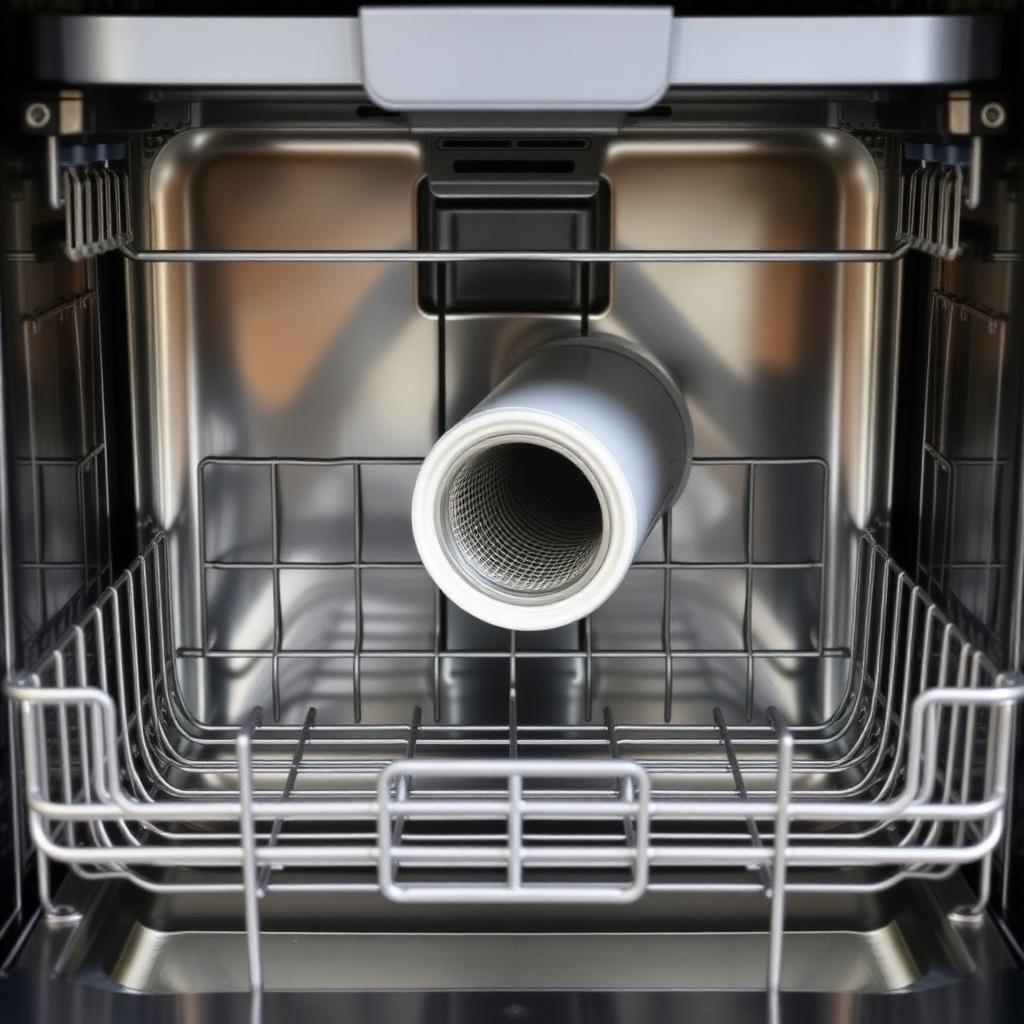
- Look at the floor of the tub, near the base of the lower spray arm. You will see a short cylindrical filter sticking up. Most models also have a flat mesh screen surrounding or sitting beneath it.
Step 2: remove the assembly
Twist the cylindrical filter counter clockwise, usually a quarter turn, and lift it straight up. Lift out the flat mesh screen beneath it. Some Bosch, Miele, and Whirlpool models have a slightly different latch, but the principle is the same: a twist or pinch release, then lift straight up.
Step 3: soak and scrub
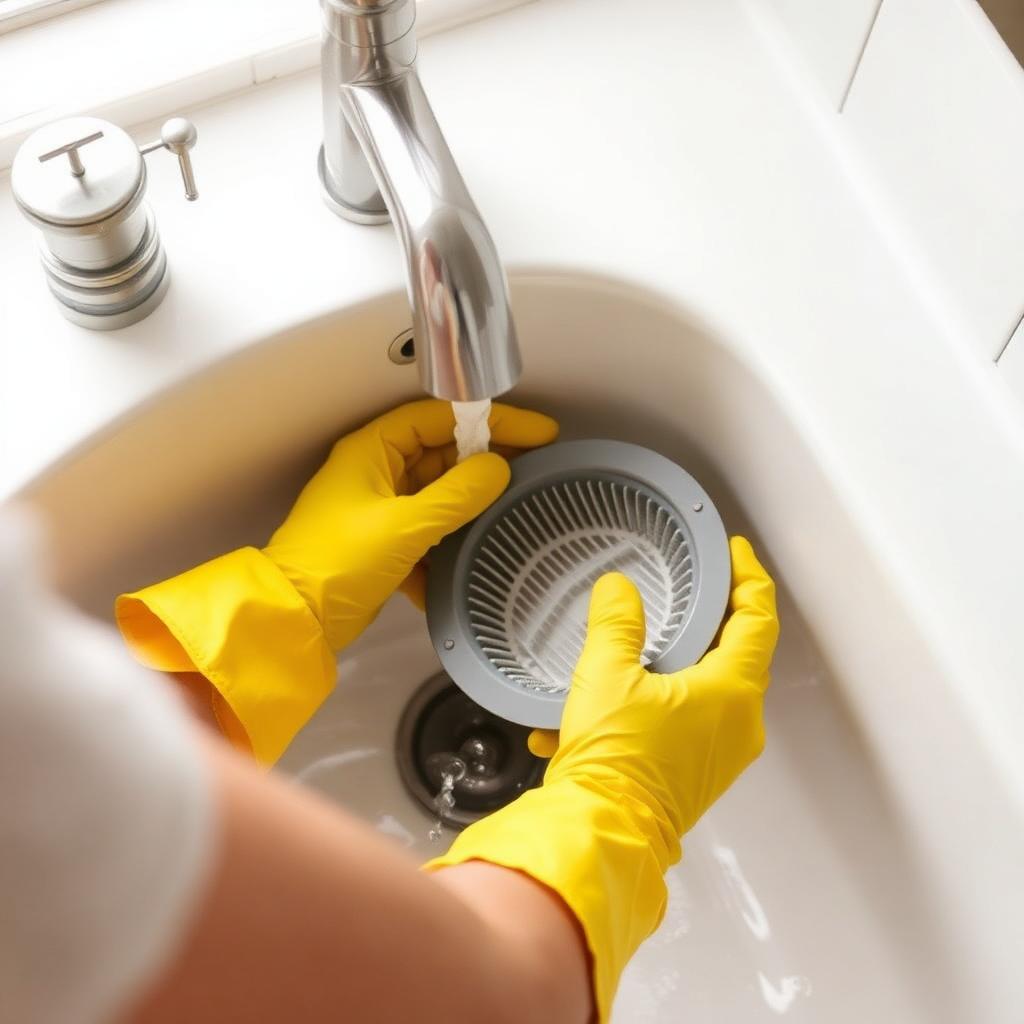
Fill a bowl or stoppered sink with warm water and a generous squeeze of grease cutting dish soap. Drop both filter pieces in and let them soak for 10 minutes. The soap loosens grease, the warm water softens starches.
After the soak, use an old soft bristle toothbrush to scrub the mesh on both sides. Pay attention to the seams where the mesh meets the plastic frame, that is where the worst gunk hides. Never use steel wool or wire brushes, they tear the mesh and the filter loses its filtering ability.
Step 4: deal with stubborn buildup
- White chalky scale: hard water mineral deposits. Soak the filter in plain white vinegar for 15 minutes after the soap scrub.
- Sticky yellow grease layer: usually a sign of a detergent issue or low wash temperature. Use a heavier degreaser and consider running a hotter wash cycle.
- Grey or black spotting: mold or mildew. Disinfect with a dishwasher safe appliance cleaner or a diluted oxygen bleach solution, then rinse thoroughly.
Step 5: re install
Drop the flat mesh screen back into its slot first. It should sit perfectly flush against the floor of the tub with no gaps. Set the cylindrical filter on top, lining up the alignment marks if your model has them, and twist clockwise until you feel it click into place. If it does not click, take it back out and check the seating, a misaligned filter will leak particles into the pump.
The monthly maintenance habit
A monthly filter cleaning is the single highest impact thing you can do for dishwasher performance. Combine it with a hot empty cycle run with a dishwasher cleaner tablet every three months to keep the spray arms and interior tub free of buildup.
Related reading
For more bathroom and kitchen cleaning workflows see how I deep clean tile floor grout.
The takeaway
A cloudy film on dishes is almost never a detergent problem. It is almost always a filter problem. Ten minutes of monthly maintenance solves it, prevents the musty smell, and extends the life of the wash pump by years.
Frequently asked questions
How often should I clean my dishwasher filter?
Once a month for normal household use. Every two weeks if you do not pre rinse dishes or you run heavy greasy loads.
Can I put the filter in the dishwasher?
No. The filter needs to be removed and scrubbed by hand. Running it through a cycle does not actually clean the mesh.
What if my filter is cracked?
Replace it. Cracked filters let food particles into the pump and can damage it. Most replacements are model specific and available directly from the manufacturer.
The signs your filter is overdue
- A musty or sour smell from the dishwasher between cycles.
- White or cloudy film on glassware that does not rinse off.
- Small bits of food redepositing on the upper rack after a normal wash.
- Standing water in the bottom of the tub at the end of a cycle.
- The dishwasher sounding louder than usual during the pump phase.
Any one of those points to either a clogged filter or a partially blocked drain. The filter is the quick fix to check first because it costs nothing.
What to do after a really bad clog
If the mesh comes out caked with grease and food residue, the spray arms are usually due for the same treatment. Lift off the lower spray arm (most twist off without tools), rinse it under hot water, and use a toothpick to clear any clogged spray holes. Then run an empty hot cycle with a cup of white vinegar standing upright in the top rack to flush mineral scale out of the wash circuit.
Front loader versus older models
Older dishwashers from before roughly 2010 often have self cleaning hard food disposers, basically built in grinders that pulverize food and flush it out the drain. Newer machines almost universally use removable filters because they run quieter, use less water, and last longer. The trade off is the manual cleaning step. If your machine is a hybrid (grinder plus filter), still pull and clean the filter on the same monthly schedule.
Why some loads still come out gritty
If you have cleaned the filter and dishes still feel gritty, the next places to check are the spray arm holes and the inlet water valve. Hard water deposits clog spray holes from the inside, restricting the wash spray. A long term fix is installing a salt based water softener or using a rinse aid formulated for hard water on every cycle.