Quick Answer
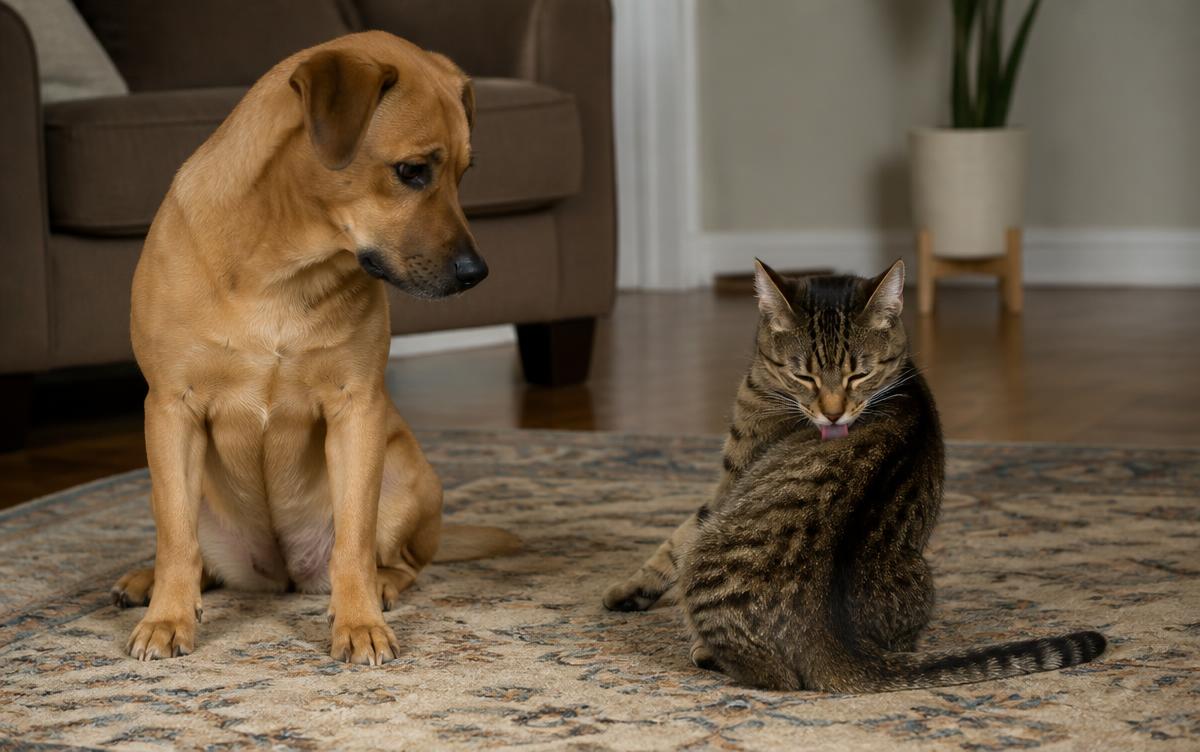
Dogs do not groom themselves like cats. Cats spend 30 to 50 percent of their waking hours self-cleaning using barbed tongues, while dogs perform brief touch-ups (a few minutes at a time) on paws, groin, and any spot where debris is caught. Dogs rely on humans for full baths, nail trims, ear cleaning, and haircuts.
The difference comes down to evolution: cats evolved as solitary stealth hunters that needed to stay completely scent-free, while dogs evolved as pack endurance hunters that often use scent for tracking and group identity.
Why cats groom so much
Cats are ambush predators. Prey animals detect approaching threats primarily by smell and sound. A cat with strong body odor cannot sneak within pouncing distance. So felines evolved:
- A tongue covered in backward-facing keratin barbs (papillae) that pull loose hair and debris out of fur.
- Extreme spinal flexibility that lets them reach every part of their body.
- An instinct to groom constantly, even after brief contact with anything (a human petting, another animal, food).
Self-grooming also spreads sebum (skin oil) across the coat for waterproofing and thermoregulation.
Why dogs groom so little
Wolves and wild dogs evolved as pack endurance hunters. They chased prey over long distances rather than stalking silently, so scent-masking was less important than group scent-mixing. In fact, wild canids often roll in strong scents (carrion, other animal droppings) as a scent-communication behavior to bring information back to the pack.
Domestic dogs kept this loose grooming instinct. Their tongue is smooth (not barbed), they cannot easily reach their own back and head, and they simply don't have the wiring to spend hours self-cleaning.
What "normal" dog self-grooming looks like
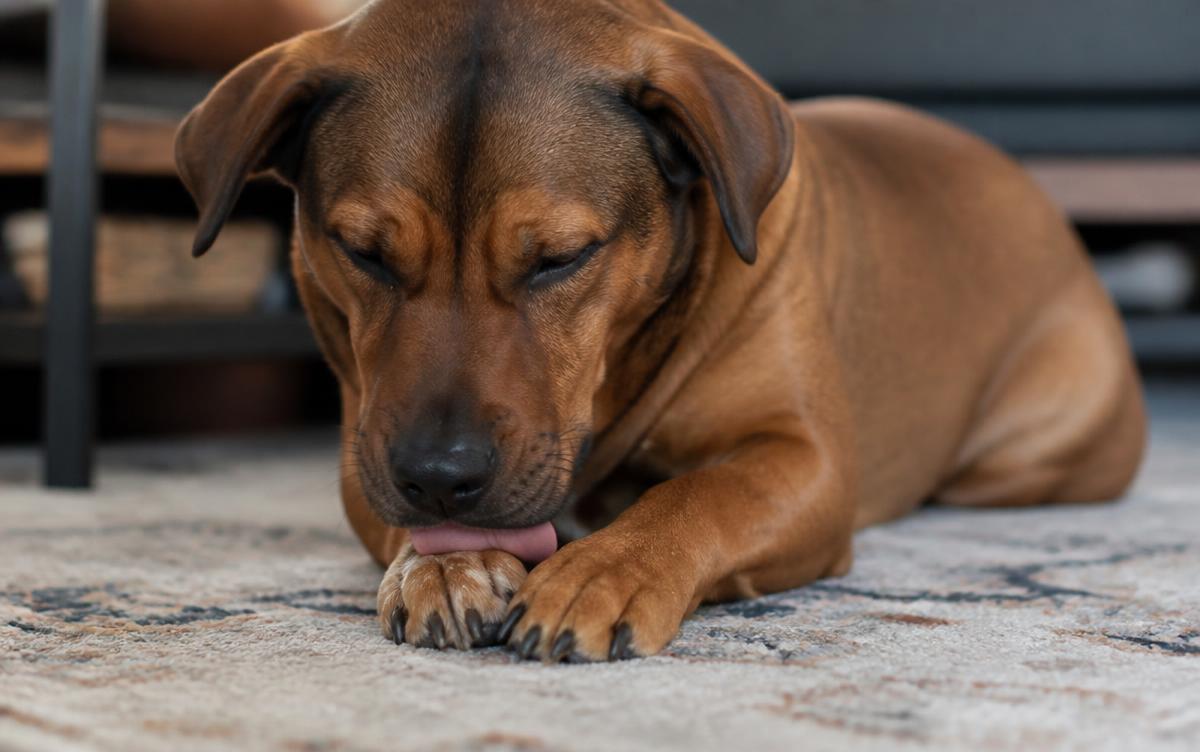
- Paw licking after walks. Clearing grass seeds, salt, mud, and small debris from between the toes.
- Occasional coat nibbling. Using front incisors to pluck out burrs, dried mud, or an itch spot.
- Genital and sanitary licking. Routine daily hygiene.
- Face washing with a wet paw. Some dogs "cat wash" their face; this is charming but uncommon.
- Rolling on grass or carpet. Scratching the back and redistributing skin oils.
Cat vs dog grooming compared
- Time spent daily: Cats 30 to 50 percent of waking hours; dogs a few minutes total.
- Primary tool: Cats use a barbed tongue; dogs use a smooth tongue and front teeth.
- Primary goal: Cats aim for complete scent removal and thermoregulation; dogs clear specific spots of debris or minor irritation.
- Owner support needed: Low for short-haired cats, higher for long-hairs; high across all dog breeds (baths, nails, coat cuts).
- Shedding management: Cats manage most shedding themselves; dogs need weekly brushing to control shedding.
When dog self-grooming signals a problem
Because dogs are naturally light self-groomers, a sudden shift to constant licking or chewing is almost always a medical issue, not a cleaning habit. Watch for these patterns:
- Non-stop paw chewing. Environmental or food allergies causing itchy paws. Look for reddened skin between the toes.
- Licking at the base of the tail. Impacted anal glands, flea bites, or a food allergy hot spot.
- Obsessive joint licking. Arthritis pain or a joint injury the dog is trying to soothe.
- Belly and groin licking that leaves the skin raw. Yeast infection or contact dermatitis.
- Sudden face rubbing on furniture. Ear infection, dental pain, or an eye irritant.
How to support your dog's coat
Since dogs are not built to keep themselves clean, the routine falls to you:
- Brush at least weekly, daily for double coats and doodles.
- Bathe every 4 to 8 weeks with a pH-balanced dog shampoo. Over-bathing strips protective skin oils.
- Wipe paws after every walk to prevent debris licking and allergen buildup.
- Trim nails every 2 to 4 weeks so the quick recedes over time.
- Clean ears monthly, more often for floppy-eared breeds.
Bottom line
Cats are self-cleaning machines; dogs are not. A quick paw lick after a walk is normal. Constant, focused licking is almost always a medical signal worth investigating with your vet.