Quick Answer
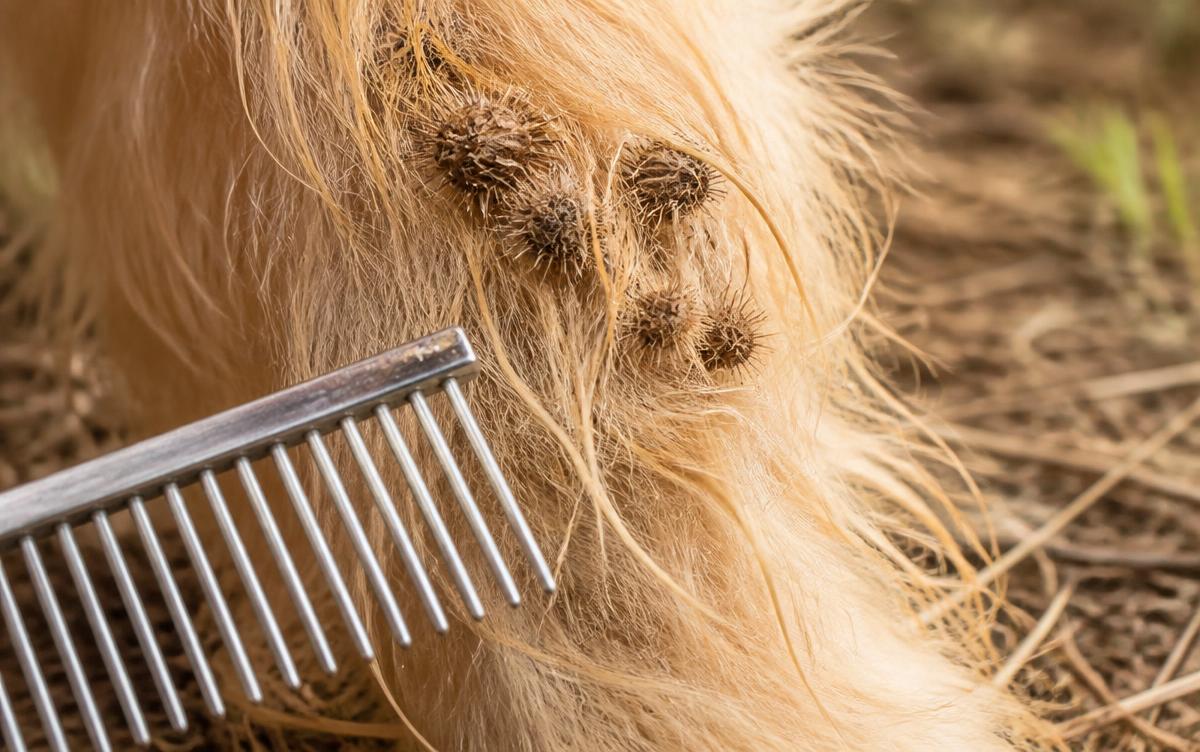
The best way to remove burrs from a dog's coat is to saturate the tangled area with a grooming oil, silicone-free leave-in conditioner, or even plain olive oil, massage the lubricant into the knot with your fingers, then wedge the teeth of a stainless steel wide-tooth comb under the burr and lift it outward. Never yank a dry burr; the hooks are designed to lock into fur and pulling snaps healthy hair while hurting the dog.
Why burrs are so tricky
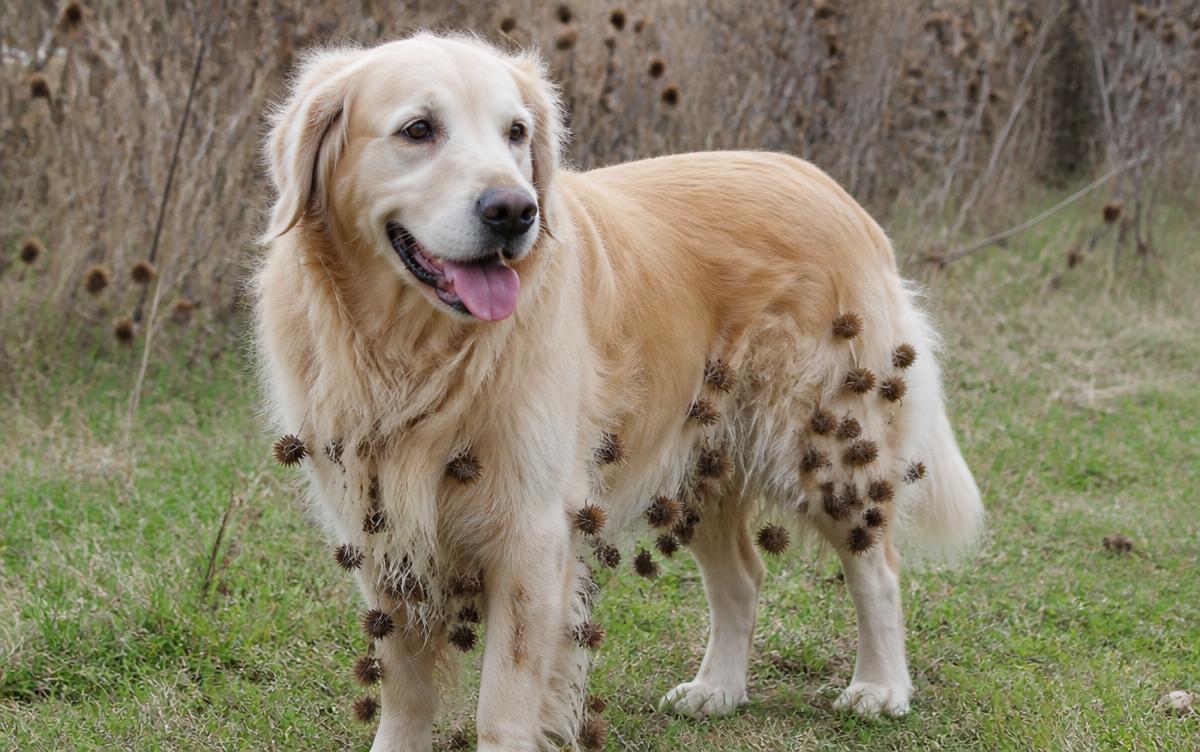
Burrs, stickers, and sandspurs are seed pods built by nature to hitchhike on animals. Each pod carries hundreds of microscopic backward-facing hooks that snag on passing fur, then tighten with every movement. Once embedded, a dog's normal walking, sitting, and scratching wraps the hooks deeper around neighboring hair strands, creating tight painful knots close to the skin.
Dry fur has high surface friction, so the hooks lock in tightly. Introduce lubrication and that friction drops dramatically, letting the pod slide out of the coat without tearing hair.
What not to do
- Do not yank the burr by hand. The hooks are stronger than your dog's hair. You will break healthy strands and hurt the skin.
- Do not use household scissors blindly. The skin underneath is thin and mobile; scissor cuts under a mat are the leading cause of home grooming accidents.
- Do not bathe first. Water tightens the tangle around the burr.
- Do not use a wire slicker to fight it out. Slicker pins wedge deeper and pull on the skin.
What you need
- Grooming oil or plain olive oil. Any high-slip food-safe oil works. Olive oil is fine in a pinch.
- Silicone-free leave-in detangling conditioner. Better than oil if you have it; leaves less residue.
- Stainless steel wide-tooth comb. The main removal tool.
- Fine-tooth mat splitter. For heavy clusters that will not lubricate free.
- Blunt-tip safety scissors. Only used to cut around the burr as a last resort, never blind.
- Mild dog shampoo. To clear the oil after.
Step by step
- Saturate. Apply grooming oil directly to the burr and the surrounding hair. Really coat it; skimping keeps the friction high.
- Massage. Work the oil into the tangle with your fingers for 30 to 60 seconds. Gently flex the knot without pulling on the skin.
- Separate the outer hairs. Hold the base of the hair near the skin between two fingers to absorb tension. Use the wide-tooth comb to tease apart the outer strands around the burr.
- Wedge the comb. Slide the teeth of the comb directly beneath the loosened burr, close to the skin but not touching it. Lift outward rather than upward.
- Cleanse. Wash the area with a mild dog shampoo to clear residual oil so fresh dirt does not stick tomorrow.
When a burr will not budge
Some sandspur clusters or cocklebur balls fuse into a hard structural mat that no lubricant can penetrate. In that case:
- Slide a fine-tooth mat splitter parallel to hair growth to slice the cluster into smaller pieces.
- Comb each piece out separately after lubricating.
- If the mat has fused to the skin, stop. Book the groomer to clipper it off cleanly.
Common friction zones for burrs
- Chest and belly: low-hanging feathering catches everything.
- Leg feathering: especially on Golden Retrievers, Setters, and Spaniels.
- Between the toes: paw pad hair traps sandspurs first.
- Ear feathering: Cocker Spaniels and Border Collies are prime candidates.
- Tail: heavy feathering picks up burrs on tall grass.
Prevention beats extraction
- Comb out feathering immediately after any walk through tall grass or brush.
- Trim leg and belly feathering short during peak burr season (late summer, autumn).
- Consider a lightweight dog jacket over long-coated breeds in burr country.
- Wipe paw pads before letting the dog inside; sandspurs love house carpets.
When to see the vet
If a burr embeds in an ear, an eye, or between toe pads and you cannot lift it easily, do not fight it. Grass awns especially can travel into the skin and cause abscesses; that is a vet visit, not a home job. Any burr wound that bleeds more than a scratch or looks infected in the next day or two also needs a vet.
Bottom line
Burrs are hitchhiker seed pods that lock into dry fur; the fix is lubrication first, then a stainless steel comb wedged underneath, then a wash. Never pull dry, never use scissors blindly, and split heavy clusters with a mat splitter before lifting. Prevention with post-walk comb-outs and seasonal feathering trims will save most of the work.