Quick Answer
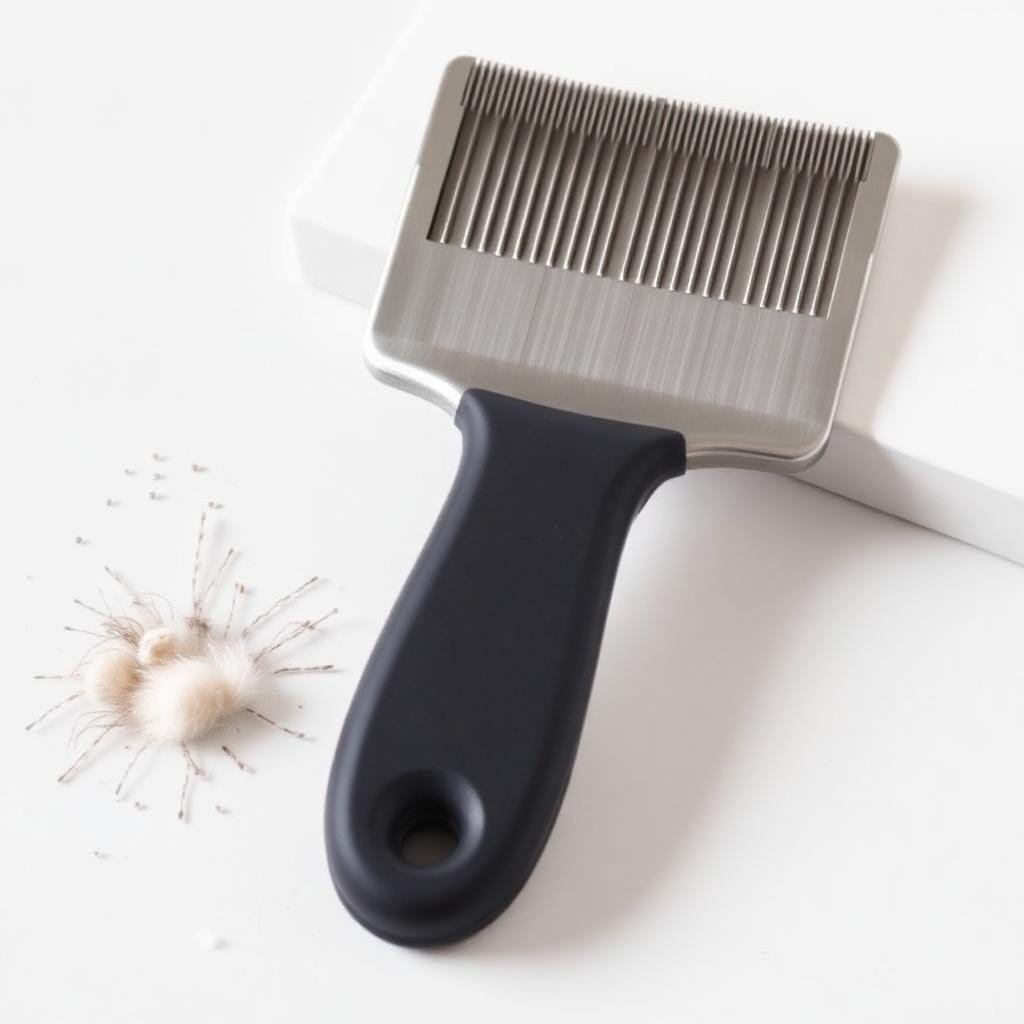
The best undercoat deshedding tool has a curved stainless steel extraction edge with dozens of fine, non-cutting teeth and a spring-loaded ejector button. It pulls loose undercoat out from beneath the guard hairs without cutting the top coat and without scratching the skin.
Deshedding tools do not stop shedding. They move the shed hair from your couch to the trash on your schedule instead of the dog's.
Why a slicker brush leaves the shedding behind
A slicker's fine bent pins are optimized to lift and separate the top coat. They glide over the dense undercoat rather than reaching it. So you brush, you see a small tumbleweed, and the next morning the couch is covered again because 90 percent of the loose undercoat is still there.
A deshedding tool has a completely different edge geometry. The teeth are microscopic and closely spaced, sized to allow live guard hairs to pass through while catching the fine, fuzzy, already-loose undercoat fibers. Every stroke extracts what is falling out today, not what will fall out tomorrow.
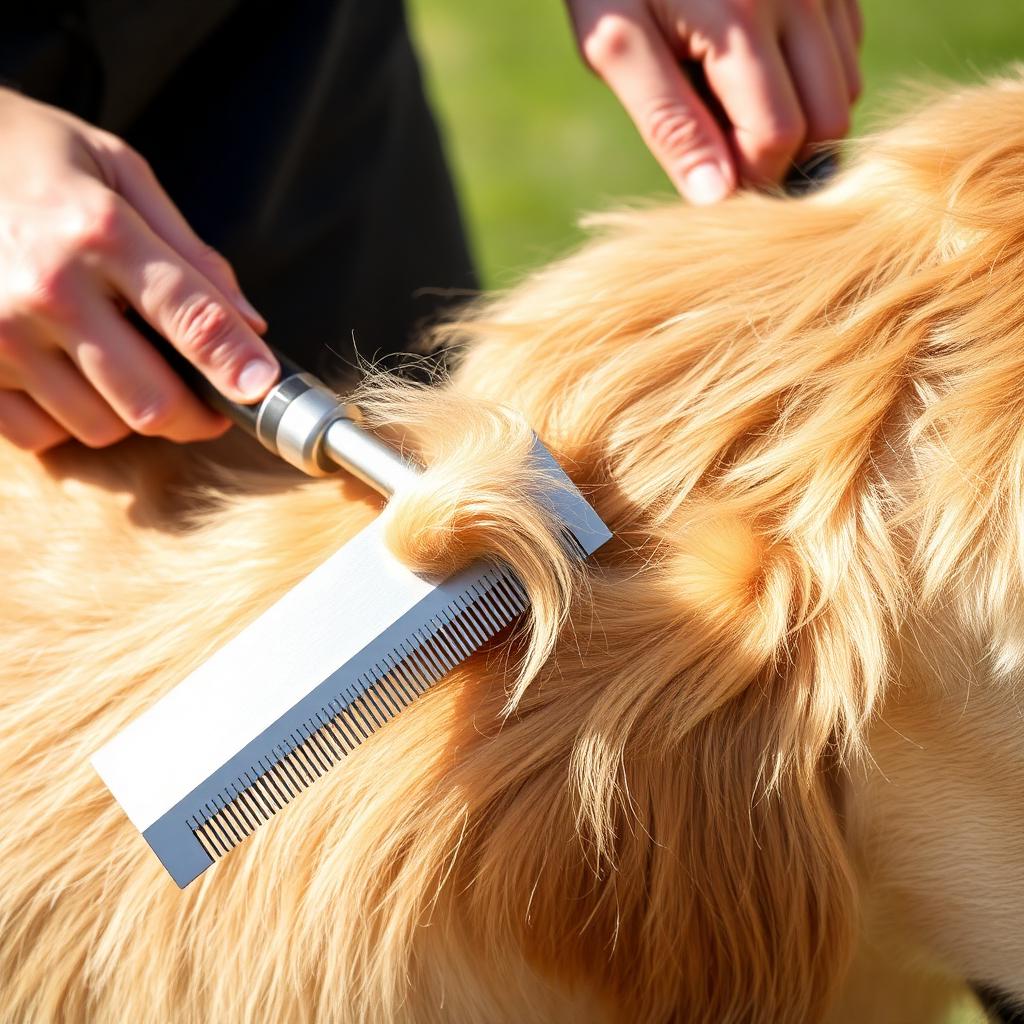
What a good deshedding tool looks like
- Stainless steel extractor edge. Dozens of fine, non-cutting teeth in a slight convex curve.
- Curved edge profile. Follows the body contour on the flanks and back.
- Two to four inch working width. Two inches for small dogs; four for large double coats.
- Spring-loaded ejector button. Drops the caught fur without touching it.
- Rubber-molded handle. The tool wants a firm grip through 15 minutes of pulling.
- Cover or cap for storage. The edge is dull to skin but sharp against another tool.
Step by step: safe deshedding routine
- Bathe and dry the dog first, ideally the day before. Dry hair pulls free; damp hair drags.
- Brush the whole coat with a slicker first. Untangles the top coat so the deshedder reaches the undercoat.
- Work with the direction of the coat. Neck to tail, top to bottom.
- Short strokes; light pressure. The teeth do the work; force scratches skin.
- Two passes per zone maximum. More thins the coat visibly.
- Empty the tool every 30 seconds with the ejector. A packed head just pushes hair around.
- Finish with a fine-tooth comb. Catches the strays and confirms the coat is smooth.
How to fit the tool to your dog
- Golden Retriever, Newfoundland, Bernese: a 4-inch curved-edge tool once a week during shedding seasons.
- Husky, Malamute (heavy blow-out coat): a 3-inch tool three times a week for four weeks in spring and fall.
- German Shepherd: a 3-inch stainless edge; twice a week year-round.
- Short-haired single coat (Beagle, Lab): a rubber curry brush is friendlier than an extractor; you do not have undercoat to reach.
Common mistakes
- Using a deshedder daily. Two to three times a week during shedding season is the cap.
- Pressing hard. The teeth already reach the undercoat; pressure only reaches skin.
- Working against the coat. Cuts and irritates.
- Skipping the slicker step. Deshedder catches on the top-coat tangles.
- Ignoring bare patches or scabs. Never run the tool over broken skin; wait until healed.
Care and edge life
Wipe the edge with alcohol after every session; skin oils dull the teeth. Rinse with warm water once a month, dry immediately, then oil the ejector spring with a drop of light machine oil. The stainless edge itself does not need oil, but a rusted spring will jam. A quality deshedder head lasts 2 to 3 years of double-coat home use.
Bottom line
A curved stainless deshedding tool with a fine-toothed extractor edge and a spring ejector is the tool that actually moves undercoat out. Bathe first, slicker first, short passes with the coat, two passes per zone. It does not stop shedding; it puts the shed hair in the bin on your schedule. Your couch will notice within a week.