Quick Answer
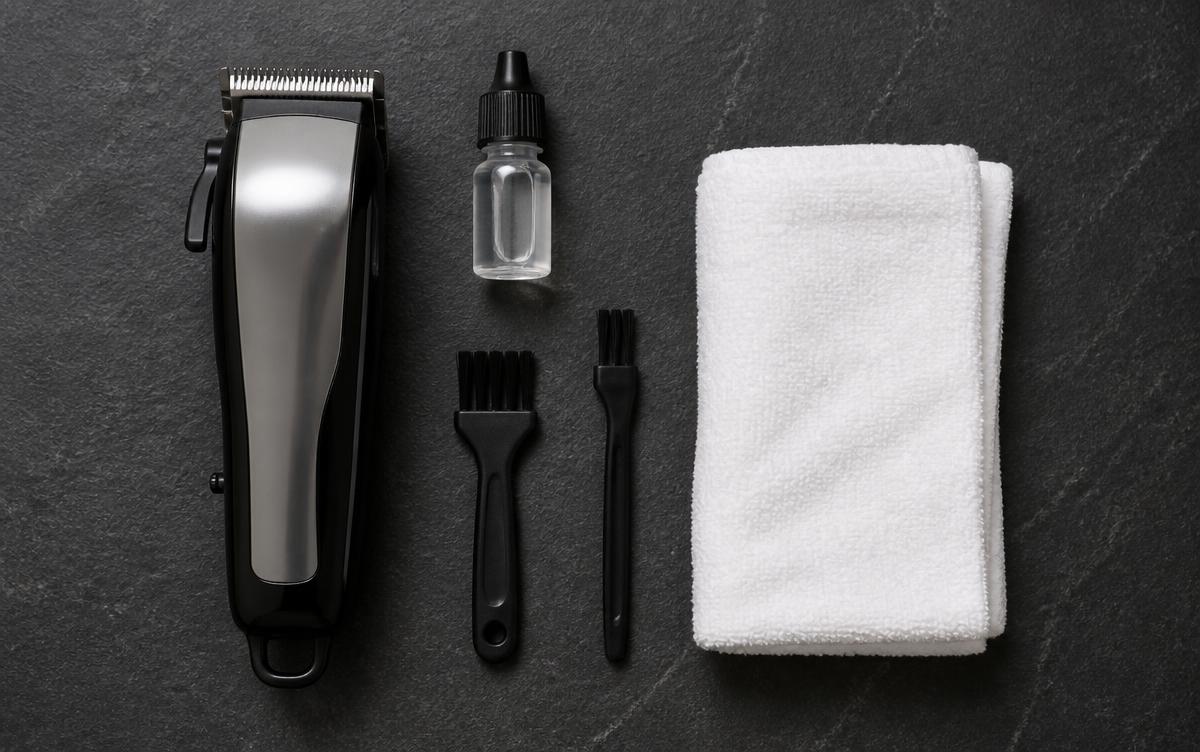
The best trimmer cleaning brush and oil kit uses a low-viscosity, highly refined mineral oil with a precise dropper tip, paired with a stiff nylon detail brush. Andis Clipper Oil (4 fl oz), Wahl Premium Blade Oil, and the Oster Blade Care Plus kit are the three picks barbers reorder for years.
Skip household oils like WD-40, olive oil, or 3-in-1. They are far too thick for high-speed clipper blades and leave sticky residue that attracts hair fibers, gums up the motor, and dulls the cutting edge in weeks.
Why blade lubrication matters more than the clipper itself
Electric clippers spin two flat metal blades rubbing against each other at up to 7,000 strokes per minute. Every stroke drags trapped hair fragments, skin oil, and dander across the cutting edge. Without a thin lubricating film between the blades, friction converts to heat, the cutting teeth wear at the tips, and the trimmer starts pulling and pinching hair instead of slicing it.
A three-dollar bottle of proper clipper oil is what makes a hundred-dollar clipper last five years instead of eight months.
The three specs that separate great oil from bad
1. Low-viscosity refined mineral base
Clipper oil is a highly refined food-grade mineral oil with a viscosity roughly matching sewing machine oil (ISO VG 10 to 22). It penetrates the tight gap between blades quickly, coats without dripping, and leaves no gummy residue when it evaporates.
Vegetable oils oxidize and turn sticky within days. Cooking oils harbor bacteria. Motor oils contain detergents that attack blade coatings. Only refined mineral clipper oil is safe.
2. Precision dropper nozzle
The bottle should have a small twist-off dropper tip so you can place a single drop on the blade corner without flooding. Wide-mouth bottles dump too much oil, which drips inside the motor housing and traps hair.
3. Rust and heat protection
Good clipper oil forms a thin protective film that prevents oxidation on carbon steel blades and helps dissipate heat during long sessions.
The brush half of the kit
- Stiff wide nylon brush: sweeps large hair clumps off the blade teeth and out of the housing. Boar bristle is too soft for this job.
- Narrow detail brush: reaches into the motor track and between blade teeth where the wide brush cannot fit.
- Avoid metal brushes. They score the blade coating.
The three-minute maintenance routine
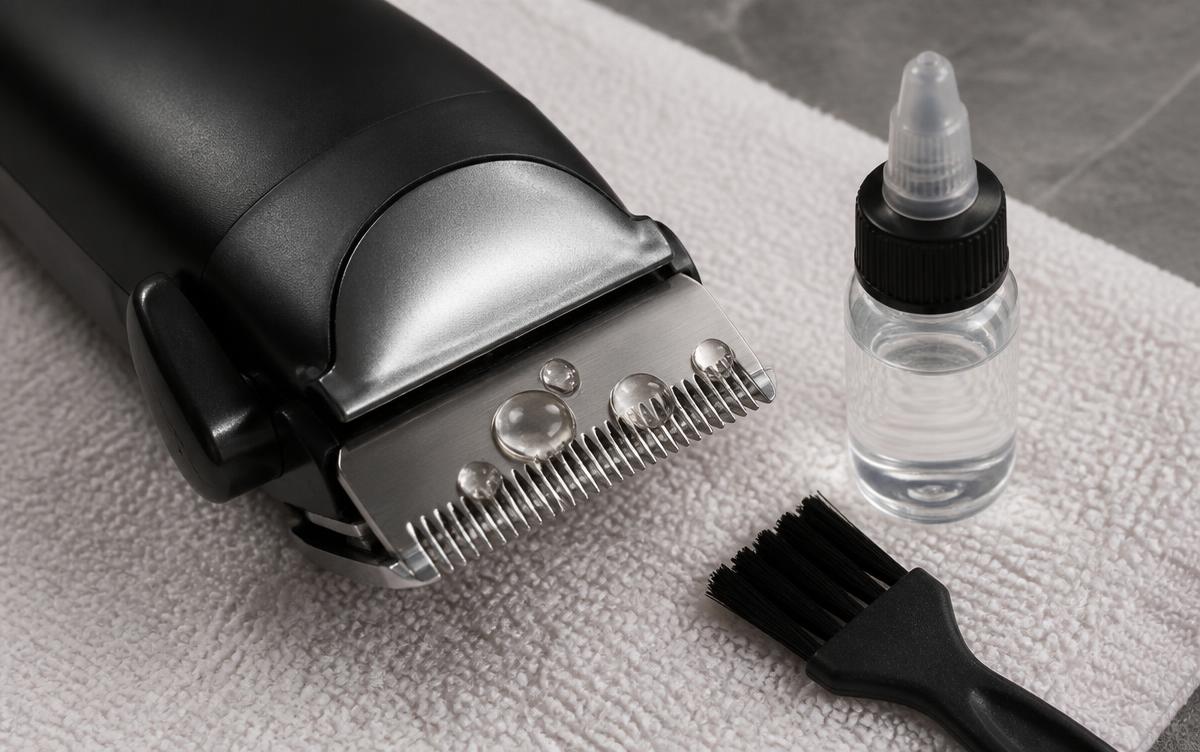
- Power off and brush. Use the wide brush to sweep away loose hair from the blade teeth and housing. Do not blow into the housing; moisture from your breath corrodes the internal contacts.
- Three drops of oil. One on the left corner, one on the center, one on the right corner of the cutting edge. Add a fourth drop into the exposed motor track if you can see it.
- Run for 10 to 15 seconds. The high-speed blade movement distributes the oil evenly across all running surfaces.
- Wipe the excess. A dry microfiber leaves the film in place but removes surplus oil that would otherwise attract hair.
- Repeat every three to four uses, or immediately if the blade sounds louder or feels warmer than usual.
Bonus: five-in-one blade spray
Premium kits often include an aerosol blade coolant (Andis Blade Care Plus, Oster Cool Care) that acts as a disinfectant, coolant, cleaner, light lubricant, and rust preventative in a single spray. It is not a full replacement for proper oil but is invaluable for barbershops running multiple clients back-to-back.
Common mistakes
- Using cooking oil "just this once." Once is enough to gum up the motor track permanently.
- Flooding the blade. Excess oil drips into the housing and traps hair, creating a paste that seizes the drive gear.
- Skipping the wipe. Leaving a thick layer attracts hair and dust between sessions.
- Storing the trimmer with hair on the blade. Trapped hair holds moisture against the steel and starts pitting rust within a month.
Bottom line
A small bottle of refined mineral clipper oil with a dropper tip, a stiff nylon detail brush, and an optional aerosol blade spray is all you need. Three drops after every three to four uses is what makes a good trimmer feel like new for years.