Quick Answer
The best shaving cream for sensitive skin is a dense, low-foaming traditional cream built on a potassium stearate soap base with high glycerin, plus soothing allantoin and bisabolol. It cushions the blade, hydrates the whiskers, and leaves the barrier intact instead of stripping it.
Aerosol gels loaded with sodium lauryl sulfate and isobutane propellants are the opposite: fluffy, fast, and drying. Sensitive skin needs slip and moisture, not foam theater.
Why the blade itself is only half the problem
Every shaving pass drags a sharp edge across the stratum corneum. Even a well maintained blade removes a microscopic layer of dead skin and natural lipids alongside the whiskers. If the skin was dry, or the cushion was thin, the blade grabs live skin instead of gliding.
That is where razor burn, sting, redness, and small bumps come from. The lather is the buffer between steel and dermis, and a weak lather is a broken buffer.
What "sensitive skin" actually means at the shave
Sensitive skin has a compromised barrier: less ceramide, less sebum, faster water loss. Detergent foams pull what little lipid remains, and any menthol or alcohol left on the surface stings for hours.
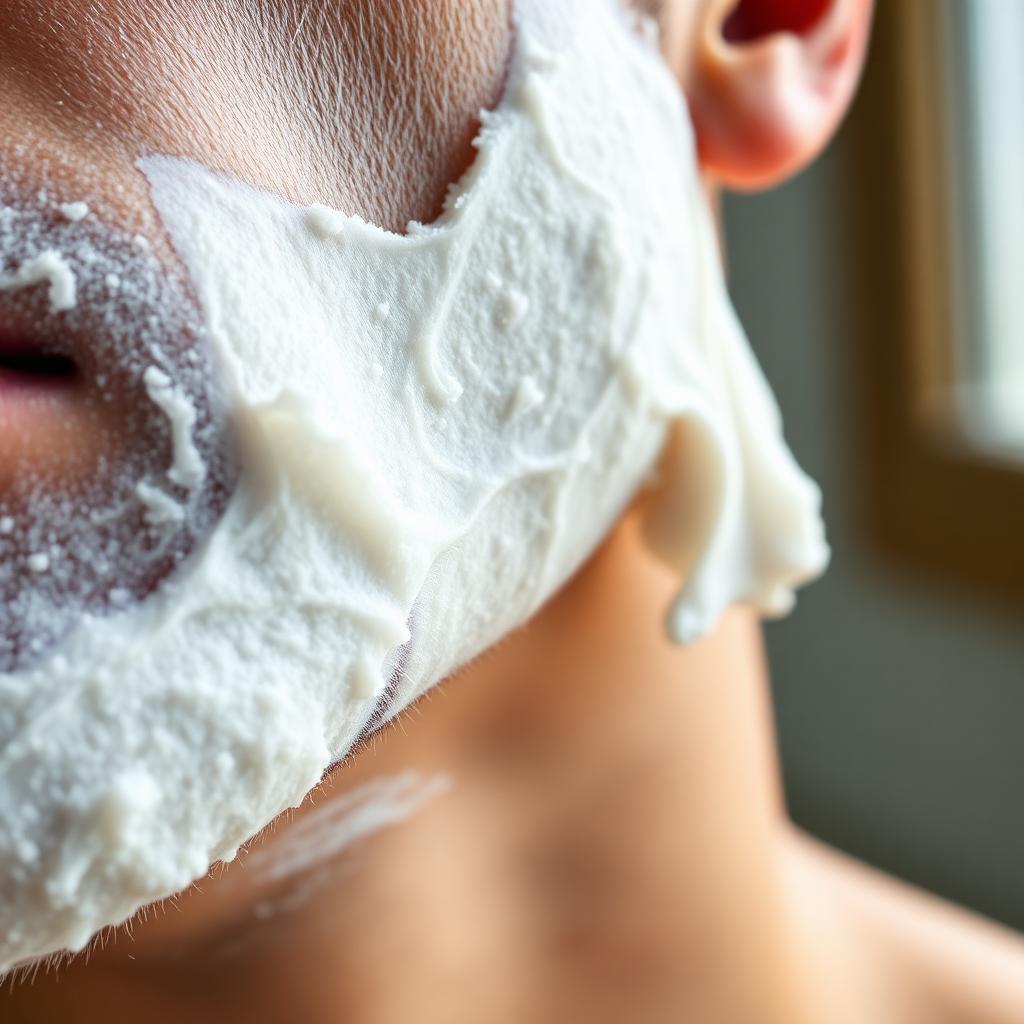
A cream built for sensitive skin does three quiet things: it holds water on the whiskers, it lays down a slick film so the blade slides, and it leaves calming compounds behind after the rinse.
The ingredients that matter
- Vegetable glycerin. Humectant. Pulls water into the whisker so the blade cuts, not tears.
- Potassium stearate soap base. Dense, wet lather. No SLS drying feel.
- Allantoin and bisabolol. Plant-derived calmers that quiet redness on contact.
- Shea butter or lanolin. A thin lipid film that protects the barrier through the pass.
- Aloe vera and green tea extract. Antioxidants that help the skin settle after the rinse.
What to avoid on a sensitive face
- Aerosol propellants (isobutane, propane). Dry the skin as they evaporate.
- Sodium lauryl sulfate (SLS). Harsh detergent that strips lipid.
- Denatured alcohol high in the ingredient list. Stings and dehydrates.
- Menthol as a headline "cooling" ingredient. Feels great for 20 seconds, irritates for hours on reactive skin.
- Heavy synthetic fragrance. The most common trigger for perioral rash after shaving.
Step by step: a sensitive-skin shave
- Warm compress, 2 minutes. Damp microfiber towel pressed to the face. Softens whiskers, opens pores.
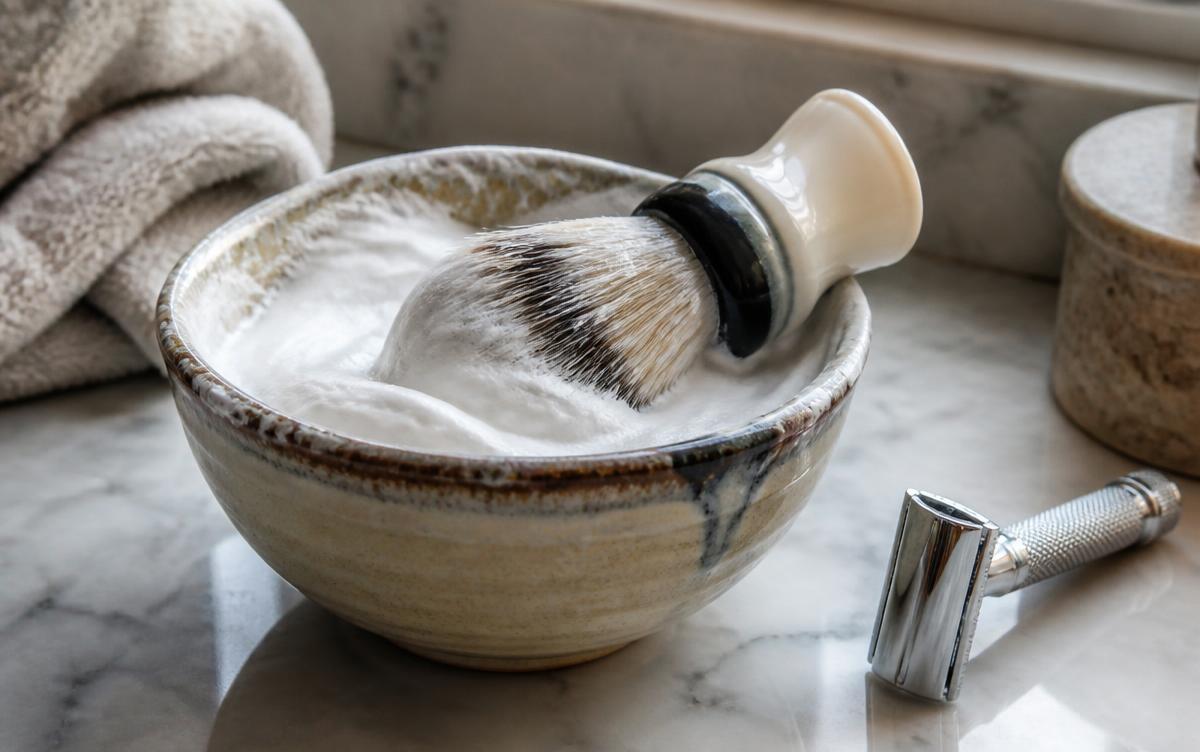
- Nickel-sized dab. Load a wet brush or your fingers, work into a dense cushion on wet skin.
- With the grain, first pass. One short stroke, rinse the blade, next stroke. No pressure.
- Re-lather for any second pass. Never shave over bare skin.
- Cold water rinse. Closes the surface and clears soap residue.
- Alcohol-free balm. Aloe or witch hazel base to seal the barrier.
Cream, soap, or gel: what actually suits sensitive skin
- Traditional soft cream in a tube or tub. Best all-round pick. Dense, wet, easy to spread.
- Hard shaving soap. Excellent slip once you can whip a lather, steeper learning curve.
- Non-foaming clear shave gel. Good for beginners because you can see what you are cutting.
- Aerosol foam. Convenient, drying, avoid if the skin is reactive.
How often to shave when your skin flares
- Every second or third day if you are prone to razor burn. Gives the barrier time to rebuild.
- Never shave over an active flare. Trim with a guarded electric instead until the skin settles.
- Change the blade sooner than you think. A dull blade drags; a fresh blade slices.
Common mistakes
- Applying cream on dry skin. The cushion never forms.
- Pressing the razor to "get closer." A dense lather with a light hand gets closer than pressure ever will.
- Going against the grain on pass one. Save that for pass three if at all.
- Following with an alcohol splash. Feels traditional, wrecks a reactive barrier.
- Ignoring the water. Hard tap water leaves a mineral film that itches; a warm rinse and pat dry solves it.
Bottom line
Pick a dense, low-foaming cream built on potassium stearate with real glycerin, allantoin, and bisabolol. Skip aerosols, skip SLS, skip menthol. Warm the face, build a wet cushion, one short stroke at a time with the grain, cold rinse, alcohol-free balm. Sensitive skin does not need a special razor as much as it needs a properly built lather.