Quick Answer
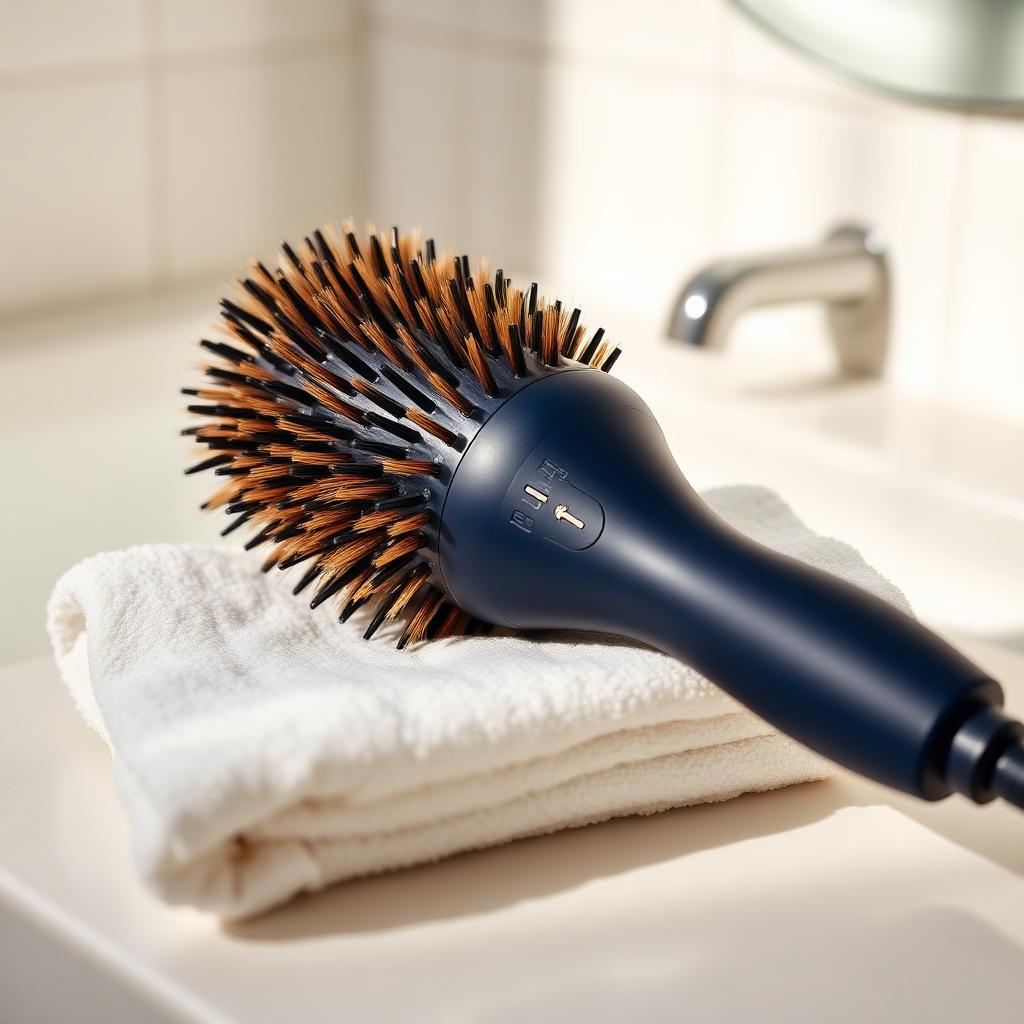
The best rotating hot air styling brush uses a self-rotating oval or round barrel with mixed boar and nylon bristles, an ionic ceramic tube, three heat settings, and dual-direction rotation. It replaces the round brush plus dryer combo, so you can dry and style in one motion at home.
A hot air brush is not a curling iron. It builds a soft bouncy blowout, adds volume at the root, and turns limp hair into salon-shaped hair in under 15 minutes.
Why a hot air brush works so well at home
The classic salon blowout uses two hands: one holds the dryer, one holds a round brush, and the brush provides tension while the airflow does the drying. Almost nobody can coordinate that on themselves. A rotating hot air brush combines both. Airflow comes through the bristles, and the barrel spins to create the tension.
The spin direction matters. Alternate the rotation on each section so the finish looks natural, not uniformly curled to one side. The oval-shaped brushes are gentler on fine hair; round barrels build more volume for thick hair.
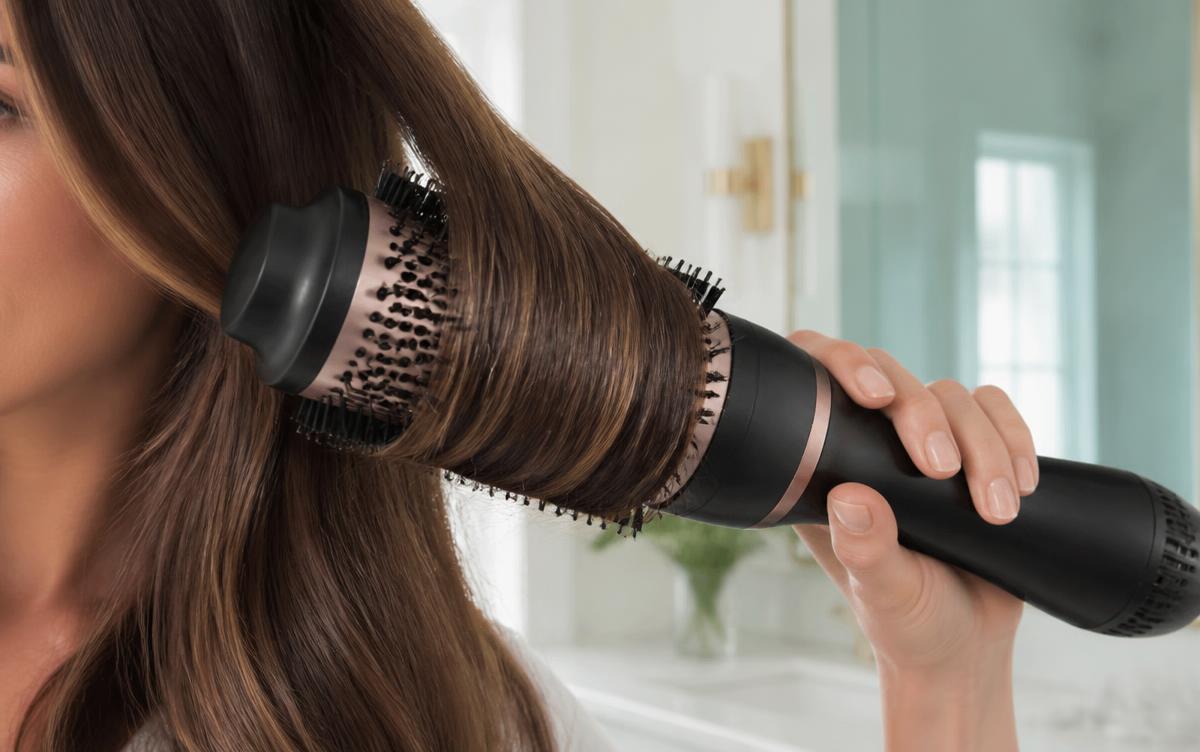
What a good hot air brush looks like
- Self-rotating barrel. Not just a heated brush; the barrel must spin under its own motor.
- Left and right rotation. A single-direction brush produces a uniform mannequin look.
- Ionic ceramic tube. Even heat and negative ions for shine.
- Mixed boar and nylon bristles. Boar smooths; nylon grips the section during the spin.
- Three heats and two speeds. Low for fine hair; high for thick.
- Cool shot. Locks the shape at the end of each section.
Step by step: a real blowout
- Rough dry hair to 80 percent damp. Bone-dry hair will not shape; wet hair steam-cooks.
- Apply a mousse or blow-dry cream. Fine hair: mousse for lift. Thick: cream for smoothness.
- Section the hair into four zones. Nape first, top last.
- Feed a two-inch section onto the brush at the root. Rotate to wind the section around the barrel.
- Move slowly down the shaft. Let the spin pull; do not force.
- Reverse direction on the next section. Alternate lift and direction so the finish is not stiff.
- Cool-shot the ends for 3 seconds. Locks the bend.
- Finish with a light oil or shine spray at the mid-length.
How to match the brush to your hair
- Fine, straight hair with no volume: oval 2 inch barrel, medium heat, high speed, spin at the root.
- Medium hair, wants bounce: round 1.5 inch barrel, medium heat, alternate rotation.
- Thick coarse hair: round 2 inch barrel, high heat, low speed so the section actually stays on the barrel.
- Very short hair (chin length or shorter): smaller 1 inch barrel; larger heads catch the ear.
Common mistakes
- Starting on soaking wet hair. The motor stalls and the section drops off the barrel.
- Only spinning one direction. Uniform blowouts read as fake.
- Moving too fast. Not enough contact time to set the bend; the wave falls out before you leave the bathroom.
- Skipping the cool shot. Every bit of shape you built collapses inside an hour.
- Never cleaning the bristles. Lint and product build-up choke the airflow.
Care and product life
Every two weeks pull the shed hair out of the bristles with a brush cleaner comb. Once a month wipe the barrel with a barely damp microfiber cloth while the tool is off and fully cold. Check the rear air intake for lint; a clogged intake makes the motor run hot and shortens its life. A quality rotating hot air brush lasts 3 to 5 years of daily use.
Bottom line
Rotating barrel, mixed bristles, ionic ceramic, dual-direction spin, cool shot. Rough-dry, section, spin, alternate. Three sessions in and you will stop booking blowouts you used to schedule twice a week.