Quick Answer
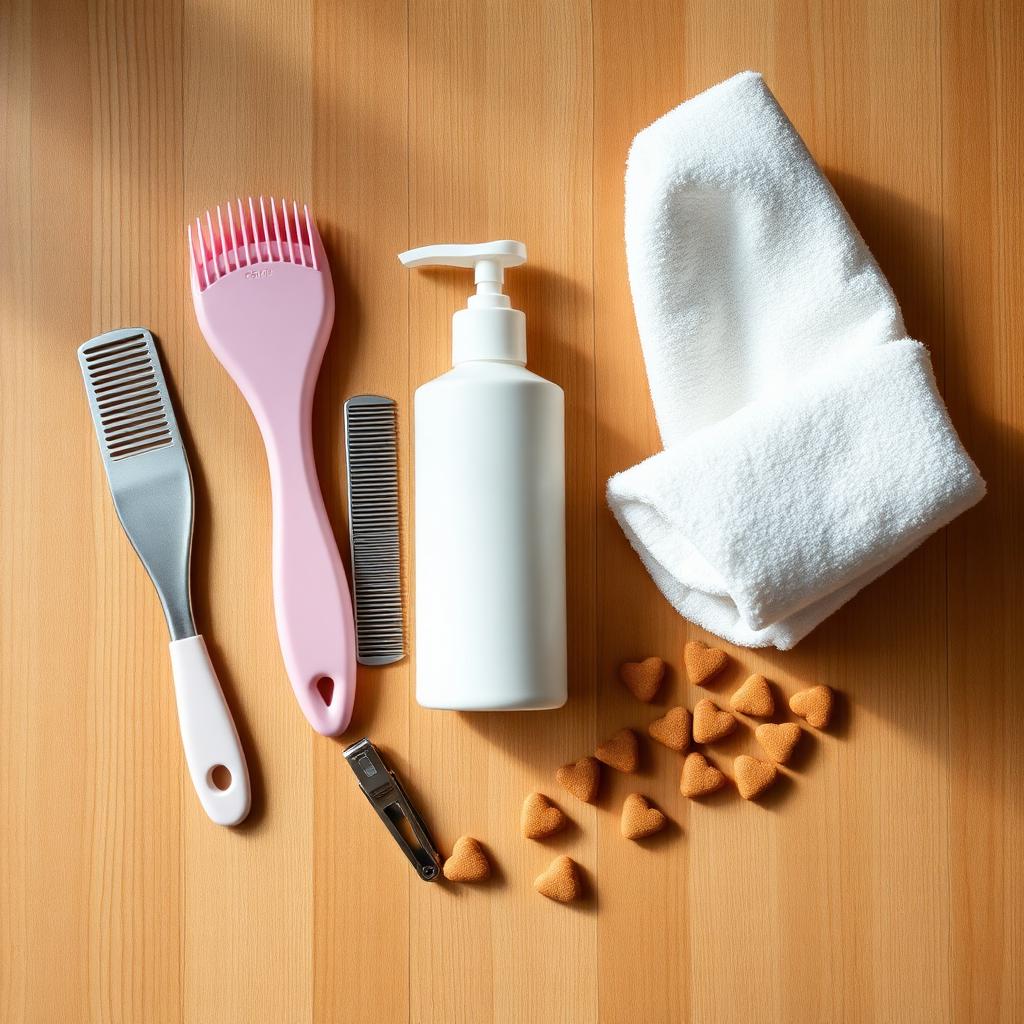
The best puppy first-groom kit is a soft-pin puppy slicker brush, a dual-length stainless steel comb, a tearless pH-balanced puppy shampoo, a safety-guarded nail clipper or gentle electric nail grinder, and a stack of high-value treats. The goal in the first month is not a haircut; it is teaching the puppy that grooming is a normal, safe, treat-rich activity.
Why the first month sets the pattern
Puppies form lasting associations with new experiences between 3 and 16 weeks. A puppy who has been handled gently, brushed briefly, and paw-touched daily during that window will stand calmly at a professional grooming salon for the rest of their life. A puppy who is thrown into a full salon session at 16 weeks with clippers, dryers, and strangers can develop grooming anxiety that lasts a decade.
Home grooming during the first month is desensitization first, styling much later.
What actually goes in the kit
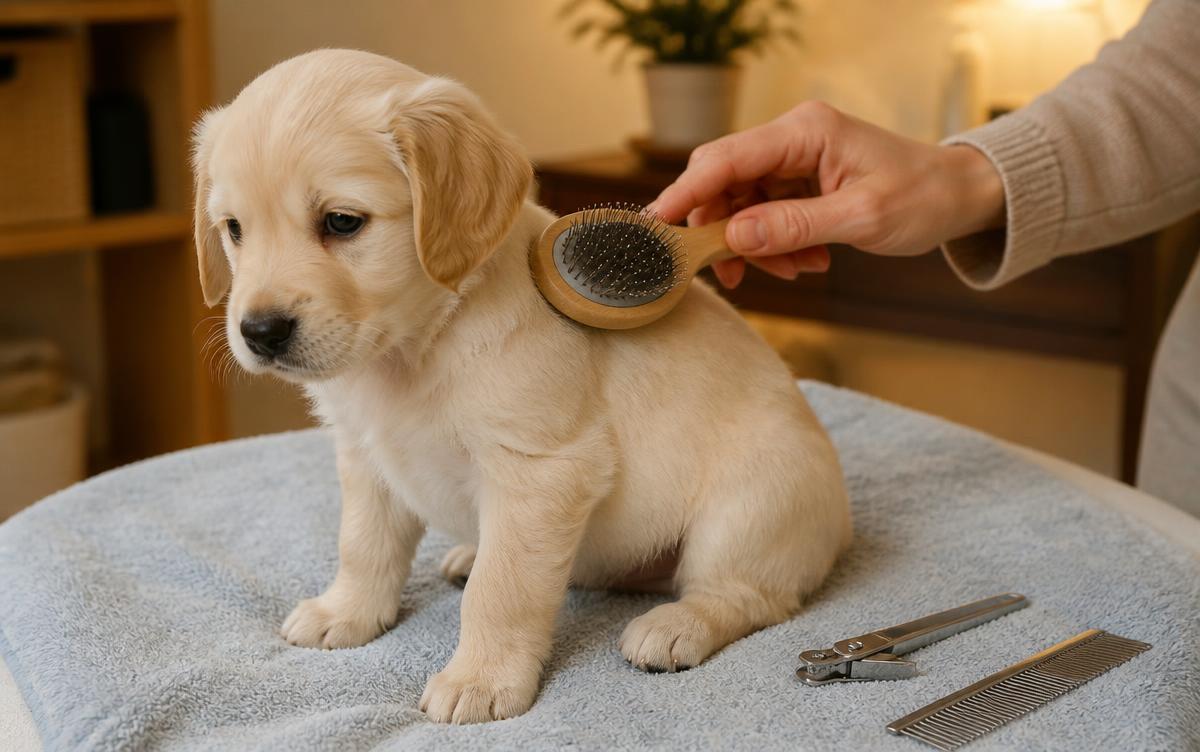
- Soft-pin puppy slicker brush. Flexible pins with cushioned tips, not stiff adult pins. Removes surface dust and small tangles without scratching.
- Dual-length stainless steel comb. Wide teeth for the body, fine teeth for feathering and behind ears. Also a great truth-teller after brushing.
- Tearless, pH-balanced puppy shampoo. Sulfate-free, fragrance-light, and gentle enough for the face.
- Guillotine or scissor nail clipper with safety guard. Safety guard limits how much nail passes through at once, reducing quicking risk on tiny puppy nails.
- Quiet electric nail grinder (optional). A quieter model helps introduce the sound of grooming tools.
- Blunt-tip safety scissors. For pad hair and around the eye area.
- Non-slip mat. Set the traction habit from week one.
- Small high-value training treats. Not kibble. Something the puppy loves.
What is not in the kit yet
- Electric clippers. Save those for after the puppy is calm about brushes and dryers.
- High-velocity dryers. Too loud for a first-groom kit; a warm room and a microfiber towel is enough.
- Adult-strength shampoo. Skin is still developing.
- Metal thinning shears. Save for after the coat texture stabilizes at 6 to 9 months.
Step by step: the desensitization protocol
- Week 1: handling. Every day, touch each paw, look inside each ear, lift each lip, and stroke down the tail. Reward each touch with a treat. No tools yet.
- Week 2: tool smell. Place brush, comb, clipper, and grinder on the floor next to the puppy during play. Let them sniff. Reward interest.
- Week 3: gentle stroke. Touch the flat side of the brush against the shoulder for 5 seconds and treat. Build up to short brushing passes down the back.
- Week 4: sound introduction. Turn on the electric nail grinder or an electric toothbrush in the next room. Reward calm behavior. Move closer each day.
- Week 5+: first bath. Lukewarm water, tearless shampoo, short session, big treat at the end. Air dry in a warm room or a low-heat dryer at a distance.
- Week 6+: first nail trim. One paw only. Take the tip off two nails, treat, stop. Build up to a full paw over a week.
Rules for every session
- Short. 3 to 5 minutes at first. Never 30.
- Positive end. Stop before the puppy is done, not after. End on success.
- Never punish. A puppy who wiggles is not being naughty; they are learning.
- Consistent time and place. Same corner, same mat, same treats. Predictability reduces fear.
- Match the tool to the coat. Doodle coats need line brushing early; smooth coats need almost none.
Coat-specific first-month tips
- Curly and wavy coats (Poodle, Doodle, Bichon). Line-brush a small section daily. If you skip it, the puppy coat will pelt at 6 to 9 months during the coat change and require a shave-down.
- Double coats (Husky, Golden, Aussie). Weekly light brushing, no undercoat rake yet; the adult coat has not come in.
- Silky coats (Yorkie, Maltese). Daily comb-through with detangler mist. Trim eye-area hair with blunt-tip scissors as needed.
- Smooth coats (Boxer, Beagle). Weekly wipe with a grooming mitt is enough.
- Wire coats (Terriers, Schnauzer). Book a hand-stripping session at a groomer around 5 to 6 months; do not clip the wire coat at home.
When to book the first professional groom
For coats that need trimming (Poodle, Doodle, Cocker, Schnauzer, Shih Tzu), book a puppy introduction appointment around 12 to 16 weeks. Look for a groomer who offers a short, treat-heavy "first visit" that focuses on desensitization rather than a full haircut. That single positive first visit is worth years of easy grooming later.
Common mistakes
- Buying a full adult tool kit for an 8-week-old puppy and starting with clippers on day one.
- Bathing weekly for cuteness. Over-bathing dries developing skin.
- Skipping paw handling. The puppy who has never had their paws touched will fight every nail trim for life.
- Turning on a high-velocity dryer at the first bath. Introduce dryers from a distance, over weeks.
- Punishing wiggling. Wiggling is normal; short sessions and treats are the answer.
Bottom line
The best puppy first-groom kit is a small set of gentle tools (soft-pin slicker, stainless comb, tearless shampoo, safety nail clipper) plus a mountain of small high-value treats. Spend the first month teaching trust, not styling. A puppy who has been handled, brushed briefly, and paw-touched every day will grow into a dog who stands calmly for the rest of their grooming life.