Quick Answer
The best odor-neutralizing dog shampoo uses zinc ricinoleate and active enzyme complexes to break down odor molecules chemically, not synthetic perfume that masks smells for a few hours. Look for a formula that also includes colloidal oatmeal, baking soda, and a recommended 5 to 10 minute contact time on the coat before rinsing.
Why cheap shampoos fail on stubborn odors
Most drugstore dog shampoos are basic surfactant blends dosed heavily with synthetic fragrance. They clean surface dirt fine, but the underlying odor causing compounds (sulfurs, ammonias, and volatile fatty acids from bacteria, skunk oil, or decaying organic matter) remain in and on the coat. Within a few hours the perfume fades and the sour smell returns.
True odor elimination requires ingredients that bind chemically to those molecules and neutralize them, not cover them up.
The chemistry that actually works
- Zinc ricinoleate. A zinc salt derived from castor oil that binds volatile sulfur and ammonia molecules on contact. It literally traps odor molecules rather than perfuming over them.
- Active enzyme complexes. Specialized bacterial enzymes (proteases, lipases) that break down organic proteins, fats, and oils. Excellent on skunk oil, animal waste, and rolled-in carrion.
- Colloidal oatmeal. Absorbs surface odors while soothing skin. Fine-ground so it stays suspended in the shampoo instead of settling.
- Baking soda (sodium bicarbonate). Balances skin pH and provides light additional odor absorption.
- Gentle plant-derived surfactants. Coco-glucoside or decyl glucoside; strip less oil than SLS.
What to avoid
- Heavy synthetic perfume as the lead marketing claim. Perfume does not neutralize; it layers over.
- Sulfates (SLS, SLES) as the top surfactant. Strip natural oil, dry the skin, and often make odor worse over time by disrupting the skin barrier.
- Parabens. Increasingly avoided in premium pet care.
- Formaldehyde-releasing preservatives. Rare but still turn up in cheap imports.
Common dog odor sources and what to expect
- Wet dog smell. Bacteria and yeast on the coat produce volatile organic compounds when wet. Regular baths with an enzyme shampoo control it.
- Rolled-in carrion or waste. Enzymes break down animal fat and protein directly. Two washes are usually enough.
- Skunk spray. Thiol compounds. Any commercial enzyme shampoo helps, but a classic peroxide-baking soda-dish soap wash within 24 hours is more effective. Follow with an enzyme rinse.
- Yeasty ear or paw smell. Points to actual infection or overgrowth; needs a vet visit, not just a bath.
- Anal gland smell. Points to impacted or leaking glands; ask the groomer or vet to express and check.
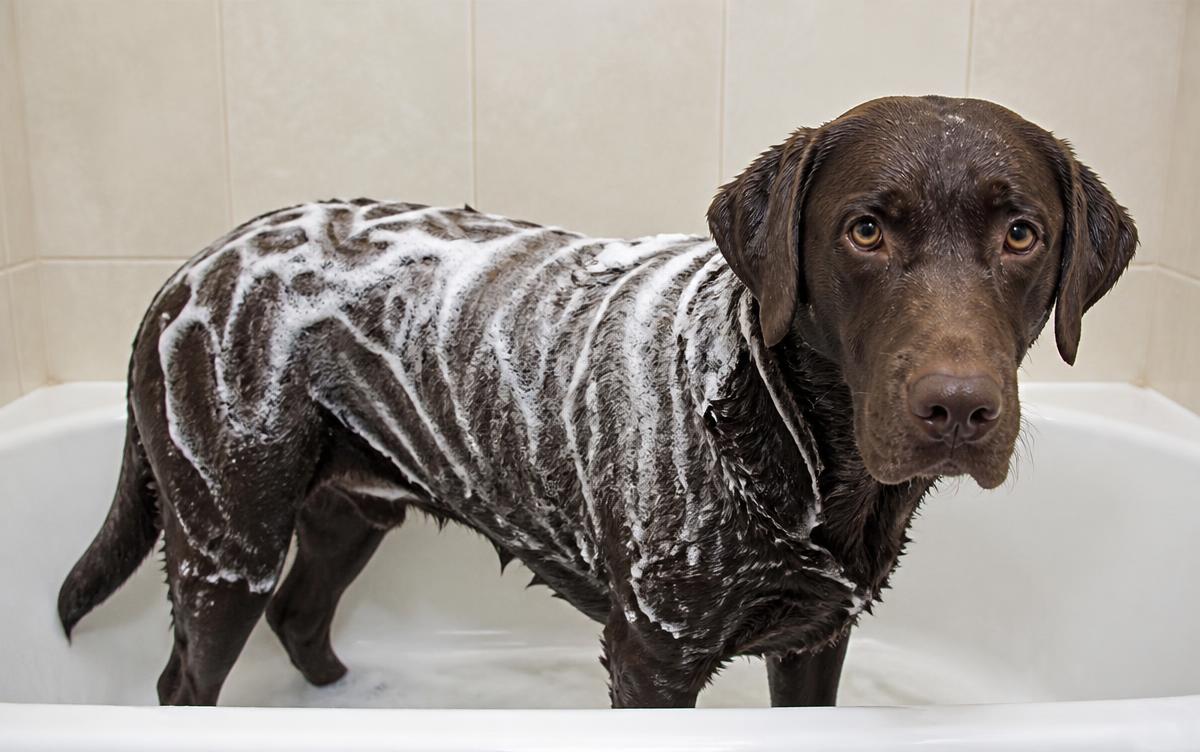
How to use an enzyme shampoo correctly
- Brush out the coat dry. Bathing over a mat locks in dirt and odor both.
- Wet thoroughly with lukewarm water. Take a minute; the water must reach the skin under the guard coat.
- Dilute according to label instructions. Most concentrated enzyme shampoos work best at 1 part shampoo to 3 to 8 parts water. Straight-from-bottle can be too rich.
- Massage into the coat. Work the lather deep in chest, armpits, base of tail, and groin, where odor concentrates.
- Wait 5 to 10 minutes. Enzymes need contact time. Keep the dog warm and calm.
- Rinse until water runs clean, then rinse another minute. Residue causes skin irritation and hot spots.
- Dry thoroughly. Air-drying traps humidity in the undercoat and returns wet dog smell overnight. Towel and high-velocity dry if the coat is dense.
Between-bath odor control
- Wipe the coat every few days with a canine deodorizing spray or a plain damp cloth.
- Brush frequently; dead undercoat holds odor.
- Clean bedding weekly on a hot wash.
- Check ears and paws for yeast if a smell persists after a proper bath.
When odor points at a health issue
Persistent bad smell after two consecutive proper baths is a medical clue, not a shampoo problem. See a vet if you notice: strong yeasty ear smell, sour or fishy anal gland smell, sweet fruity breath, ammonia breath, or foul skin fold smell. Those point to yeast infections, anal gland issues, diabetes or kidney concerns, and skin fold dermatitis respectively.
Bottom line
The best odor-neutralizing dog shampoos are enzyme-and-zinc formulas that break odor molecules down chemically, applied with a full 5 to 10 minute contact time and rinsed clean. Perfume-only formulas are cosmetic and short-lived. Follow with a proper dry, and address recurring bad smells at the vet, not the bath.