Quick Answer
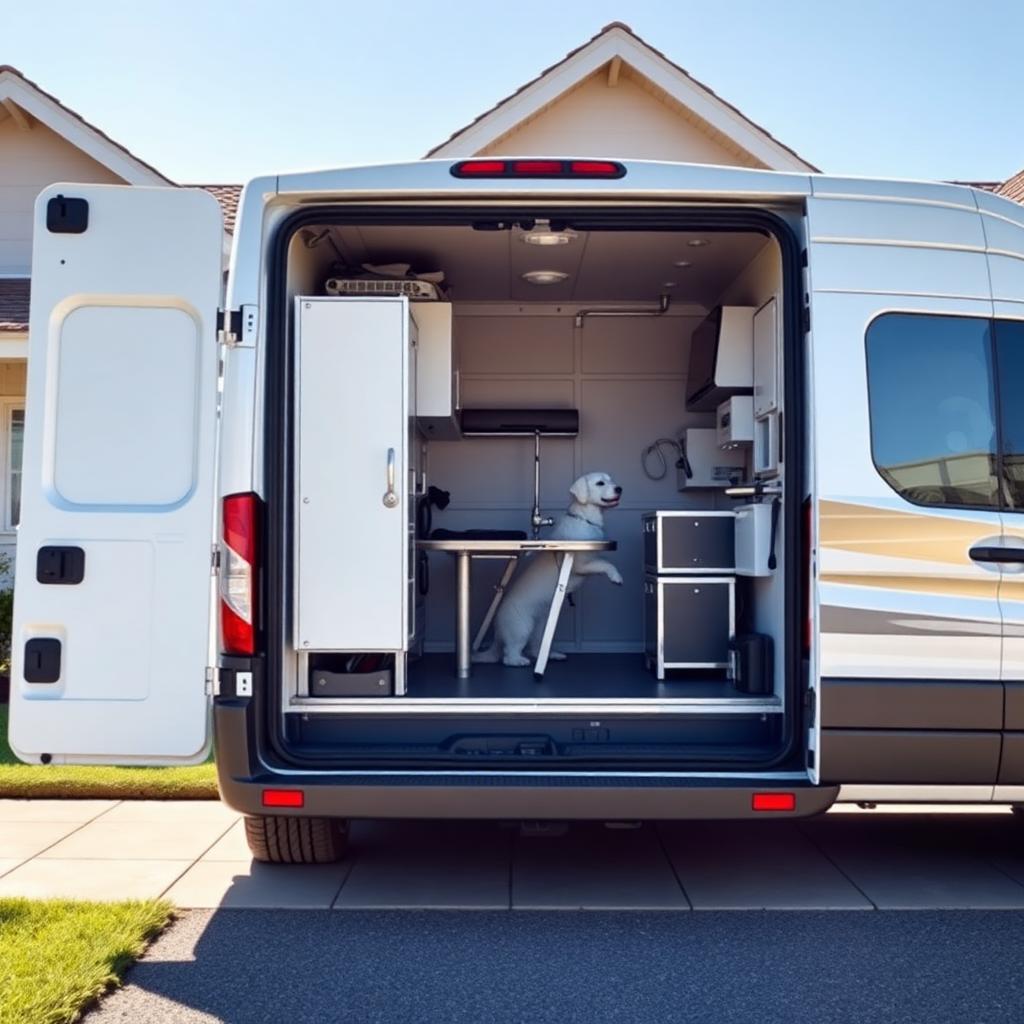
The best mobile dog grooming setup pairs a high-roof cargo van (Mercedes Sprinter, Ford Transit, or Ram ProMaster) with a lithium-ion inverter power bank, a dual-tank fresh/gray water system with a propane or electric on-demand water heater, a low-drop hydraulic or electric grooming table, a stainless steel tub, and a commercial dual-motor high-velocity dryer. Sealed HDPE wall panels finish the interior for wash-down cleaning.
A converted grooming van sits at 50,000 to 120,000 US dollars all-in. It replaces salon rent, drops overhead, and commands 40 to 60 percent premium pricing.
Why mobile is a real business, not a side hustle
Mobile grooming is the fastest-growing segment of the pet care industry. Customers pay a premium for:
- Zero transport stress for anxious or senior dogs.
- One dog per session (no cage time, no exposure to other dogs).
- Convenience: the van comes to their driveway.
A well-run mobile groomer bills 4 to 6 full sessions per day at 100 to 200 US dollars each, with virtually no fixed rent, utilities, or storefront staff.
Vehicle platform choice
Mercedes-Benz Sprinter (High Roof)
Interior height up to 79 inches. Heavy-duty payload, 10-year lifespan common. Downside: premium purchase price and dealer-only service in many markets. Best long-term investment for full-time pros.
Ford Transit (High Roof)
Interior height up to 81 inches (tallest in class). Fuel-efficient EcoBoost or Power Stroke diesel options. Wide dealer service network. Most balanced choice for a first mobile build.
Ram ProMaster (High Roof)
Interior height up to 76 inches. Front-wheel-drive design gives a lower floor height (easier dog entry for large breeds). Wider cargo bed. Slightly less durable long-term than the other two.
Power system: skip the generator
Modern builds use a lithium-ion inverter battery bank (12 to 30 kWh, sized to your daily load). Advantages over old-school gas generators:
- Silent operation (customers hate a generator running in their driveway).
- No fumes, no exhaust management, no fuel logistics.
- Charges from the vehicle alternator while driving and from a 30-amp shore power connection at home overnight.
Budget 8,000 to 20,000 US dollars for a professional-grade lithium system with proper inverter/charger. This is not the place to cheap out.
Water system
- Fresh water tank: 40 to 60 gallons is standard.
- On-demand water heater: propane (Girard, Suburban) or electric. Propane heats faster and costs less per gallon; electric integrates cleanly with your inverter system.
- Gray water tank: equal or slightly larger capacity than fresh, code-compliant with your state's mobile pet grooming regulations.
- Winterization: heated water lines and tank pads if you groom in freezing climates.
Workspace layout
Grooming table
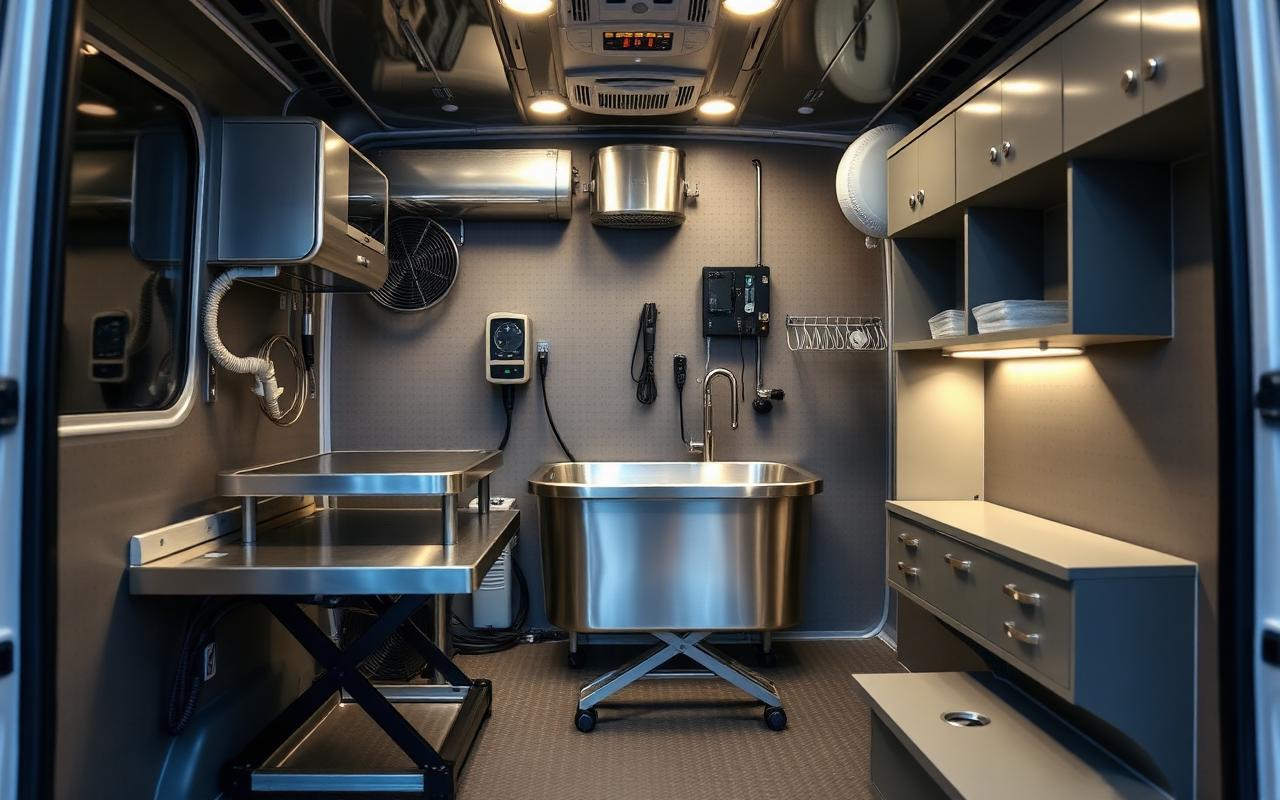
Use a low-drop hydraulic or electric table (Groomer's Best, Edemco, PetLift Everest). It drops close to the floor so large or senior dogs can step on without lifting. Cross-back straps and a chest support arm keep the dog secure without stress.
Bathing tub
Stainless steel or polyurethane, with a non-slip floor insert, multi-point safety tether loops, a hand-held pressure sprayer, and an integrated hair-trapping drain filter. Add an integrated ramp for large breeds so you don't lift 90 lb dogs into the tub.
Drying station
Wall-mounted commercial dual-motor high-velocity dryer (K-9 III, Metro Air Force). Long flexible hose so you can dry the tail end without repositioning the dog.
Climate control
- Rooftop air conditioner (Coleman Mach or Dometic) sized to the cabin volume.
- Commercial roof vent fan to clear humidity and airborne hair.
- Winter heat: diesel-fired air heater (Espar, Webasto) or electric ceramic.
Interior surfaces
Line all walls, ceiling, and cabinetry with sealed high-density polyethylene (HDPE) panels. Advantages:
- Completely water-resistant; you can spray the entire cabin at end of day.
- No mold, no rot, no wood swelling.
- Easy to sanitize (dilute chlorhexidine or bleach solution).
- Lifetime of 15 to 20 years without maintenance.
Compliance and licensing
- Business licensing for a mobile service in each city and county you operate.
- Water discharge permits: many jurisdictions require gray water to be dumped at approved dump stations, not into storm drains.
- Vehicle DOT rating: heavy builds may cross into commercial vehicle classifications requiring a CDL.
- Commercial vehicle insurance: separate policy from personal auto, plus grooming liability and workers' comp if you have staff.
Bottom line
A pro mobile grooming setup is a full-service salon on wheels. Get the vehicle right, invest heavily in the power system, size water for a full day, and seal every interior surface for wash-down cleaning. Done right, the van pays back its investment in 18 to 30 months.