Quick Answer
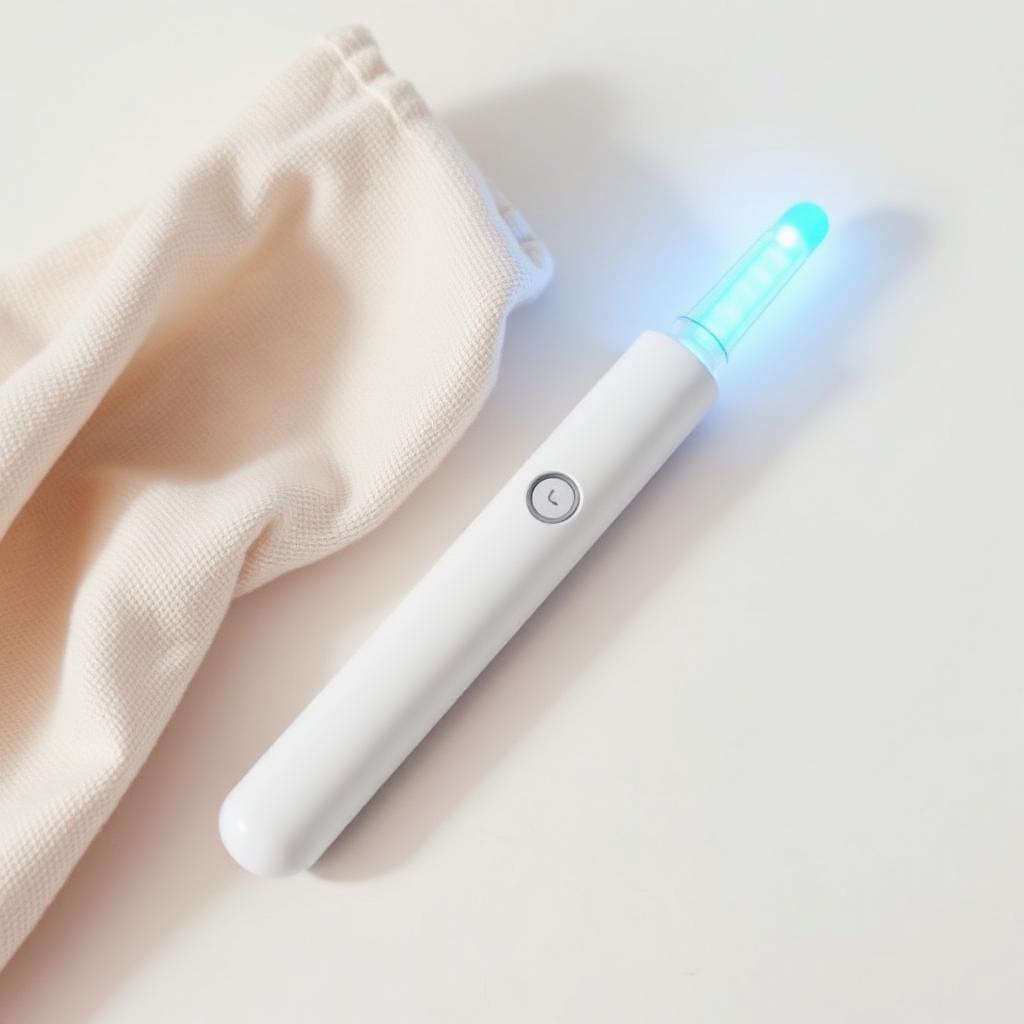
The best light therapy acne wand delivers targeted 415 nm blue LED to hit acne-causing Cutibacterium acnes and 630 nm red LED to calm the surrounding inflammation. You hold it on each spot for about three minutes, on clean and dry skin, and repeat daily.
It is not a topical replacement. It is a second lever on top of a decent routine, particularly for spots that keep flaring on the same jaw or chin.
How the wavelengths work
Blue light at around 415 nm penetrates the pore opening and triggers a photochemical reaction inside C. acnes bacteria. The reaction produces singlet oxygen inside the bacterial cell wall, which the bacteria cannot survive. Fewer bacteria means less of the inflammatory cascade that turns a clogged pore into an angry papule.
Red light at around 630 nm goes deeper. It does not target bacteria; it boosts cellular energy in the surrounding tissue (mitochondrial ATP) and dampens local inflammation, which is why redness drops and the spot heals with less mark left behind.
What a good wand looks like
- Dual wavelength: 415 nm and 630 nm. A blue-only wand handles active bacteria; a dual wand also calms redness.
- Touch sensor safety cutoff. The LEDs only fire when the head is flat against skin, protecting the eyes.
- Timed sessions. A 3-minute auto shutoff per spot. Longer is not better.
- Rechargeable battery. USB-C is a plus.
- Smooth glass or medical-grade acrylic tip. Wipes clean with alcohol.
Step by step: the daily routine
- Wash with a gentle cleanser. Anything oily blocks the light path.
- Pat completely dry. Damp skin scatters the light and reduces contact heat.
- Turn the wand on and select the wavelength. Blue for active spots, red for redness after.
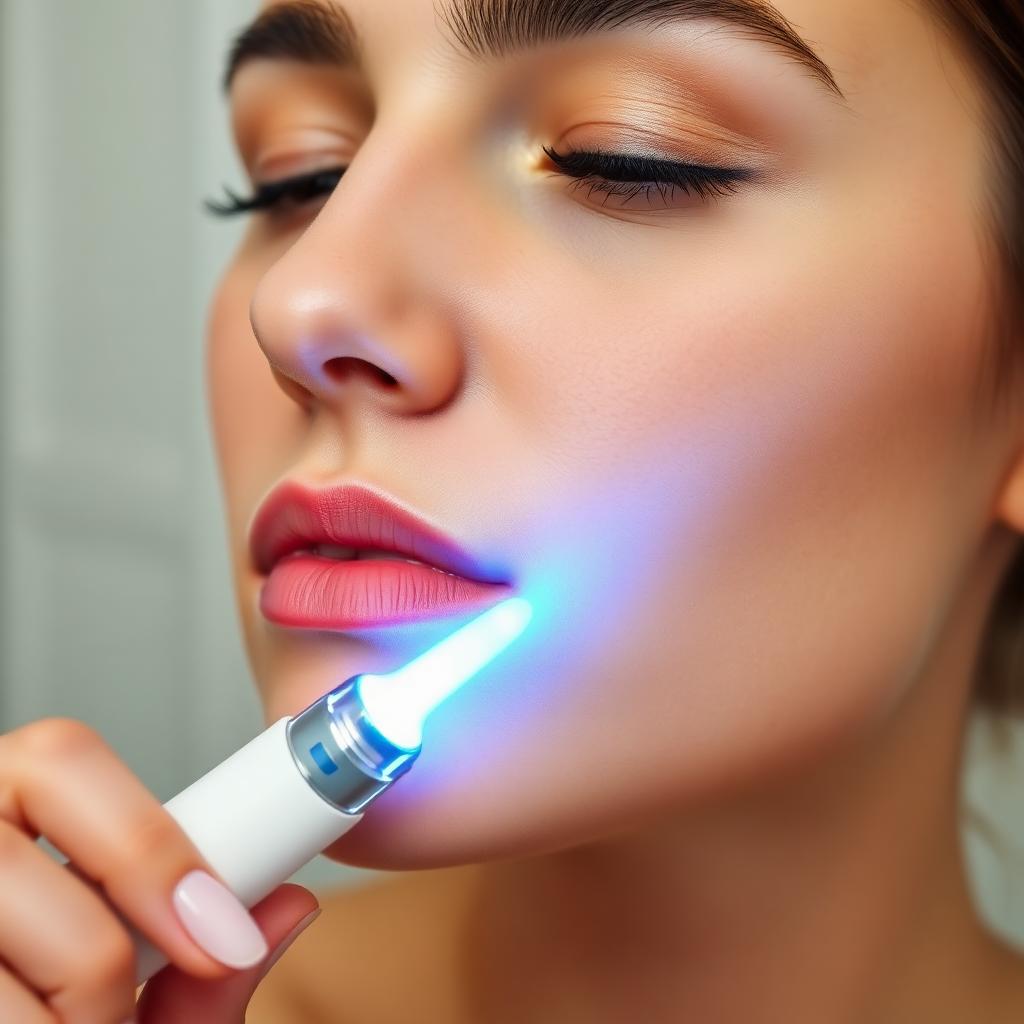
- Press the head flat over a spot. Steady contact for the full 3 minutes; do not sweep.
- Move to the next spot. Repeat across the active zone.
- Follow with lightweight serum and moisturizer. Skip retinol on the same evening on newly treated spots.
- Sunscreen the next morning. Non-negotiable when you are treating acne.
Where it actually helps (and where it does not)
- Great for: inflammatory papules and pustules along the jaw, chin, and forehead. Post-blemish redness. The occasional single flare on the cheek.
- Modest help for: comedonal acne (blackheads and whiteheads) - salicylic acid is doing more work there.
- Not a fit: deep cystic nodules, hormonal acne that needs prescription treatment, fungal folliculitis, or rosacea flares triggered by heat.
Common mistakes
- Waving the wand around like a brush. It is a stationary tool.
- Doing 10 minutes on a single spot for faster results. LEDs plateau; skin heats up.
- Using through sunscreen or heavy moisturizer. Those absorb the wavelength.
- Skipping consistency. Twice a week does very little; daily is the point.
- Expecting a wand alone to fix a topical routine that is not working.
Care and eye safety
Wipe the glass tip with 70 percent isopropyl alcohol before and after each session. Never look directly into an active LED; use the touch sensor cutoff, which is exactly what it is for. If you have a personal or family history of photosensitivity, or take medications like doxycycline that increase light sensitivity, run this routine past a dermatologist first. Under-eye and lid skin is off limits.
Bottom line
A dual-wavelength LED wand at 415 nm blue and 630 nm red is a legitimate second lever for stubborn spots, held for three minutes each on clean dry skin. It does not replace a solid routine; it stacks on top of one, and it is especially useful for the jaw and chin flares that keep coming back in the same three places.