Quick Answer
Groom a double-coated breed (Husky, German Shepherd, Golden Retriever, Malamute, Pomeranian, Aussie) on this schedule: weekly line brushing year-round, daily 10-minute undercoat raking during the spring and fall coat blows, a full bath with high-velocity blowout once a month, and nail and ear checks every 2 to 3 weeks. Never shave a double coat.
Double coats regulate temperature in both hot and cold weather. Shaving strips that insulation, exposes the skin to UV damage, and causes the coat to grow back unevenly and matt-prone forever.
How a double coat works
A double coat has two distinct layers:
- Guard hairs (top coat): long, coarse, water-repellent, protective against UV and debris.
- Undercoat: short, dense, soft insulating fibers that trap air for thermoregulation.
In winter the undercoat traps warm air against the skin; in summer the same layer keeps hot air out. That is why a properly maintained double-coated dog is actually cooler in summer with the undercoat intact than shaved.
The seasonal coat blow
Twice a year, driven by changing daylight hours, double-coated breeds "blow coat":
- Spring blow (March to May): Winter undercoat detaches in large clumps to make way for a lighter summer coat.
- Fall blow (September to November): Light summer hair sheds to allow a dense winter undercoat to grow in.
During these 4- to 6-week windows, a Husky or Malamute can produce a shopping bag full of undercoat per week. If it is not removed mechanically, it packs against the skin, blocks airflow, traps moisture, and forms dense mats that lead to hot spots.
The professional double-coat grooming calendar
Weekly (year-round, 15 to 20 minutes)
- Line-brush with a long-pin slicker or pin brush.
- Follow with a long-pin steel comb to catch loose surface hair.
- Check high-friction zones: behind ears, tail base, chest ruff, pants.
Daily during spring and fall coat blows (10 to 15 minutes)
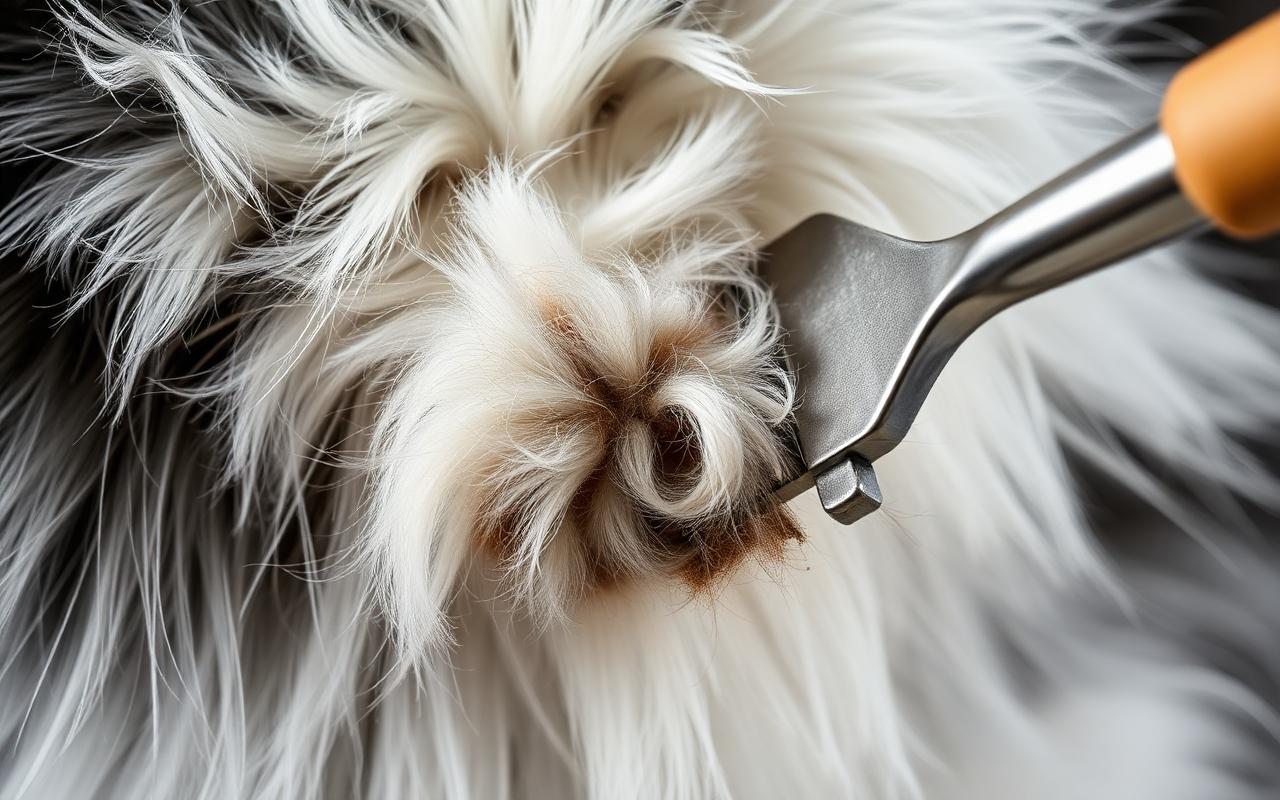
- Undercoat rake (Furminator, Safari, or Chris Christensen).
- Work in the direction of hair growth.
- Follow with a slicker to smooth the surface.
Monthly (bath and blowout)
- Full bath with a moisturizing pH-balanced dog shampoo.
- High-velocity forced-air blowout on cool setting. This is the single most effective step for removing dead undercoat from double coats. It can pull out more loose hair in 20 minutes than a week of brushing.
- Follow with a full slicker brush-out once dry.
Every 2 to 3 weeks (hygiene)
- Nail grind or clip.
- Ear canal wipe.
- Paw pad trim if needed.
- Quick eye and sanitary tidy.
Why you must never shave a double coat
The single most important rule of double-coat maintenance is written in bold in every reputable grooming curriculum: never shave a double-coated dog to the skin unless a veterinarian requires it for surgery or a severe skin condition.
- Loses thermal regulation. The dog is now hotter in summer, not cooler.
- Exposes skin to sunburn and skin cancer. Especially serious in light-coated dogs.
- Damages the coat forever. Guard hairs and undercoat grow back at different rates and often the guard coat never fully returns. The remaining coat is patchy, textured differently, and matts far more easily.
- Increases matting risk. Uneven regrowth traps loose fibers.
The correct summer strategy for a double coat is aggressive undercoat removal via brushing and blowouts, not shaving. Remove the dead insulation and the dog is cooler and healthier.
Tools that make a difference
- Long-pin steel pin brush: daily surface brushing.
- Undercoat rake with fixed rounded pins: the workhorse for coat blows.
- Furminator or similar deshedding tool: effective for short-coat double breeds (Lab, Corgi) but use sparingly on longer double coats; overuse can thin guard hairs.
- High-velocity pet dryer: the single biggest upgrade you can make for a double-coated home.
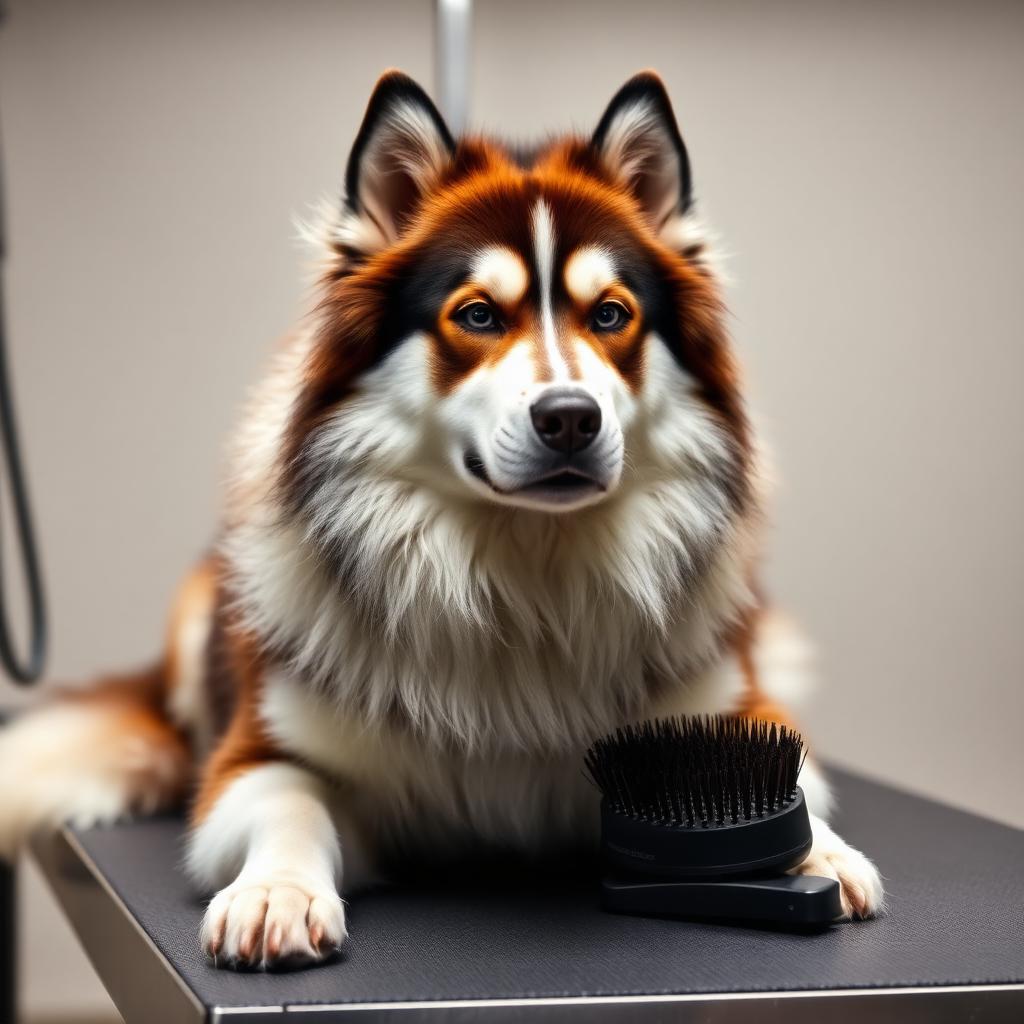
- Grooming table with a non-slip mat: keeps sessions safe and consistent.
Common mistakes
- Shaving for summer. Never. Not once.
- Skipping the daily rake during coat blow. Two weeks of missed rakes creates a pelt.
- Using a slicker only. A slicker glides over the top of the coat; you need a rake to reach the undercoat.
- Over-bathing. More than every 3 to 4 weeks strips the water-repellent guard coat.
- Air-drying after a bath. Trapped moisture in a dense undercoat leads to hot spots and matting.
Bottom line
Double coats need weekly attention year-round and daily attention during coat blows. Rake, brush, bathe monthly, blow out with high velocity, and never reach for the clippers to shave. Do this and your double-coated dog stays cool in summer, warm in winter, and comfortable in every season.