Quick Answer
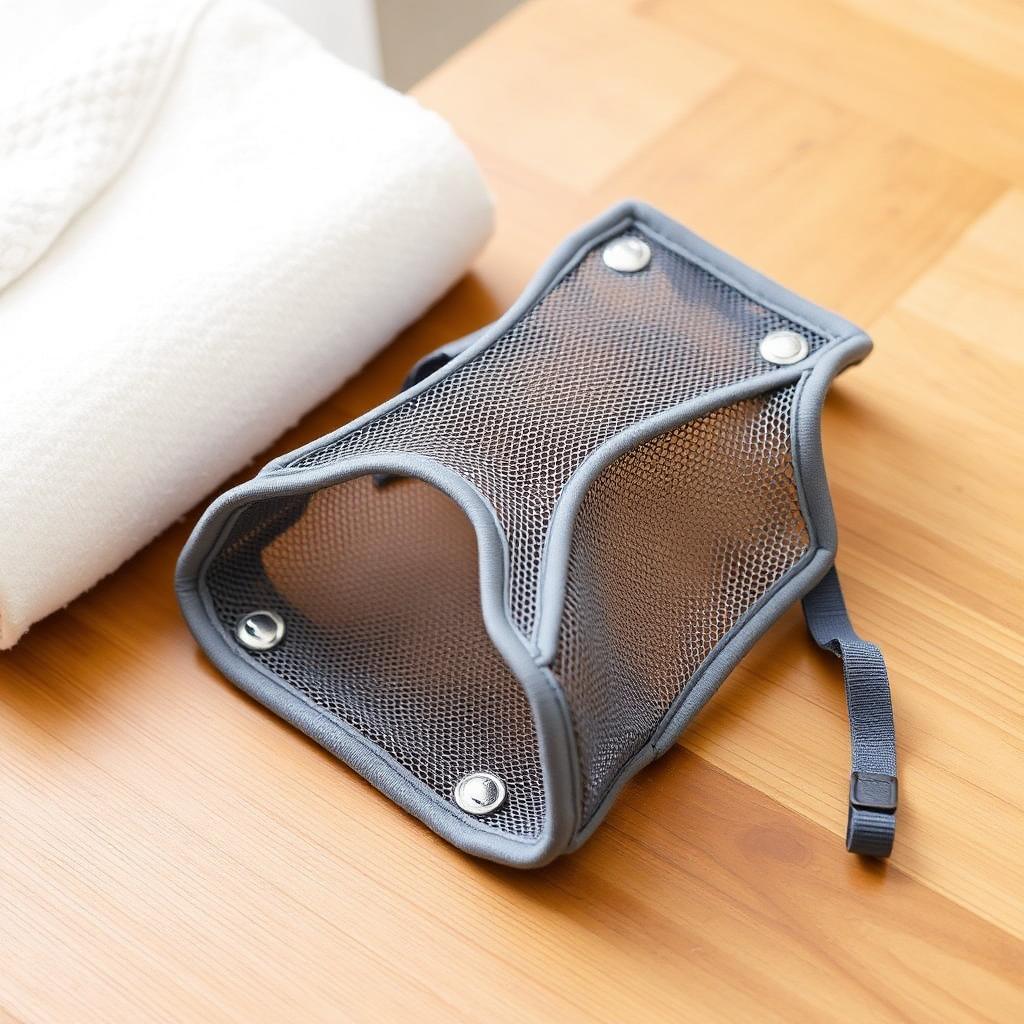
The best grooming harness for cats is a suspension air-mesh hammock with four leg-isolation ports, breathable 3D mesh fabric, reinforced steel S-hooks, quick-release safety snaps, and adjustable buckles for different body sizes. Use it low over a padded table for nail trims and short mat sessions, never left unattended, never high in the air.
Not every cat needs one. Confident cats and calm seniors do fine on a mat. Wiggly, scratch-prone, or nail-averse cats become manageable in a hammock.
Who actually benefits from a grooming harness
- Cats who fight nail trims.
- Long-haired cats with regular armpit mats.
- Elderly cats whose owners cannot safely bend and support at the same time.
- Fractious cats who need occasional handling for medications.
- Multi-cat households where sessions have to be short and repeatable.
Who does not: calm cats who groom fine on a mat, kittens under 8 weeks (still learning positive handling associations), and cats with respiratory disease or diagnosed anxiety.
Design features that matter
- Four leg-isolation ports. Legs slide through reinforced openings so each paw is separated and accessible for trimming.
- 3D breathable air-mesh fabric. Double-layer construction stretches slightly to conform to the cat's body while allowing airflow.
- Adjustable Velcro or buckle panels. One harness that fits a 6-pound cat and a 14-pound cat.
- Reinforced steel S-hooks or carabiners. Cheap plastic clips fail under panic pulls.
- Quick-release safety snap. One-hand release under tension in an emergency.
- Machine-washable. Cats stress-shed. Weekly wash keeps hygiene in check.
Design flags to avoid
- Single-layer thin nylon mesh. Cuts under pressure and traps claws.
- Plastic clips instead of steel.
- Fixed size with no adjustment.
- No quick-release option.
- Wearable "burrito wraps" that fully immobilize the cat. High stress, low benefit.
Step by step: safe first session
- Introduce the fabric flat. Lay the harness on the table for two or three sessions before you use it. Sniff, treat, done.
- Practice buckles empty. Learn every clip and quick-release with the harness in your hand.
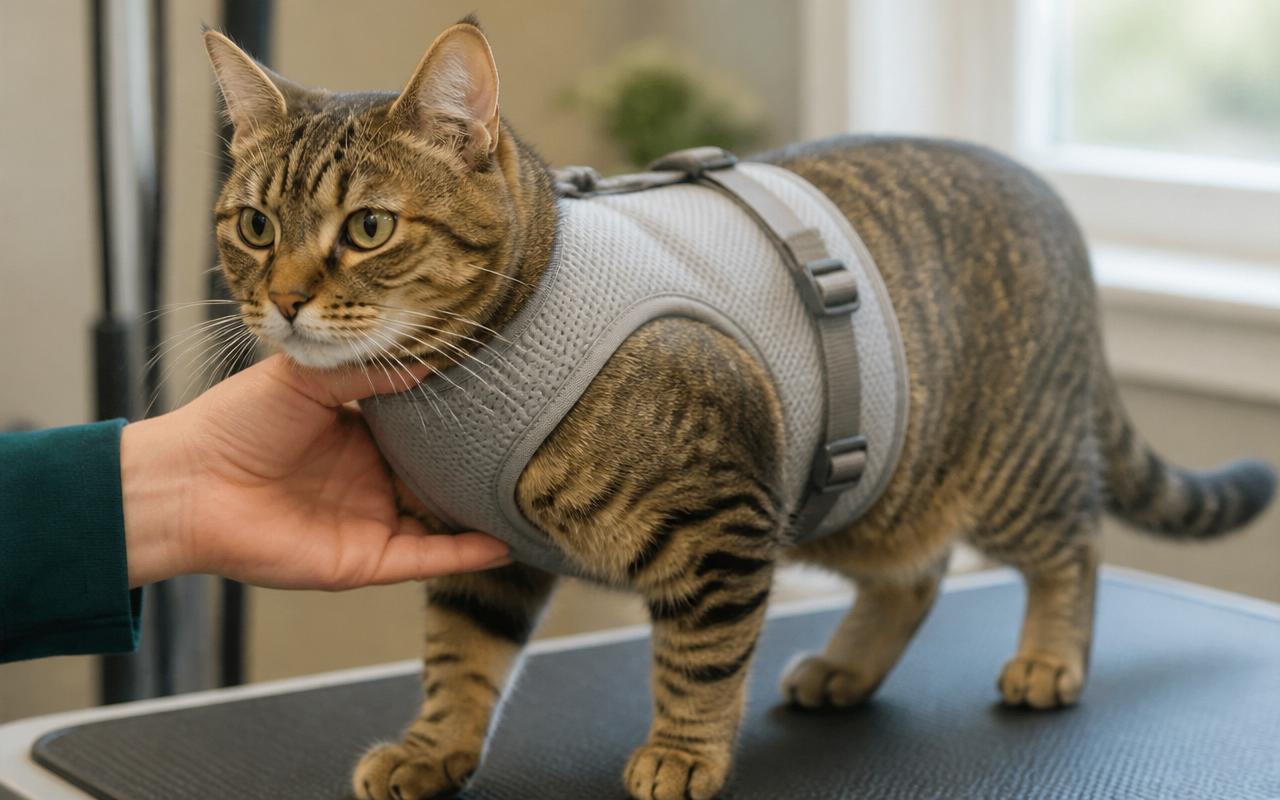
- Position the cat. Ask the cat to step onto the harness laid flat. Guide the legs through the four openings.
- Fasten the buckles. Snug, not tight. You should slide two fingers under any strap.
- Lift low. Attach the S-hooks to a stable grooming arm or a countertop support and lift just enough to suspend the cat 1 to 2 inches above a padded surface.
- Work one paw at a time. Nails, matting, or ear cleaning. Never spend more than 5 minutes suspended.
- Lower gently. Return the cat to the padded surface, release buckles smoothly, and end with a high-value treat.
Non-negotiable safety rules
- Never leave a cat unattended in a harness. Even for a second.
- Never suspend higher than 2 inches above a padded surface. The hammock is for isolation, not elevation.
- Never use in extreme heat or cold. Airflow is not enough on a hot day.
- Never use on a cat in respiratory distress. Suspension changes breathing mechanics.
- Never restrain a panicking cat. Release immediately, lower, and try again another day.
How it fits in the wider routine
- Nail trims every 2 to 3 weeks. The harness makes solo trims possible for wiggly cats.
- Short armpit and groin mat sessions. 3 to 5 minutes maximum.
- Ear checks and cleaning. Access improves dramatically.
- Not for full-body grooming. That is a mat and a pin brush job.
- Never for medication force-dosing without vet guidance. There are better tools.
Common mistakes
- Buying a dog grooming loop and adapting it. Wrong geometry.
- Suspending high in the air "for a better angle."
- Leaving the cat in the harness while you fetch a tool from another room.
- Cranking the straps tight instead of snug.
- Using the harness on every session. It becomes a stress trigger. Save it for the sessions it actually enables.
Bottom line
The best grooming harness for cats is a suspension air-mesh hammock with four leg-isolation ports, adjustable straps, reinforced steel hooks, and quick-release safety snaps. Use it low over a padded table for short 3 to 5 minute sessions of nail trims, ear cleaning, or armpit mat work, never left unattended and never high in the air. For calm cats a padded mat is enough; the harness earns its place with wiggly, scratch-prone cats where it is the difference between a solo groom and a two-person wrestling match.