Quick Answer
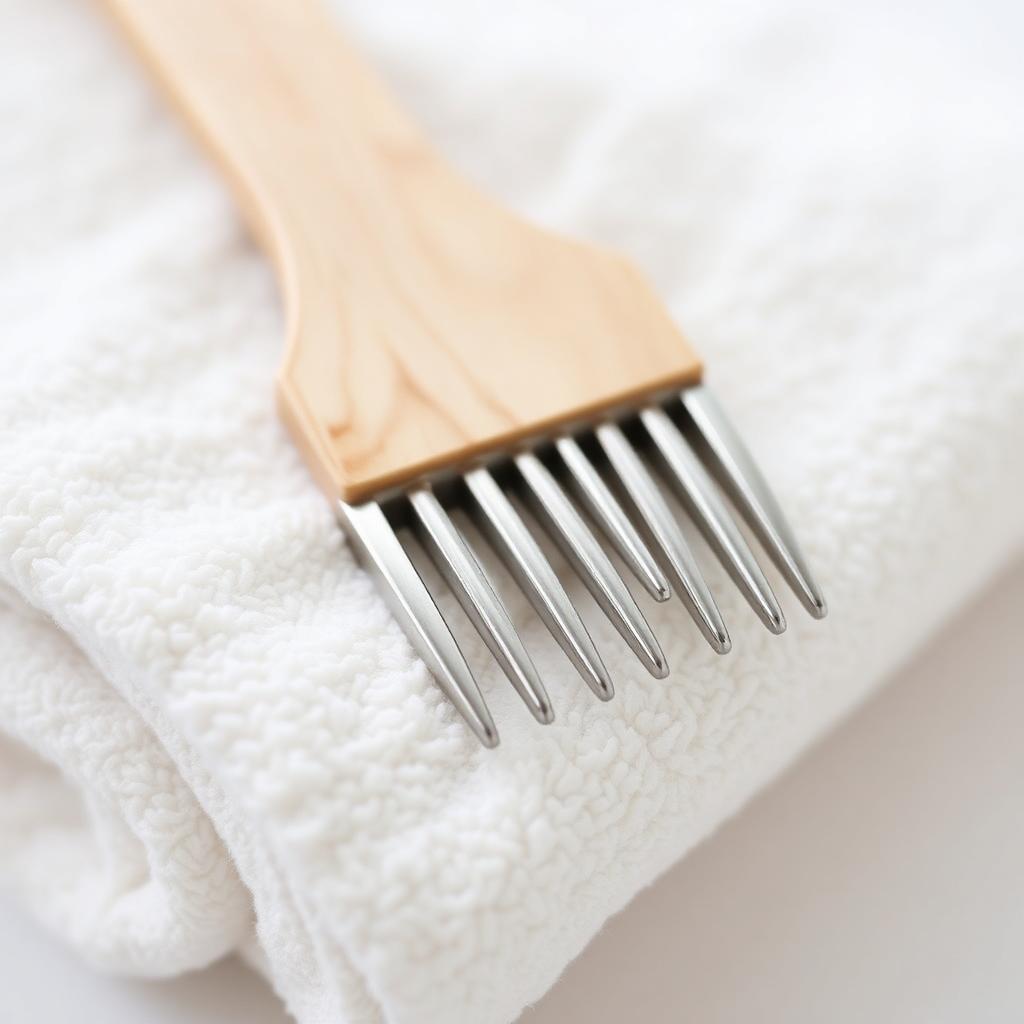
The best flea comb for kittens is a stainless steel double-row comb with teeth spaced under 0.2 millimeters apart, polished rounded tips, and a comfortable non-slip handle. Under 8 to 12 weeks of age, mechanical combing is the only safe flea control; most spot-on and oral products are not labeled for younger kittens. Work in short strokes at a shallow 45-degree angle and dunk each pass of trapped fleas directly into a bowl of hot soapy water.
Small kittens have small blood volumes. A heavy flea load can drop red blood cell counts into anemia within days. Combing every day for a week clears an infestation without any chemical risk.
Why age matters so much
Most veterinary flea products carry an age or weight floor: many are labeled from 8 weeks and 2 pounds, some from 12 weeks. Below that, a comb is not just an option, it is the only safe tool. Adult-strength permethrin sprays and dips are dangerous to cats at every age and can kill a kitten in hours.
A quality flea comb pulls fleas off mechanically. Fleas are 1 to 3 millimeters long and shaped like flat blades from front to back. A comb with teeth spaced under 0.2 millimeters lets hair through and traps fleas.
What to look for
- Tooth spacing under 0.2 mm. The manufacturing spec that catches adult fleas.
- Rounded polished tips. Kitten skin scratches easily. Check the tips against your inner wrist first.
- Stainless steel construction. Rust-free and easy to sanitize between sessions.
- Non-slip ergonomic handle. Wet, soapy grip fatigue is real during a 10-minute session.
- Double-row option (optional). Two staggered rows catch more fleas per stroke on longer coats.
Products to avoid on kittens
- Any product containing permethrin. Highly toxic to cats.
- Dog flea shampoos and dog spot-ons. Different active ingredients and different concentrations.
- Adult-strength Dawn dish soap baths for infants under 6 weeks. The bath itself can chill a young kitten into shock. Ask your vet first.
- Essential oil flea sprays. Tea tree, pennyroyal, and eucalyptus oils are toxic to cats.
- Flea collars for kittens under 12 weeks. Chemical exposure is continuous and unregulated.
Step by step: flea combing a kitten
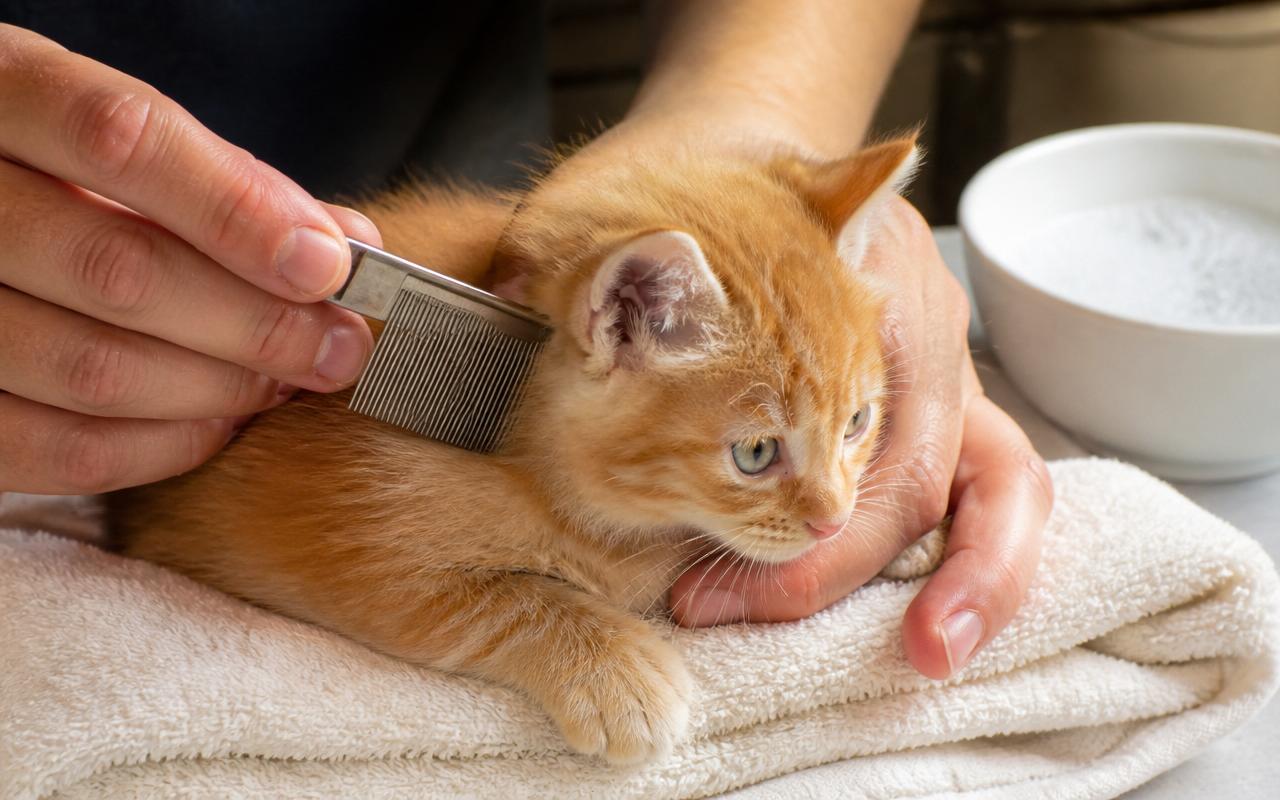
- Set up the drowning station. A wide bowl of hot water with 3 to 5 drops of dish soap. Soap breaks water tension so fleas sink.
- Set up the kitten station. A warm, damp white towel on a stable counter. White fabric shows flea dirt immediately.
- Comb the neck first. Fleas run uphill toward the head when disturbed. Comb the neck ruff to build a barrier around the ears and eyes.
- Move down in short strokes. Hold the comb at 45 degrees flat against the skin. Short 1-inch strokes with the grain of the hair.
- Dunk each pass. Every pass, plunge the comb head into the soapy bowl. Fleas drown in seconds.
- Work high-load areas hardest. Base of the tail, lower belly, armpits, and around the collar line.
- Finish the face carefully. Around the chin, cheeks, and ear base. Never comb into the eye.
- Sanitize the tools. Rinse the comb in hot water, spray with rubbing alcohol, air dry.
The environment matters more than the comb
Fleas spend only a small part of their life on the cat; most of the population is eggs and larvae in your home. Combing clears the adults you see. It does not touch the 95 percent hiding in bedding, carpet, and crevices.
- Wash all kitten bedding on hot every 3 days for 3 weeks.
- Vacuum every surface daily, including under furniture. Empty the canister into an outdoor bin immediately.
- Steam clean carpets weekly during an outbreak. Heat kills all life stages.
- Treat the mother and any adult household cats or dogs with vet-approved products. A single untreated adult reseeds every kitten.
When to combine combing with vet-approved products
- At 8 weeks and 2 pounds, most vets can dispense a kitten-labeled spot-on or oral product.
- Combing continues as a wellness check for the next 4 weeks.
- Never mix products without asking your vet. Layering flea treatments causes toxicity.
Common mistakes
- Buying a "pet" flea comb with wide-spaced teeth. Fleas slip right through.
- Combing without a soapy bowl. Fleas jump back into the coat.
- Using dog flea products or essential oils on a cat.
- Treating only the kitten and ignoring the house.
- Stopping after one clean session. Eggs hatch daily; you need at least 7 days.
Bottom line
The best flea comb for kittens is a stainless steel comb with sub-0.2 mm tooth spacing, polished rounded tips, and a non-slip handle. Combine daily combing over a soapy water bowl with aggressive home laundry and vacuuming. Above 8 to 12 weeks and 2 pounds, layer in a vet-approved kitten flea product; never a dog product, never permethrin, never essential oils. A comb, a bowl, and a week of patience will clear the infestation without any chemical risk to your kitten.