Quick Answer
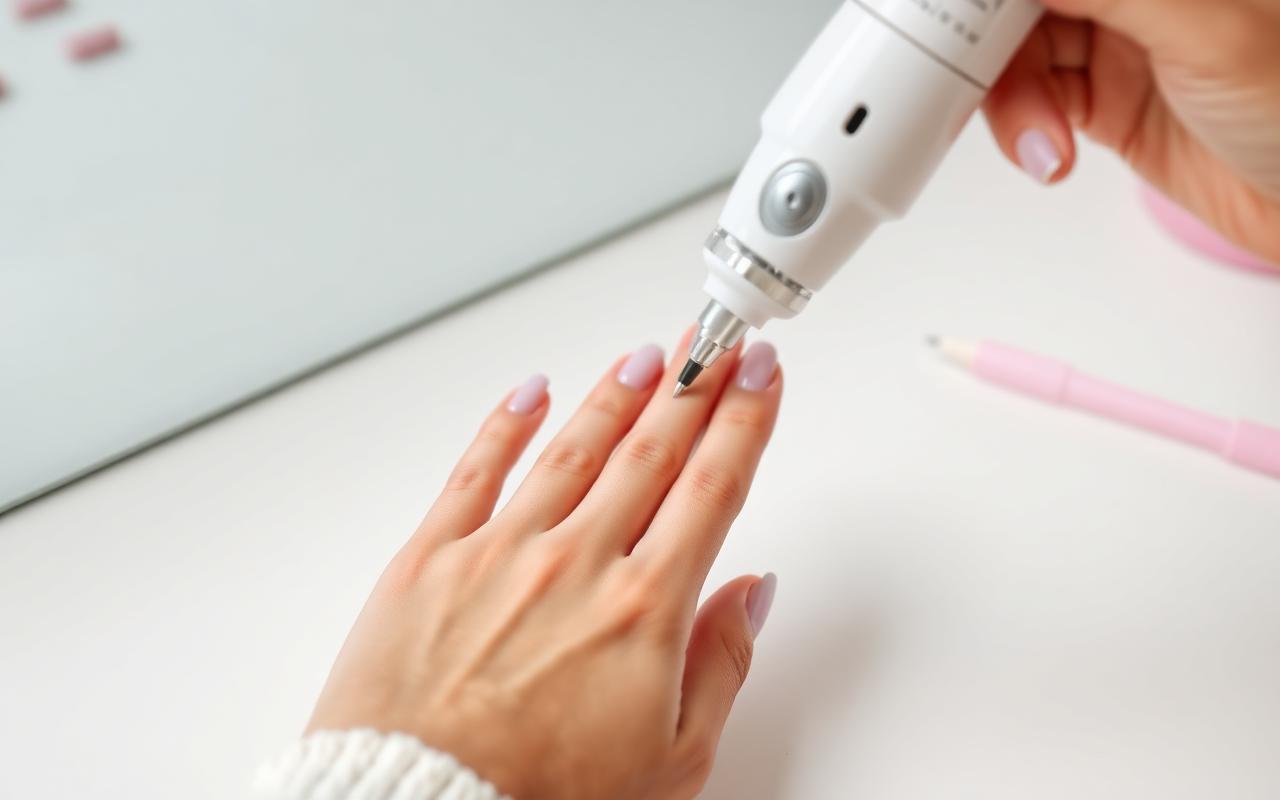
The best electric nail file for gel manicures is a corded or lithium-battery e-file that reaches 20,000 to 30,000 RPM with a low-vibration brass motor, a forward-reverse switch, and a bundled set of ceramic and diamond bits. MelodySusie 30,000 RPM, Makartt F5, and Kiara Sky Beyond Pro are the three most-rebought home models.
The right RPM range plus a real ceramic barrel bit clears cured gel in minutes without heating up your natural nail plate. That is the specific combination cheap drills fail on and the reason your gel removal has felt slow and painful.
Why manual filing damages more than the polish
Standard emery boards cannot cut cured gel efficiently, so most people press harder and drag the file back and forth. That motion peels open the top layer of your natural nail keratin along with the polish. Over a few cycles the nail plate thins visibly, splits at the free edge, and takes 4 to 6 months to fully rebuild.
A proper e-file lets the bit do the work with light contact and continuous motion. Done right, you never touch the natural nail with an abrasive at all.
The five specs that actually matter
1. Variable speed up to 30,000 RPM
Cured gel and hard builder gel need speeds above 15,000 RPM to shave cleanly. Anything under 10,000 RPM stalls and tears. But you also want to dial down to 5,000 RPM for delicate work near the cuticle and to zero for start and stop, so a full variable dial matters more than a top speed number alone.
2. Low vibration and quiet operation
A cheap unbalanced motor buzzes hard enough to make your hand shake. Look for a brass or stainless motor spindle balanced at the factory; the product page usually lists it as "low vibration under 60 dB." That specification is the difference between a clean file line and a nicked cuticle.
3. Bi-directional rotation
Forward and reverse spin matters for left-handers, for filing side-to-side without twisting your wrist, and for controlling how the bit lifts debris away from the skin instead of pushing it under the cuticle.
4. Ceramic bits included, not just carbide
Ceramic barrel bits shave gel cleanly and generate far less friction heat than carbide. If a kit ships only with generic diamond bits and no ceramic, you will feel a burning sensation on the nail bed the first time you try to break down a gel topcoat.
5. Corded stability or 12-plus-hour lithium runtime
Battery-powered pens are convenient but the cheap ones lose torque as they discharge, stalling mid-fill. Look for either a wall-plugged desktop unit or a lithium battery rated for at least 12 hours of continuous runtime.
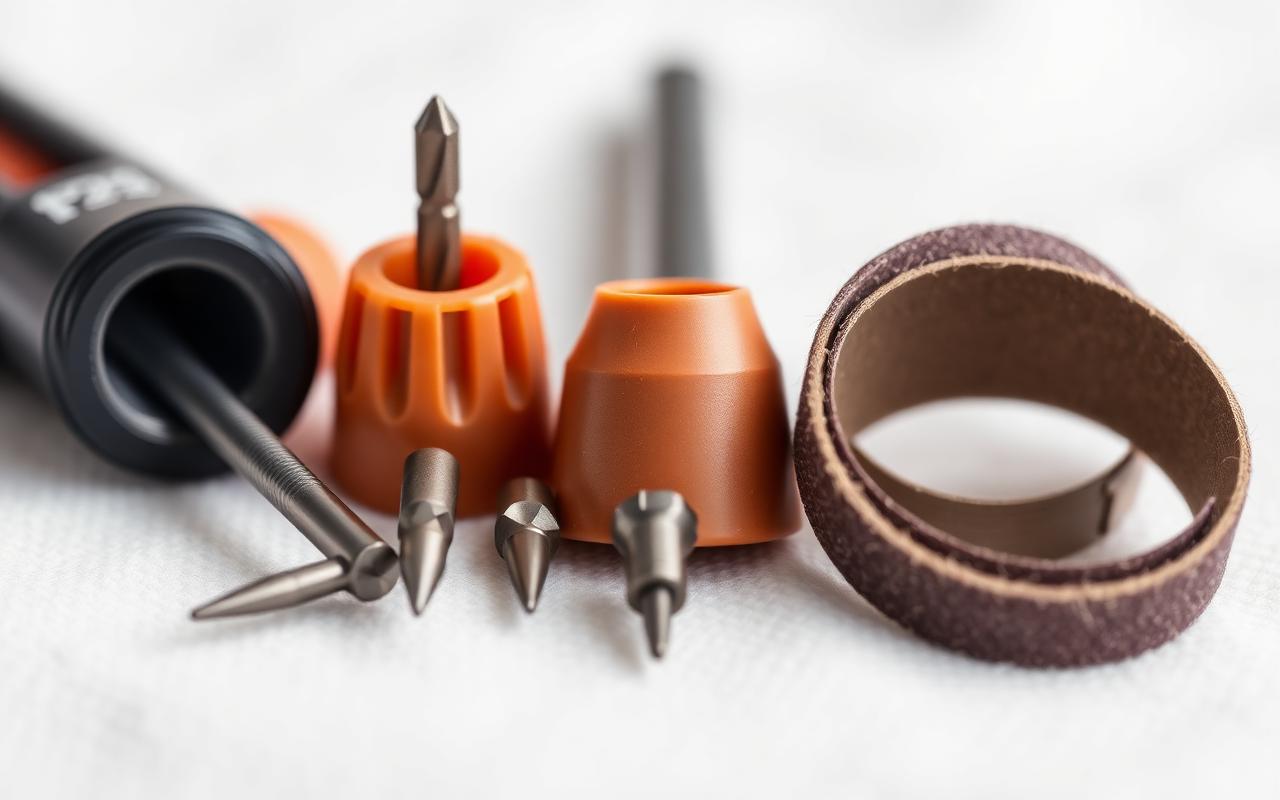
Bits and what each one is for
- Coarse ceramic barrel: reduces the bulk gel topcoat and color coat.
- Fine safety cone (diamond or ceramic): shapes near the cuticle and side walls; the rounded tip prevents skin nicks.
- Needle or flame diamond: lifts dry dead cuticle from the plate. Never touches live skin.
- Mandrel with sanding bands: preps the natural nail after gel removal. Bands are disposable, so hygiene stays high.
- Small ball bit: cleans under the free edge and inside sidewall pockets.
Safe gel removal in five steps
- Start with a coarse ceramic barrel and set the speed to around 15,000 RPM in forward rotation.
- Hold the handpiece like a pencil with your pinky braced against a table. Rest your forearms; a floating grip shakes.
- File in continuous side-to-side passes. Never hold the spinning bit in one spot; concentrated friction burns the nail bed.
- Stop at the base layer. Leave a thin veil of gel behind and lift it off with acetone-soaked cotton wrapped in foil for 8 to 10 minutes.
- Brush away dust, wash your hands, and apply cuticle oil to rehydrate the plate.
Common mistakes
- Buying the cheapest 20 US dollar drill. The motor stalls on gel and vibrates hard enough to nick the finger.
- Running at max speed always. Blow torch effect on the nail bed. Match the speed to the bit and the layer.
- Skipping the safety cone. The rounded tip is what prevents cuts along the sidewall.
- Reusing sanding bands. Bands cost pennies each and are single-use for a reason: bacterial cross-contamination.
Bottom line
Look for an e-file that reaches 30,000 RPM, has a balanced brass motor with a forward-reverse switch, and ships with ceramic plus safety-cone bits. Use light pressure and continuous motion, stop at the base gel layer, and finish with acetone soak-off and cuticle oil. Manicures will take half the time and your natural nail plate will stay thick.