Quick Answer
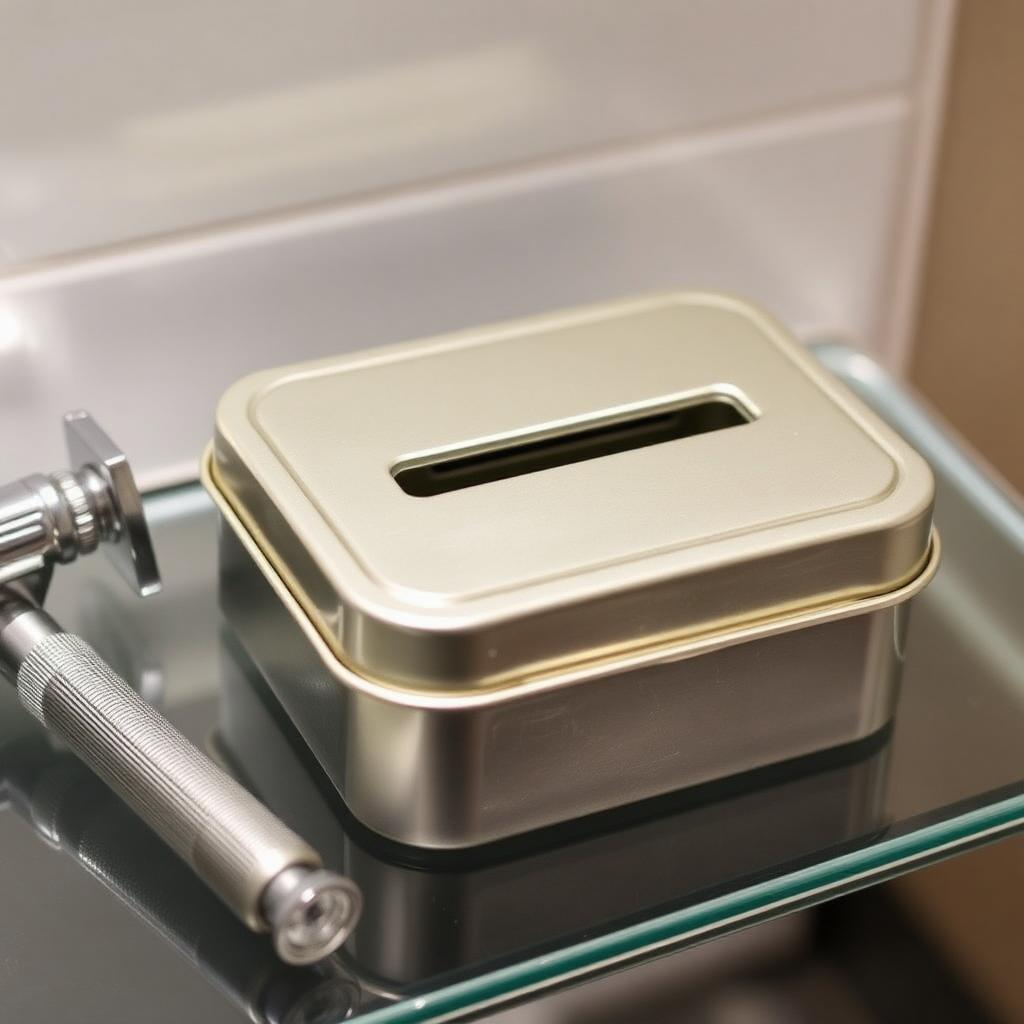
The best double-edge blade disposal bank is an all-metal welded tin with a narrow horizontal slot, no removable lid, and enough volume for 100+ used blades. Once full, tape the slot and drop the whole tin into your metal recycling bin. Loose blades in a trash bag are a real injury risk for sanitation workers.
This is the least glamorous piece of wet shaving gear you will ever buy. It also matters more than most of the shiny ones.
Why a used DE blade is more dangerous than a fresh one
People assume a "used" blade is a dull blade. Not quite. A DE blade goes from surgical-sharp to merely-sharp over its useful life. Merely-sharp still slices a plastic bag, still cuts a finger, still opens skin on a sanitation worker who reaches in blind.
Wrapping loose blades in tissue is not a plan. Tissue tears the second it snags on anything else in the bin.
What a good blade bank actually looks like
- All-metal welded body. Steel or tin plate, no removable lid, no plastic hinge.
- Single narrow horizontal slot on top. Wide enough to accept a DE blade, narrow enough that turning it upside down changes nothing.
- Capacity 100 to 200 blades. Roughly 2 to 4 years of daily shaving.
- Compact footprint. Under 8 cm on any side so it fits behind the sink.
- No decorative cutouts. Any hole is a way for a blade to escape.
Step by step: safe disposal routine
- Change the blade at the sink. Never over a soft surface where a dropped blade disappears.
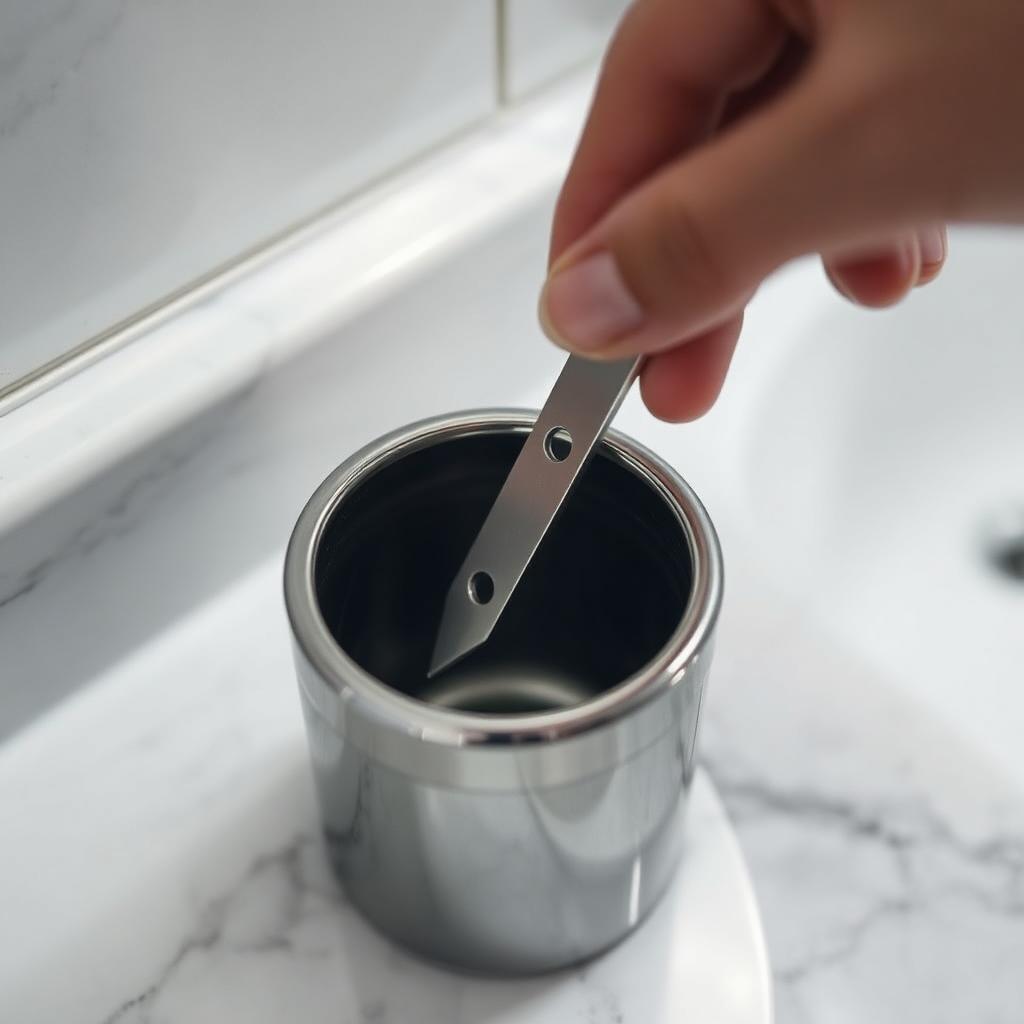
- Slide the used blade into the slot. Do not flick or throw it, let gravity take it.
- Return the razor head, load the new blade, close the razor. Never leave a bare blade on the counter.
- Store the bank on a shelf, not the floor. Keeps pets and toddlers out of range.
When the tin is full
- Do not pry it open. The whole point was that it never opens.
- Seal the slot with a strip of duct tape. Even sealed, the tin will not open in transit.
- Drop it in the metal recycling. Steel and tin blades plus a steel tin all belong in the same stream in most municipalities.
- Skip the general waste bin. That is where the injury risk lives.
Why not just fold a soda can
Old-school forums recommend folding a used soda can around your blades and hammering it shut. It works. It is also a way to slice a knuckle while making the folded pouch, and the aluminium is soft enough that a determined blade edge can push through a corner. A purpose-built welded tin is 5 dollars and lasts 3 years.
Common mistakes
- Storing loose blades in a drawer "to figure out later." They rust and shift; you cut yourself when you pick up the drawer contents.
- Using a plastic tin with a snap lid. Falls off the shelf, splits open, blades everywhere.
- Emptying the tin to recycle blades separately. That defeats the entire safety design.
- Leaving a used blade balanced on the sink between shaves.
Bottom line
An all-metal welded tin with a single narrow slot, room for 100+ blades, and a small footprint is the entire spec. Slide each used blade in, keep it out of reach of pets and kids, tape the slot when full, and drop the whole unit into metal recycling. Cheapest safety upgrade you will ever make.