Quick Answer
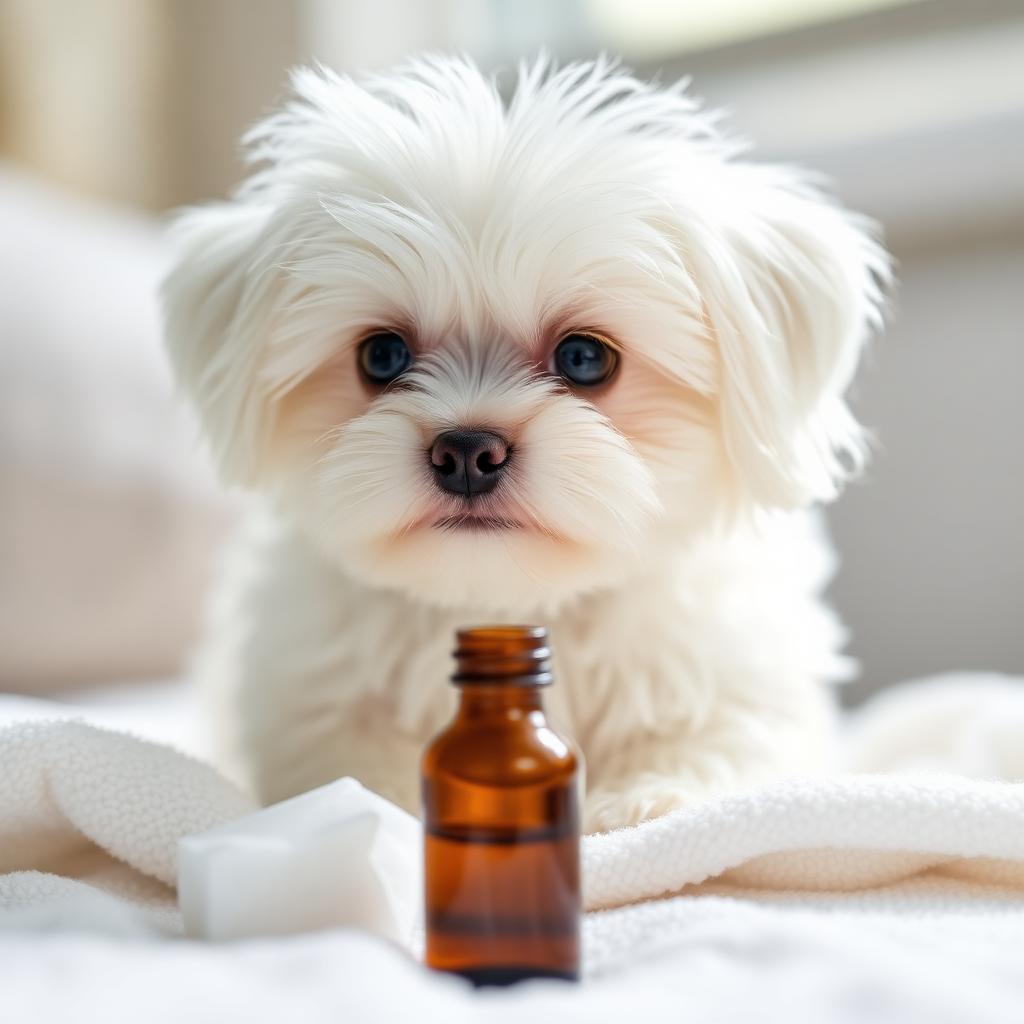
The best dog eye tear stain remover is a gentle micellar cleanser with boric acid, camomile, and mild antimicrobial botanicals that dissolve dried porphyrin crusts without irritating the eye. Soak a clean cotton pad in the liquid, press for 20 to 30 seconds to soften the stain, and wipe outward daily. Pair with fresh water served in a stainless steel or ceramic bowl (not plastic).
Reddish-brown staining under a white dog's eyes is porphyrin, an iron-rich byproduct of red blood cell turnover excreted in tears. Once exposed to air, porphyrin oxidizes on the fur, and standard shampoo cannot break the bond.
Why tear stains happen
Any dog can produce porphyrin, but you only see the stain on light coats. Contributing factors include:
- Shallow eye sockets or shortened muzzles. Poodles, Maltese, Bichons, Shih Tzus, Pugs, and French Bulldogs all overproduce visible tears because their tear drainage anatomy is small.
- Blocked tear ducts. Congenital narrow nasolacrimal ducts push tears out onto the face rather than draining into the nose.
- Yeast in damp fur. Red yeast (Pityrosporum) thrives on wet fur and darkens staining further.
- Diet and water. High-mineral tap water and iron-heavy diets increase porphyrin production. Filtered water in a non-plastic bowl helps.
- Teething in puppies. Temporary tearing that resolves at 6 to 9 months.
Ingredients that work (and are safe near the eye)
- Micellar cleansers. Very mild surfactants that lift dried tear proteins and oils off the fur without stinging.
- Boric acid (veterinary grade). Common in over-the-counter eye rinses. Mild antimicrobial and pH-balancing.
- Camomile and calendula extracts. Anti-inflammatory botanicals that calm irritated skin.
- Colloidal silver. Mild antimicrobial that discourages yeast in damp fur.
- Licorice root extract. Very gentle natural lightener.
Ingredients to avoid
- Hydrogen peroxide or chemical bleaches. Never near the eye. Ever.
- Tylosin tartrate (antibiotic). Used in older tear stain products; now restricted by regulators for over-the-counter use because it fuels antibiotic resistance.
- Strong fragrances. Irritate the eye directly.
- Alcohol. Dries the delicate skin under the eye and stings.
Product formats compared
- Pre-moistened wipes. Fastest for daily use. Grab, wipe, done.
- Liquid solution. Applied to a cotton pad. Better for softening older, hardened crusts before combing them out.
- Post-cleanse shielding powder. A fine water-repellent powder brushed onto dry fur after cleansing. Helps repel fresh tear fluid.
- Oral supplements. Some are labeled for tear stain support. Talk to a vet before adding these; the ones that work are usually antibiotic-based.
Step by step: the daily wipe routine
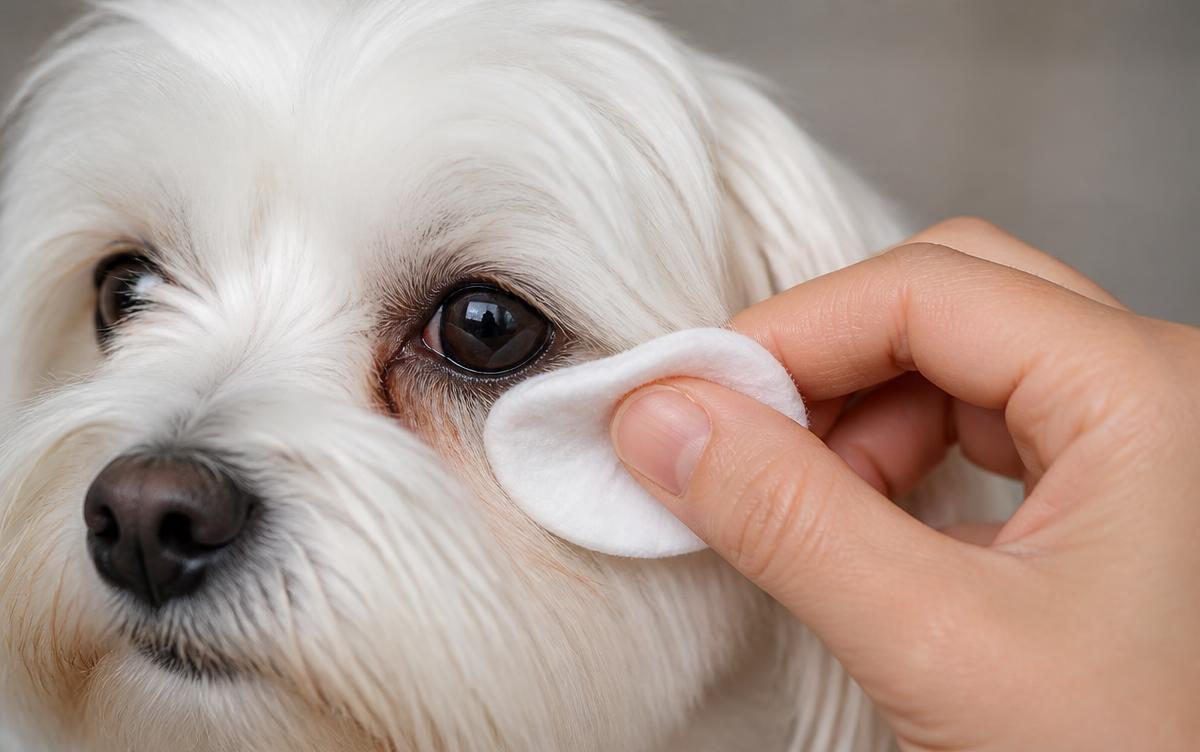
- Saturate a clean pad. Pour a small amount of liquid remover onto a clean lint-free cotton pad. Never use cotton swabs near the eye.
- Soften old crusts. Press the pad against the stained fur for 20 to 30 seconds.
- Wipe outward. Move down and away from the eye, following the direction of hair growth. Never toward the eye.
- Comb through. Draw a fine-toothed metal comb through the damp hair to clear softened debris.
- Dry the area. Pat with a fresh tissue until the fur feels dry to the touch. Damp fur is where the next stain begins.
- Optional shielding powder. Dust a tiny amount into dry fur with a small brush.
Environmental fixes that reduce staining at the source
- Switch to stainless or ceramic water bowls. Plastic scratches, harbors bacteria, and increases tearing.
- Use filtered water. Lower iron and mineral content in the bowl means less porphyrin production.
- Trim the hair around the eye. Fewer strands to catch tears means less soak time and less oxidation.
- Wash the face daily. Not weekly. Daily wipes prevent yeast from moving in.
When to see a vet
Book a vet if tearing is sudden, one-sided, thick or yellow, accompanied by squinting, redness, or pawing at the eye. Those are signs of infection, corneal ulcer, or blocked tear duct, and no over-the-counter product is the answer.
Common mistakes
- Using human eye drops near dog eyes.
- Skipping daily maintenance and trying to clean months of oxidation in one session.
- Wiping toward the eye instead of away from it.
- Assuming a bleach-based product will work faster. It stings, it can damage the cornea, and it is unnecessary.
Bottom line
The best dog eye tear stain remover is a gentle micellar cleanser with boric acid, camomile, and mild antimicrobial botanicals, used on a cotton pad and wiped outward from the eye daily. Pair the wipe with environmental changes (fresh filtered water, stainless bowls) and trim the eye-area hair short. See the vet for sudden or one-sided tearing.