Quick Answer
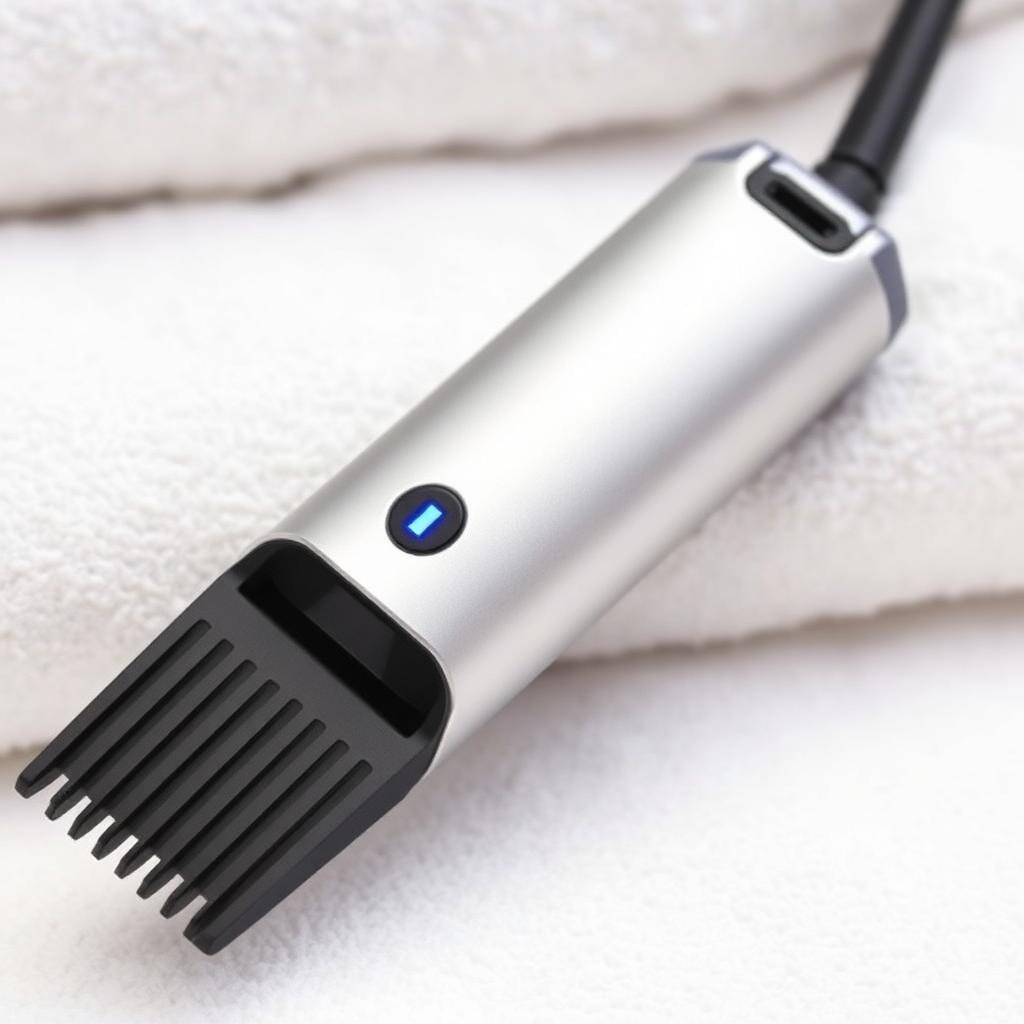
The best cordless detailing trimmer for dogs has a 1-inch fine T-blade, a slim lithium-ion pen body, and an integrated LED spotlight. It clears the paw pads, ear folds, sanitary zones, and face contours cleanly, exactly where a full-size body clipper is too wide and too heavy to steer safely.
You still need a body clipper for the coat. A detailer is a partner tool, not a replacement, and it is worth its own charger.
Why full-size clippers struggle in detail work
Two issues. First, the cutting head on a body clipper is around 2 inches wide, which is broader than the space between most dogs' toes. So you cannot get the blade parallel to the skin without lifting a toe out of the way; the moment the dog pulls back, the blade catches the webbing.
Second, the mass of a body clipper makes small motions imprecise. A slim pen-shaped detailer weighs a fraction as much; your fingers, not your wrist, drive the cut. That is the whole difference for precision work in tight, contoured places.
What a good detailing trimmer looks like
- 1-inch (or narrower) fine T-blade. Fits between paw pads without lifting the toes apart.
- Slim pen-shaped body. Finger control, not wrist control.
- Lithium-ion cordless. No power cord tugging at the paw you are working on.
- Integrated LED spotlight. Lights up dark paw crevices and ear folds.
- Waterproof or splash-rated head. Rinseable between sensitive zones.
- Quick-swap blade or comb set. Fine T-blade for pads; small guard combs for face lines.
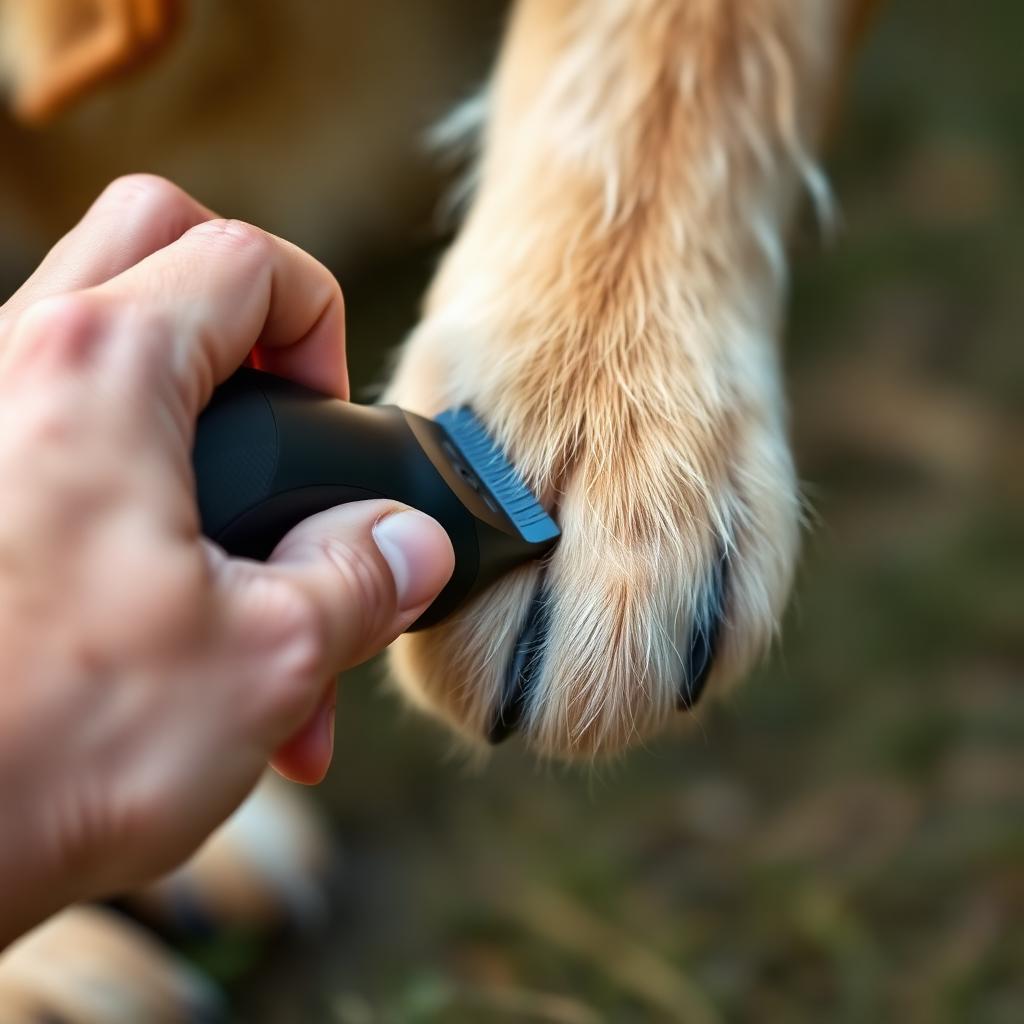
Step by step: safe paw pad clean-up
- Sit or lie the dog on their side. Standing paws lift too much; you need slack skin.
- Hold the paw softly at the wrist. Squeezing the toes tightens the webbing; that is where cuts happen.
- Turn the trimmer on across the room first. Bring it in already running so the sound is not new against the ear.
- Spread the pad hair with a comb. See what you are cutting.
- Trim flush to the pad, not below. Below the pad is skin; skin is the wrong target.
- Ear folds and sanitary zone next. Same principle: comb up, trim flush, do not scoop.
- Rinse or wipe the blade before switching zones. Hygiene between paws and groin.
How to fit the tool to your dog
- Long-haired small dog (Yorkie, Maltese): LED matters most; the pad hair is often the same color as the pad.
- Feathered feet (Cocker, Golden): a slightly wider T-blade saves time on the outside of the paw.
- Doodle mix with dense curl: pair the detailer with a full-size clipper; the detailer will not clear a solid mat.
- Senior dog with sensitive skin: the quietest possible trimmer, and shorter sessions of two zones per day.
Common mistakes
- Scooping to try to shorten more. Flush passes only.
- Trimming a wet, freshly bathed paw. Wet hair drags on the blade and lifts skin.
- Skipping the LED because it is not "necessary." It is, on dark paws.
- Leaving the head uncapped in a drawer. A bent blade catches skin.
- Using body clipper oil on a detailer head. Different viscosity; use the fine-machine oil the manufacturer specifies.
Care and blade life
Brush the head clean after every session with the nylon brush that ships in the box. One drop of light machine oil per session extends blade life. Wipe the housing with alcohol between dogs. A well-cared-for detailer head runs 12 to 18 months of regular home use before the cut starts to tug; that tug is the signal to replace the head, not to press harder.
Bottom line
A slim, LED-lit, cordless detailing trimmer with a 1-inch fine T-blade is the second half of a grooming kit. The body clipper does volume; the detailer does the paws, ears, and sanitary line where precision matters. Sit the dog down, spread the hair, trim flush, and move slowly. It is a small tool, and its whole job is to stay small.