Quick Answer
The best conditioner for silky dog coats is a diluteable cream rinse built on cationic conditioning agents, hydrolyzed silk or keratin proteins, and light plant esters like argan or jojoba. Dilute one part conditioner into ten parts warm water, smooth it through the coat, dwell 3 to 5 minutes, then finish with a cool rinse to seal the cuticle flat.
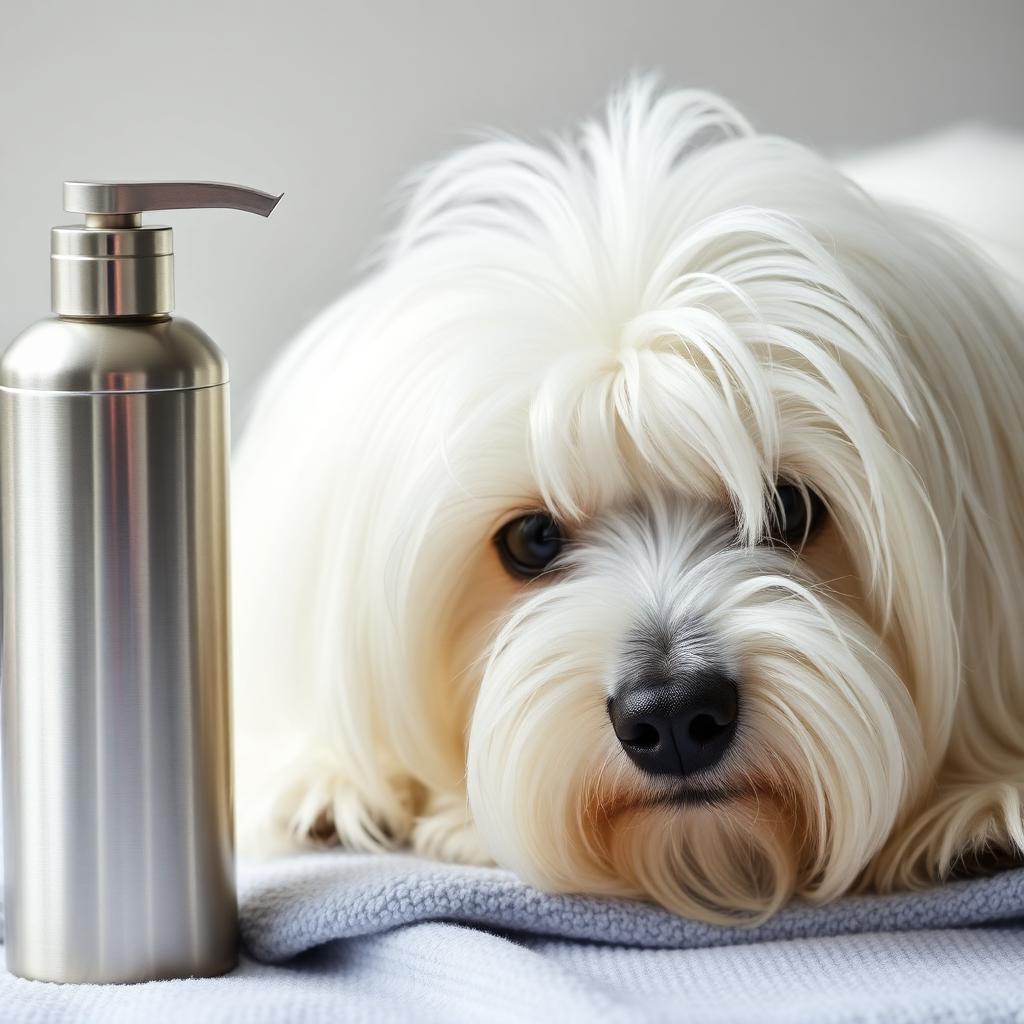
Silky-coated breeds like the Maltese, Yorkshire Terrier, Afghan Hound, and Shih Tzu carry a fine single-layer coat that behaves like human hair. Without conditioning, the cuticle stays open after shampoo, the coat frizzes, and tight mats form at friction points.
Why silky coats need their own product
Double-coated breeds have a dense insulating undercoat under a coarse guard coat, so conditioner focuses on cuticle protection. Silky-coated breeds have no undercoat at all; every strand grows long, fine, and continuously. That means every strand is exposed to friction from harnesses, play, and daily movement, and every strand is fragile.
A shampoo bath opens the cuticle to lift dirt. If you stop there, the coat dries with the cuticle raised, catching itself on other strands. The result is that famous "cottony" texture that mats overnight. Conditioner is not a nice-to-have on these breeds; it is what closes the cuticle so the coat can flow instead of tangle.
Ingredients that actually work on silky hair
- Cationic conditioning polymers (behentrimonium methosulfate, cetrimonium chloride). Positively charged molecules that bind to damaged (negatively charged) hair, flatten the cuticle, and cut static.
- Hydrolyzed silk, keratin, or wheat protein. Small protein fragments that slip into microscopic cracks along the shaft and reinforce elasticity so hair breaks less during brushing.
- Argan and jojoba esters. Lightweight lipid oils close to the natural oil profile of hair. They add slip without leaving a greasy film.
- Amodimethicone (for show coats). A high-quality silicone that bonds only to damaged sites on the cuticle rather than coating the whole strand. It repels dirt and urine on floor-length coats without heavy build-up.
- Pro-vitamin B5 (panthenol). Humectant that pulls in moisture and improves shine.
Ingredients to skip on fine coats
- Heavy dimethicone or cyclopentasiloxane at the top of the ingredient list. They coat every strand and slowly weigh the coat down.
- Sulfate detergents in a "2 in 1" cleansing conditioner. Fine coats respond much better to a separate mild shampoo and a dedicated conditioner.
- Strong fragrance. It rarely helps a dog and often irritates skin under the belly.
- Coconut oil-heavy formulas. Beautiful on some coats, but on very fine hair they leave a waxy residue.
Cream rinse vs leave-in vs show spray
- Cream rinse (rinsed out). The workhorse. Deep hydration during the bath, low residue on the coat afterward. Use every wash.
- Leave-in conditioner spray. A light daily mist before brushing. Prevents dry-brush breakage between baths.
- Detangling spray. Higher concentration of slip agents than a leave-in. Use spot-on before working through a knot.
- Finishing show spray. Contains cosmetic silicones to smooth the top layer for photos or the ring. Do not use as a daily product.
Step by step: the conditioning routine
- Dilute. Mix one part conditioner with ten parts warm water in a squeeze bottle. Shake until smooth. Diluting is what lets the product coat every fine strand evenly.
- Apply along the spine. Pour the mixture along the back and let it flow down the sides. Smooth it through the coat with your palms; never scrub in circles.
- Work through gently. Use a wide-tooth comb (or your fingers) to draw the conditioner from mid-shaft to tips.
- Dwell 3 to 5 minutes. This is where proteins and lipids actually bond. Skip the dwell and you paid for a rinse.
- Cool rinse. Rinse with lukewarm to cool water until the water runs clear. Cool water helps close the cuticle flat.
- Blot with a microfiber towel. Press, do not rub. Rubbing a fine coat is how you create the first tangle before the dog even leaves the tub.
- Blow-dry straight. A stand dryer on cool or warm (never hot) while brushing straight down the strand.
Between-bath care
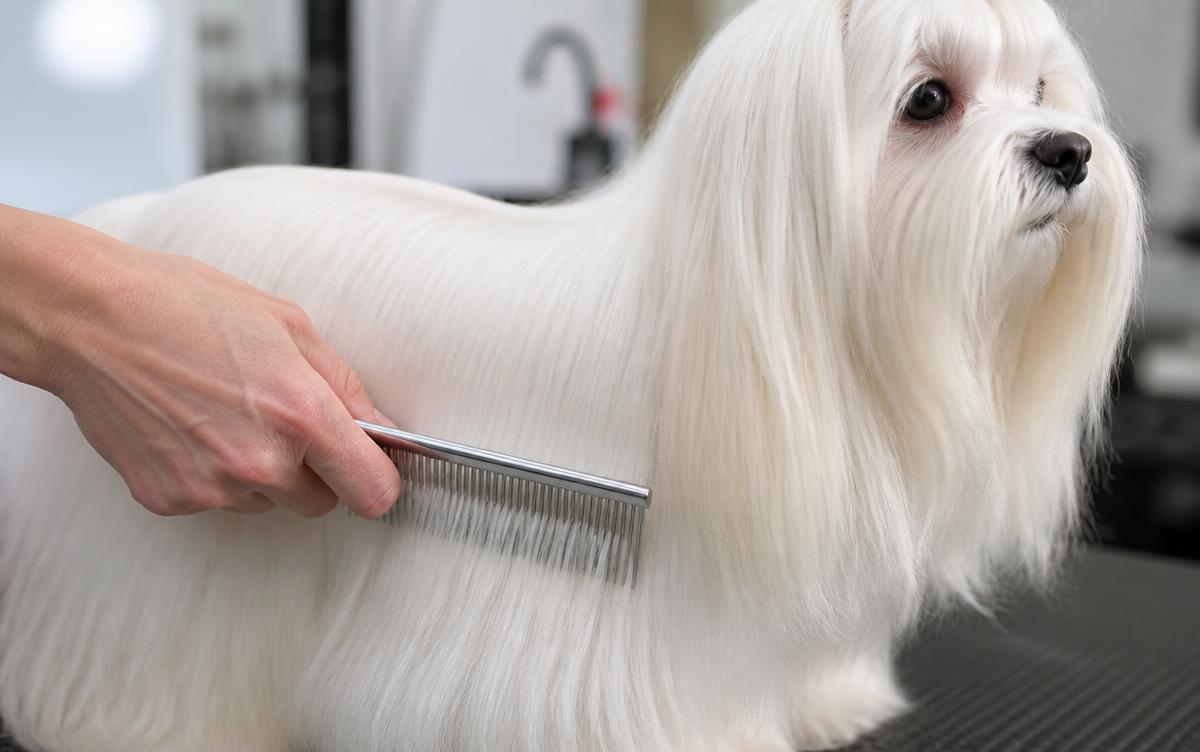
Silky coats need daily attention or they mat overnight. Mist a light leave-in through the coat before brushing every morning, and line-brush from skin outward with a long-pin brush. Follow the brush with a fine steel comb; if the comb hits a snag, go back with the brush. The comb is the truth-teller.
Common mistakes on silky coats
- Skipping the dilution step. Undiluted cream rinse sits in patches and leaves the rest of the coat under-conditioned.
- Rinsing with hot water. Hot water keeps the cuticle open; cool water closes it.
- Rubbing with a terrycloth towel. Microfiber blots without gripping the fine strands.
- Air-drying a wet coat. Wet fine hair mats against itself within an hour. Always blow-dry straight.
- Brushing a bone-dry coat. Static locks the pins into the coat. Always mist a leave-in first.
How often to bathe and condition
- Every 2 to 3 weeks: full bath, shampoo twice, condition once.
- Every 6 to 8 weeks: deep-conditioning treatment with a mask left on 10 minutes.
- Daily: leave-in mist plus line brushing.
Bottom line
The best conditioner for a silky dog coat is a diluteable cationic cream rinse with hydrolyzed proteins and light plant esters, applied warm, left to dwell, and rinsed cool. Pair it with a daily leave-in mist and a fine steel comb, and the coat flows instead of frizzing. Skip the 2-in-1 wash and the coconut-heavy oils on fine hair, they weigh the coat down.