Quick Answer
The best comb for thick facial hair is a saw cut, hand polished cellulose acetate comb with graduated wide and fine tooth spacing, or a natural sandalwood or ox horn composite. The seamless teeth glide through coarse curly beard hair without static, snagging, or split ends. Skip injection molded plastic combs; the microscopic seams on each tooth act like tiny hacksaws on the hair shaft.
Why beard hair is different
Beard hair is coarser, thicker, and more irregular than scalp hair. It grows in curly, unpredictable directions and mats close to the skin line. That density means it needs a comb whose teeth are smooth all the way around; anything with a seam or a rough edge catches on the coarse cuticle and drags.
Cheap injection molded plastic combs are the worst offender. The molding process leaves a microscopic ridge along the inside of every tooth, and every stroke through a thick beard pulls hair against those ridges. The result is snagging, split ends, and static. Static in a thick beard reads as frizz for the rest of the day.
What to look for
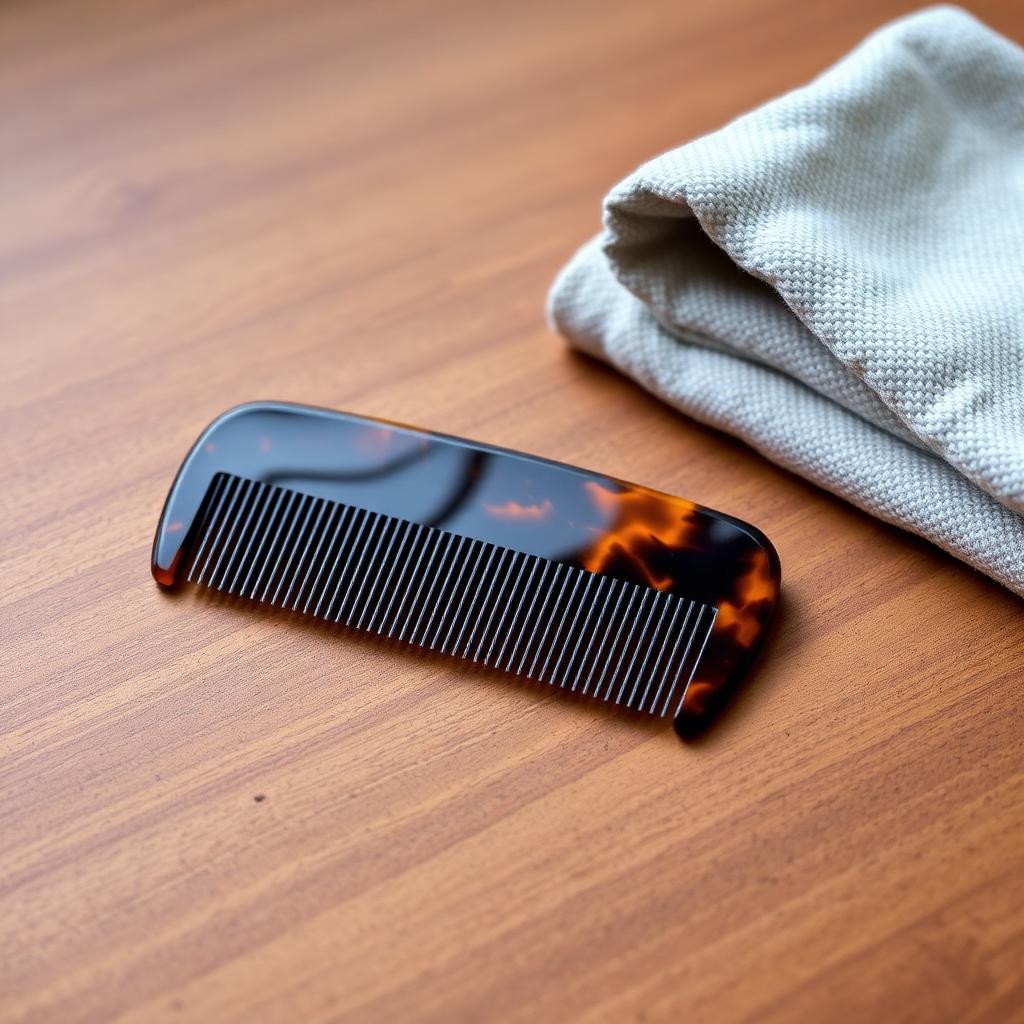
- Saw cut cellulose acetate. Sliced from solid sheets and tumble polished; every tooth is smooth and rounded.
- Natural sandalwood. Anti static, distributes sebum, smells great.
- Ox horn composite. Traditional barbering material, warm to the touch, zero static.
- Graduated tooth spacing. Wide teeth for detangling bulk, narrow teeth for mustache and final finish.
- Rounded tooth tips. Not sharp; skin friendly.
Materials to skip
- Injection molded plastic. Seams and static.
- Metal combs. Cold, harsh, scrape skin.
- Rubber combs with plastic teeth. Marketed as "anti static" but the plastic teeth still snag.
- Ultra thin travel combs. Too flexible for coarse beard hair; teeth splay under load.
Step by step: combing a thick beard
- Start with a dry or almost dry beard. Wet coarse hair snaps under tension.
- Apply a drop of beard oil to the fingertips, work through the length so hairs glide.
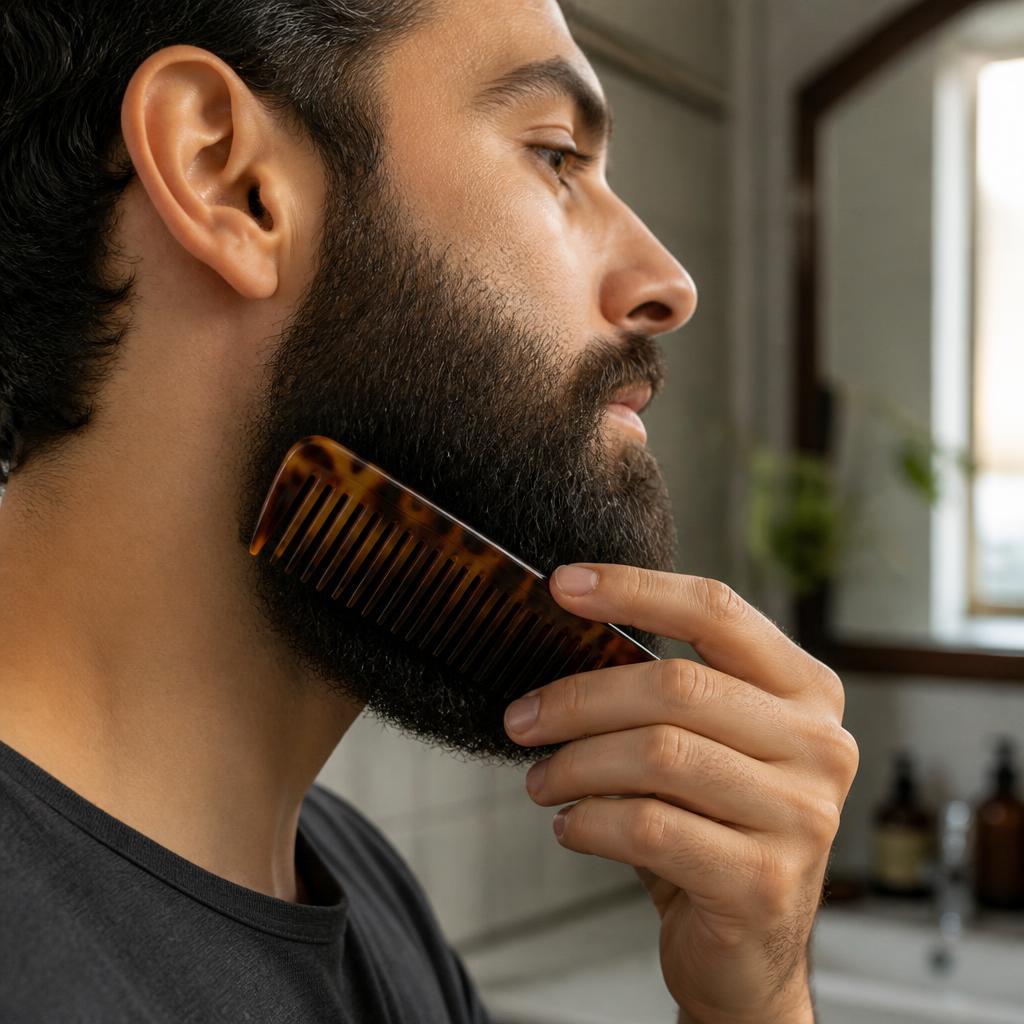
- Use the wide teeth first. Start at the ends and work up toward the roots in short sections. Never rip from root to tip on a first pass.
- Switch to fine teeth. Once the bulk is detangled, use the narrow side for the final smoothing pass.
- Comb the mustache last. Downward and outward strokes from the septum toward the corners of the mouth.
- Set with a light layer of balm. Optional; helps shape hold through the day.
Caring for a good comb
- Rinse under warm water once a week. Small drop of gentle soap.
- Air dry flat. Not on a radiator; wood warps.
- Store in a case or drawer. Loose in a bag scratches the polish.
- Oil wooden combs occasionally. A drop of beard oil worked in with a soft cloth keeps sandalwood conditioned.
Common mistakes
- Using a cheap plastic comb because it came with the beard oil.
- Combing wet coarse hair straight down; snaps hairs.
- Starting at the roots on a knotted beard; rips.
- Skipping the oil; the comb drags on dry cuticle.
- Storing loose in a bag; the polish scratches, the teeth chip.
Bottom line
Pick a saw cut cellulose acetate comb with wide and fine tooth spacing, or a natural sandalwood or ox horn comb for zero static. Use a drop of beard oil, work the wide teeth from tips up in short sections, finish with the fine teeth, and store the comb in a soft case. Skip the injection molded plastic combs; the microscopic seams on their teeth are the reason your beard splits and frizzes.