Quick Answer
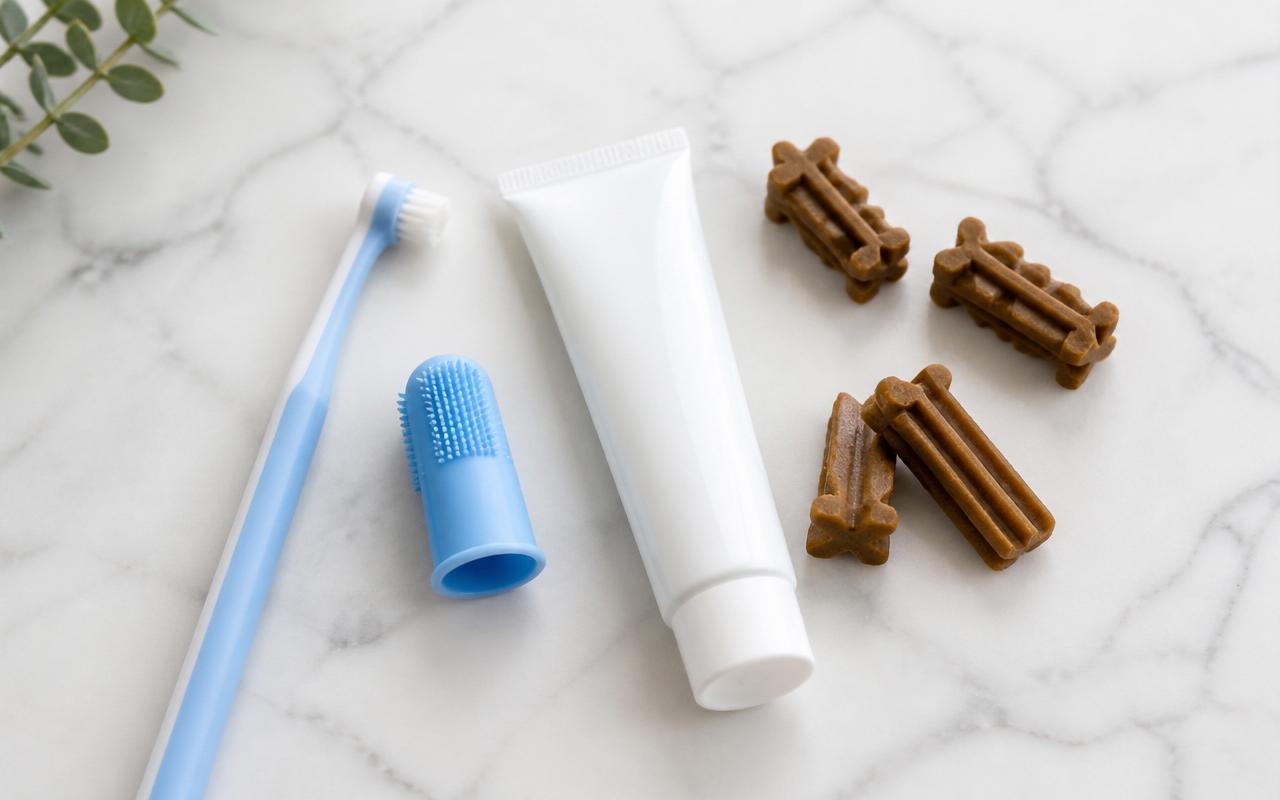
The best cat dental chew and brush kit pairs a micro-head soft bristle toothbrush and a silicone finger brush with an enzymatic feline toothpaste (poultry or fish flavored, glucose-oxidase based) and a bag of VOHC-accepted crunchy dental chews. Brush 3 to 4 times a week and use chews on the days you skip brushing. Never use human toothpaste; xylitol and high fluoride levels are toxic to cats.
By age three, over 70 percent of cats show early periodontal disease. A ten-minute weekly investment now saves an extraction under anesthesia later.
Why dental care matters more than owners think
Plaque forms within hours of a meal. Left alone, it mineralizes into tartar within 48 to 72 hours. Tartar traps bacteria, bacteria inflame the gum, the gum recedes, and the tooth's supporting bone starts to disappear. In cats this often shows up as a specific painful condition called feline tooth resorption, where the tooth is dissolved from the inside.
Home care will not reverse advanced disease. It will slow plaque before it becomes tartar, which is the only phase brushing can touch.
What actually belongs in the kit
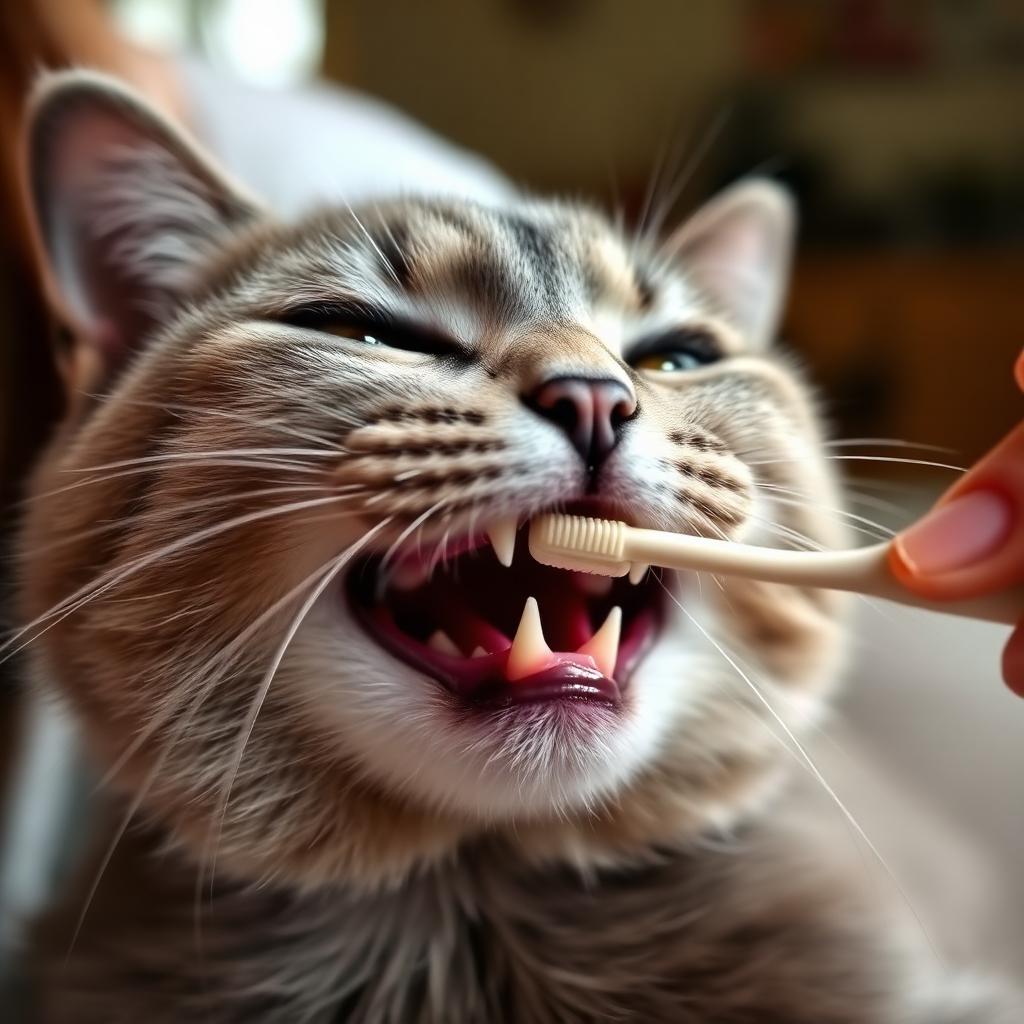
- Micro-head soft bristle toothbrush. Angled head, ultra-soft nylon, small enough to reach back molars.
- Silicone finger brush. Best for the introduction phase and back molar sweeps.
- Enzymatic feline toothpaste. Glucose oxidase and lactoperoxidase enzymes plus a highly palatable flavor (chicken, beef, or seafood).
- VOHC-accepted dental chews. Crunchy, fibrous texture with a porous internal structure that wraps around the tooth as the cat bites.
- Water additive (optional). A tasteless enzymatic additive that reduces bacterial load in the mouth all day.
What to skip
- Human toothpaste. Fluoride and xylitol are toxic.
- Baking soda. Alkaline load is bad for cats with any kidney compromise.
- Rawhide-style chews. Not designed for feline mouths and a choking risk.
- Anesthesia-free dental scaling from mobile services. Cosmetic only. Does not address subgingival disease and often stresses the cat.
- Bones and antlers. Fracture cat teeth on the first bite.
Step by step: teaching a cat to accept brushing
- Week 1: taste only. Put a small dab of enzymatic toothpaste on your fingertip. Let the cat lick it as a treat. Twice a day. Nothing else.
- Week 2: lip lift. Same paste treat but lift the upper lip briefly on one side while the cat licks. Reward calmness.
- Week 3: finger brush. Add the silicone finger brush loaded with paste. Rub the outside of the top canines only for 3 seconds. Treat.
- Week 4: full outer surface. Extend the pass to the outer surface of the top and bottom teeth on one side, then the other. Total time: 20 to 30 seconds.
- Week 5+: real toothbrush. Swap the finger brush for the micro-head toothbrush. Same routine. Small circular motions at the gumline.
Never force the mouth fully open. All brushing happens on the outer (cheek-facing) surface of the teeth with the mouth closed. The tongue keeps the inner surfaces relatively clean; the outside is where plaque builds.
How chews and additives fit in
- Dental chews. Best given after a meal or as a bedtime treat. Look for the VOHC seal (Veterinary Oral Health Council).
- Water additives. A daily dose in the water bowl. Refresh the bowl daily. Watch that the cat still drinks; some are picky.
- Dental diets. Prescription kibble like Hill's t/d or Royal Canin Dental works well for cats who tolerate dry food. Not a substitute for brushing but a strong add-on.
How often, and when to see the vet
- Daily. Ideal brushing schedule.
- 3 to 4 times a week. Realistic minimum for meaningful plaque reduction.
- Once a year. Vet oral exam.
- Every 12 to 24 months. Anesthetized dental cleaning with x-rays for most adult cats.
- Immediately. Any drooling, dropping food, one-sided chewing, sudden bad breath, or blood on toys.
Common mistakes
- Skipping the 4-week introduction and forcing a brush on day one.
- Using human toothpaste "just this once."
- Brushing only the front teeth. Plaque builds on the back molars.
- Relying on treats alone. Chews without brushing slow disease; they do not stop it.
- Skipping the annual vet oral exam because "the teeth look fine."
Bottom line
The best cat dental kit is a micro-head soft brush, a silicone finger brush, an enzymatic poultry- or fish-flavored feline toothpaste, and a bag of VOHC-accepted crunchy chews. Introduce brushing over four weeks starting with paste as a treat. Brush the outer surfaces of the teeth 3 to 4 times a week minimum, use chews and a water additive on off days, and book an annual vet oral exam. Never use human toothpaste and never skip anesthesia for a real cleaning.