Quick Answer
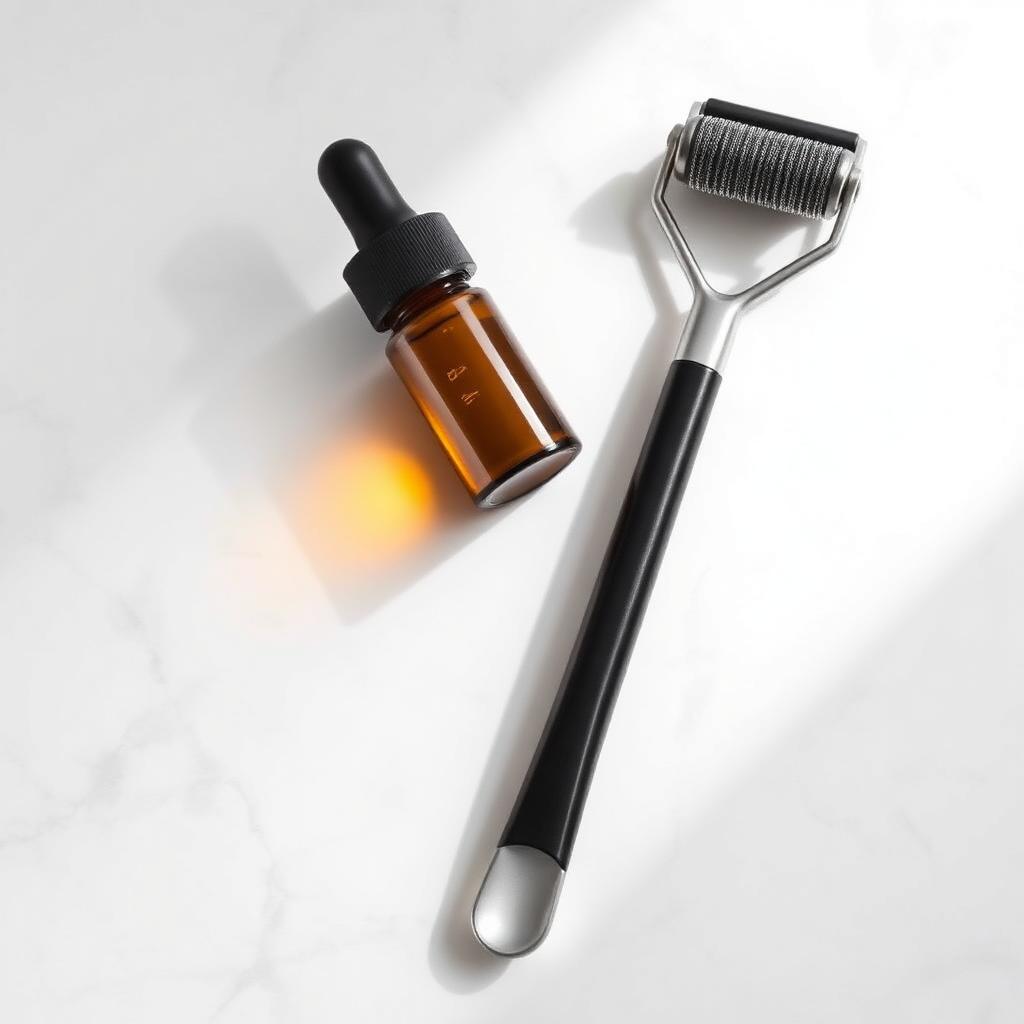
The best beard roller for patchy growth uses 192 individually laser sharpened titanium microneedles at a 0.5mm calibrated depth, aligned to enter the skin at a clean 90 degree angle. Use it 2 to 3 times a week on cleansed skin, follow with a growth serum or beard oil, and never on active acne, open cuts, or inflamed skin.
A derma roller is not a shortcut, but it is one of the few genuinely evidence backed mechanical stimulants for facial hair follicles. Combined with realistic expectations, it fills patches better than any oil alone.
Why beards go patchy in the first place
Beard patchiness is driven by genetics, localized blood circulation, and follicle sensitivity to dihydrotestosterone (DHT). When circulation is poor, follicles enter a prolonged dormant phase and produce fine translucent vellus hairs instead of thick terminal hairs. The follicle is still there; it just is not receiving the signals it needs to make a real hair.
Microneedling breaks that cycle. Rolling a fine needle array across the skin creates microscopic channels in the outer skin layer, triggers a controlled wound healing response, spikes vascular endothelial growth factor (VEGF), and floods dormant follicles with the collagen and growth factors they need to convert to a terminal hair phase.
What to look for
- Pure titanium needles. Titanium is harder than stainless steel and holds a sharp edge for months. Stamped metal disc rollers dull fast and drag.
- 0.5mm calibrated depth. The optimal balance of penetration and safety for facial hair. Below 0.25mm you only exfoliate; above 1.0mm you risk pain and scarring.
- 192 needle real count. Lower needle counts allow clean 90 degree entry per pin. 540 needle wheels look impressive but drag the skin and blur individual punctures.
- Sturdy handle with clear needle head. You should be able to inspect every pin before use.
- Hard storage case. Keeps needles clean and sharp between sessions.
Step by step: beard rolling protocol
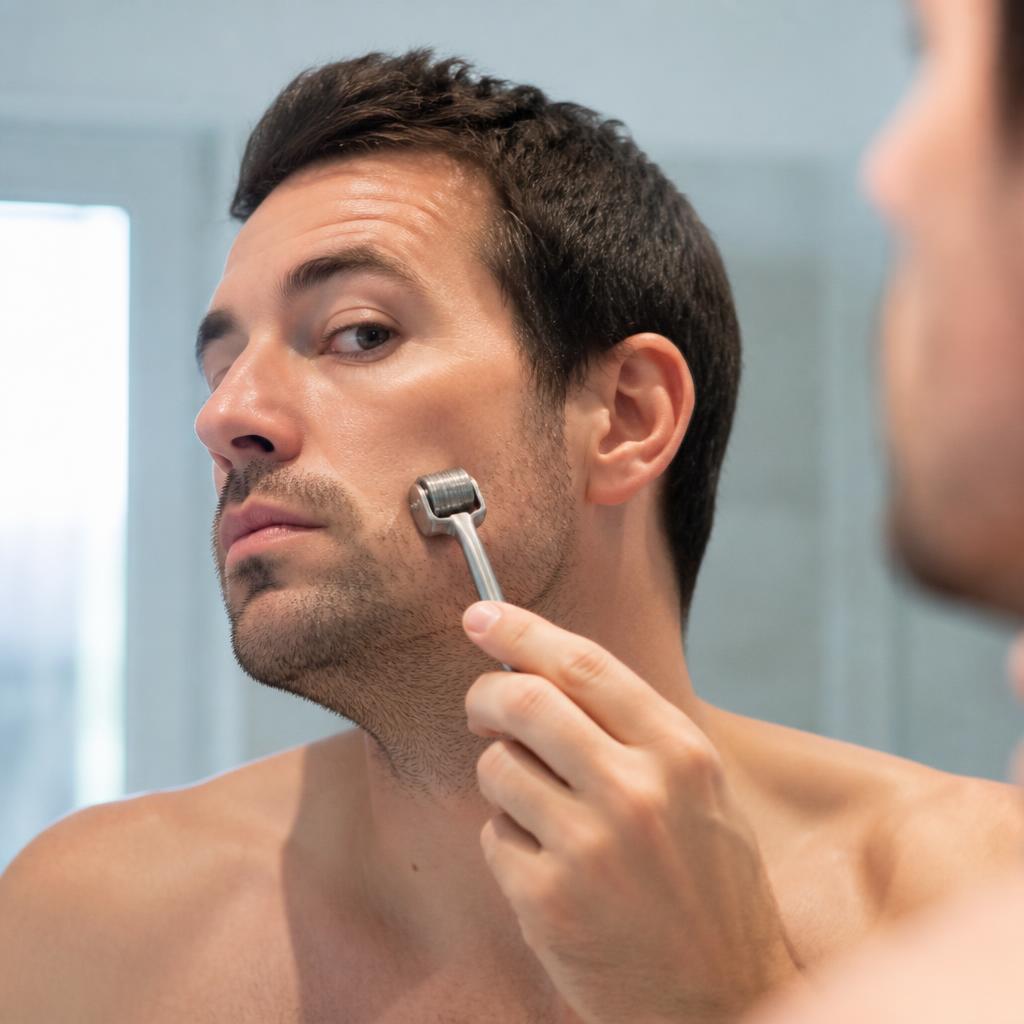
- Sterilize the tool. Submerge the roller head in a cup of 70 percent isopropyl alcohol for a full 10 minutes.
- Cleanse the face. Wash with a gentle sulfate free cleanser and pat completely dry.
- Roll horizontally. 5 slow passes across each patchy area. Lift and place; do not drag.
- Roll vertically. 5 more passes.
- Roll diagonally. 5 more passes, both diagonals.
- Wait 10 minutes. Then apply beard growth oil or a targeted growth serum.
- Clean and store. Rinse the head in warm water, submerge in alcohol for 5 minutes, air dry, back in the case.
How often
- 2 to 3 sessions per week is the sweet spot for facial hair.
- 48 hours minimum between sessions. Skin needs time to build collagen.
- Expect 8 to 12 weeks before you see the first change. Hair cycles are slow.
- Reassess at 12 weeks. If nothing has changed, add topical minoxidil (under medical guidance) or accept that your patches are genetically fixed.
When not to roll
- Active acne on the target area; you spread bacteria and inflammation.
- Cold sores anywhere on the face.
- Sunburn or windburn.
- Recent shaving cuts.
- Isotretinoin (Accutane) users; skin healing is impaired.
Realistic expectations
Microneedling can convert vellus to terminal hair in dormant follicles. It cannot create new follicles where none exist. Complete cheek gaps rarely fill fully; scattered patches usually do. If you already have a good jawline connection, microneedling thickens what is there. If you have no follicles at the cheekbone at all, no roller will make hair grow there.
Common mistakes
- Rolling daily. Skin does not rebuild fast enough; you cause inflammation and scarring instead.
- Buying a 1.5mm roller "for faster results." Scarring risk, real pain, no benefit.
- Skipping the alcohol soak. Skin infections and folliculitis follow.
- Applying harsh actives (retinol, glycolic acid) immediately after rolling. Chemical burns.
- Quitting at 4 weeks. Hair cycles are 8 to 12 weeks; you have to wait.
Bottom line
Choose a 192 needle titanium beard roller at a 0.5mm depth, sterilize before every use, roll 2 to 3 times a week on clean skin, and follow with a growth oil or serum. Expect visible thickening in 8 to 12 weeks, not overnight. It is one of the few genuinely mechanical interventions for patchy growth and it works when the protocol is followed.