Quick Answer
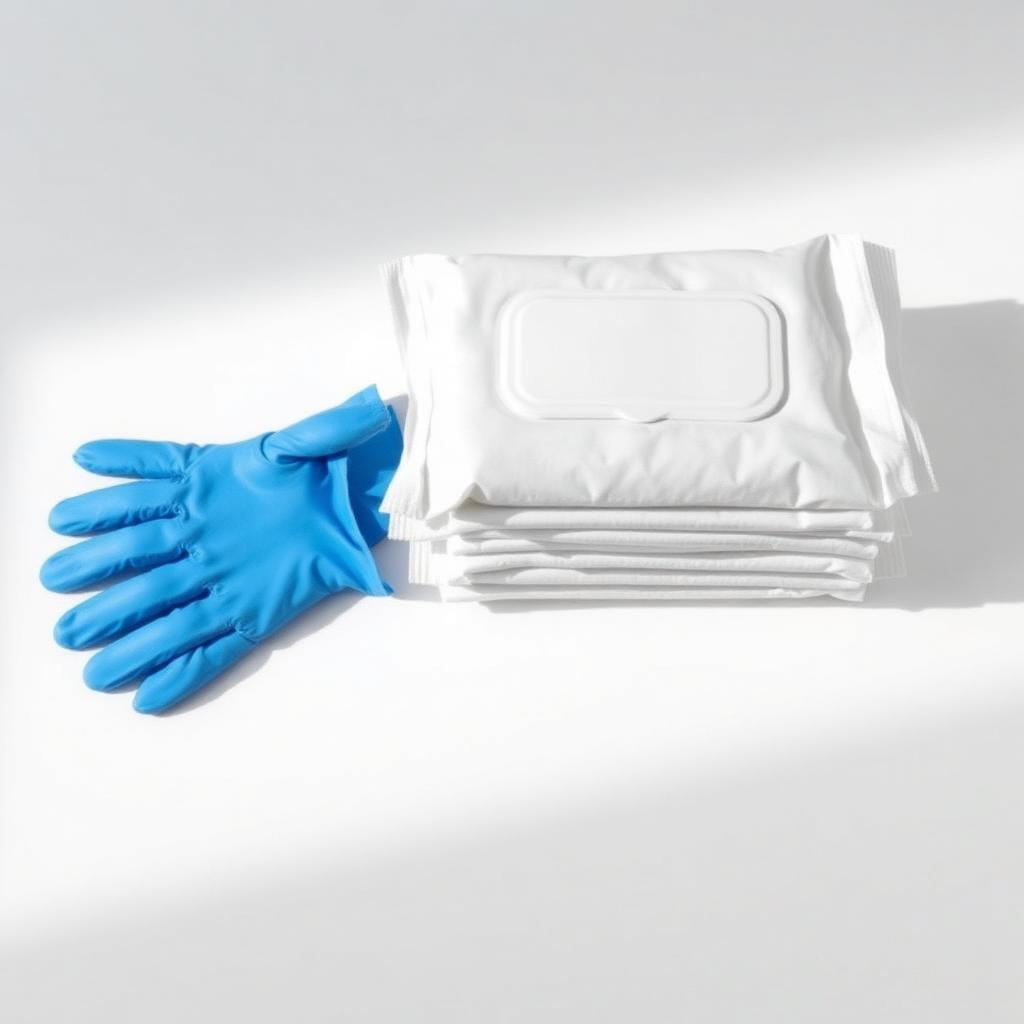
The best anal gland wipe at home is a thick, alcohol-free deodorizing pet wipe with enzymatic odor breakers, witch hazel, and colloidal silver, used with disposable gloves in outward strokes. These wipes clean the fur around the sanitary area; they do not empty the glands themselves. See a vet if your dog is scooting, licking obsessively, or the fishy smell keeps coming back within a day.
What anal glands actually are
Anal glands are two small sacs just inside the rectum at roughly the 4 and 8 o'clock positions. They produce a strong, oily, sulfur-heavy fluid that normally expresses in tiny amounts each time your dog passes a firm stool. In healthy dogs you never notice it.
The fluid becomes a problem when it leaks unexpectedly (onto the fur, your couch, or your lap) or when the sacs do not empty fully and become impacted. Both feel like the same thing to owners: a bad fishy smell.
Wipes clean the fur, not the sacs
This distinction matters. A wipe removes the leaked fluid from the fur around the tail, deodorizes the area, and calms the skin. It does not empty a full or impacted gland.
If your dog is scooting, licking the rear, or you can still smell the fish after a proper clean, the glands themselves need attention, from a vet or trained groomer.
Ingredients that break down the odor
- Enzymatic odor eliminators. Bio-enzymes that dismantle the sulfur compounds and proteins in gland fluid, rather than just masking them.
- Witch hazel. Gentle astringent that reduces surface irritation from friction and licking.
- Colloidal silver. Mild antimicrobial that discourages secondary infection.
- Chamomile and aloe vera. Anti-inflammatory botanicals for the sensitive skin around the rectum.
- Saccharide isomerate. Skin hydrator that supports the barrier without adding oil.
Ingredients to avoid
- Isopropyl alcohol. Stings, dries skin, and does not deodorize.
- Strong artificial fragrance. Masks smell temporarily but irritates skin.
- Chlorhexidine at over-the-counter strength on broken skin (see a vet for that).
Step by step: cleaning the sanitary area
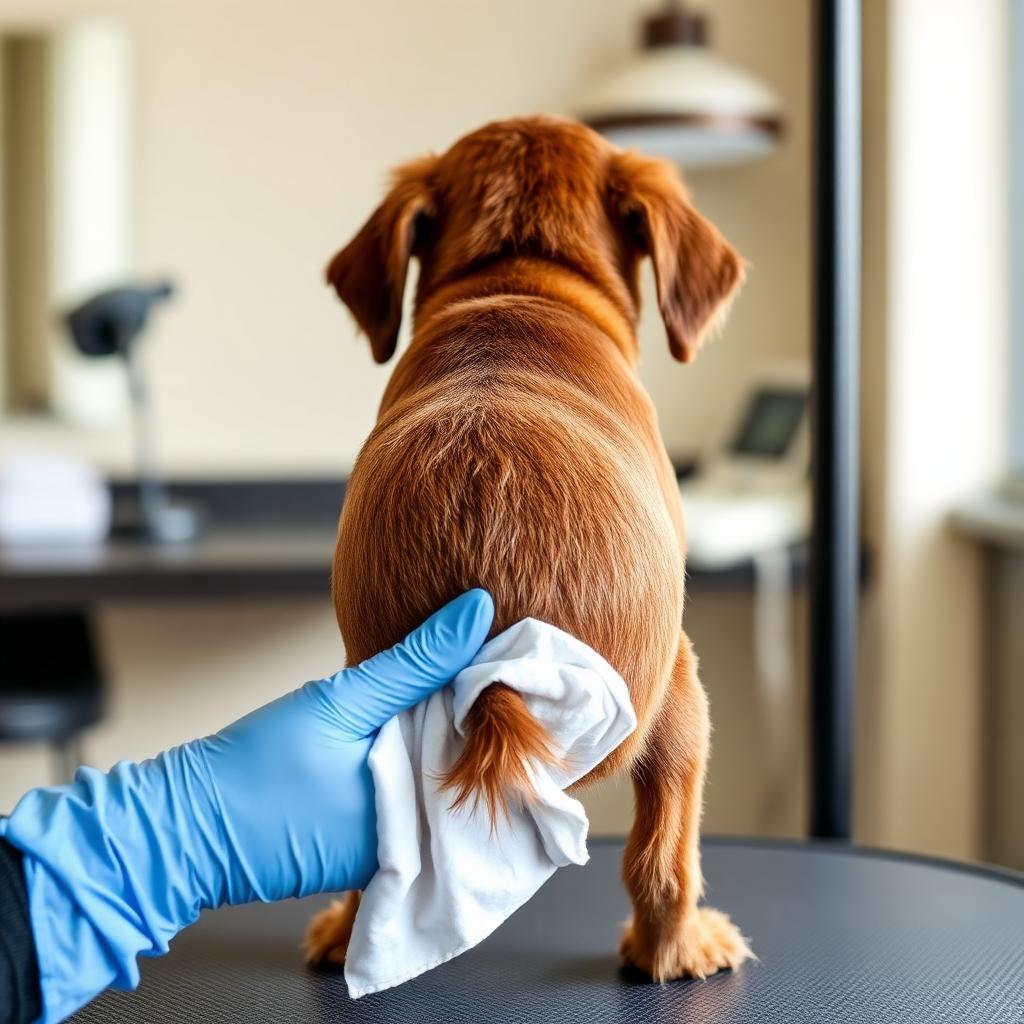
- Put on gloves. Disposable nitrile gloves. Do not skip this.
- Position the dog on a mat. Standing on a non-slip mat, tail lifted gently.
- Lift the tail. Expose the sanitary area clearly.
- Wipe outward. Take a fresh wipe and sweep outward from the center of the rectum. Do not press inward or into the gland openings.
- Dwell if needed. If the smell is strong, hold a fresh wipe against the stained fur for 10 to 15 seconds so the enzymes can work.
- Clean the surroundings. A fresh wipe for hind legs and under the tail base where leaks may have tracked.
- Bin the wipe. Never flush; the wipes are not sewer-safe.
Trimming the sanitary area
Long fur around the rectum traps gland leaks and stool. Keep the hair short with a #10 clipper blade or a small sanitary trimmer. Leave at least a quarter inch of hair; do not shave to bare skin, which can irritate.
Signs the glands themselves need help
- Scooting the rear along the floor.
- Persistent obsessive licking of the tail base.
- Fishy smell returns within 24 hours of a proper clean.
- Swelling or redness to one side of the rectum.
- Straining or pain during defecation.
Book a vet or a trained groomer for manual expression. Do not attempt to squeeze the glands at home; done wrong it can rupture the sac.
Diet and stool matter
Firm, well-formed stool naturally empties the glands on the way out. Loose or small stool does not. If your dog has soft stool and repeated gland problems, ask the vet about adding fiber (canned pumpkin, psyllium husk, or a prescription fiber supplement) and check for food allergy.
Common mistakes
- Using human wet wipes with fragrance and alcohol.
- Skipping gloves.
- Pressing into the gland opening instead of wiping outward.
- Flushing wipes down the toilet.
- Ignoring scooting or licking, assuming a wipe will fix it.
Bottom line
The best anal gland wipe at home is a thick, alcohol-free enzymatic deodorizing wipe used with gloves in outward strokes. Wipes clean the fur around the area; they do not empty the glands. See a vet for scooting, licking, or a fishy smell that keeps coming back. Firm stool and a short-clipped sanitary area prevent most problems in the first place.