Quick Answer
The Ferrari Luce, Italian for Light, is Ferrari's first fully electric production vehicle. Unveiled in Rome, the Luce is a five seat, four door grand tourer powered by four electric motors producing 1,050 horsepower and 990 Nm of torque, fed by a floor mounted 122 kWh battery pack on an 800 volt architecture.
The car accelerates from 0 to 100 km/h in 2.5 seconds, tops out at 310 km/h (193 mph), and delivers a 530 km (329 mile) range. Pricing starts around 550,000 euros (roughly $640,000), with global customer deliveries scheduled to begin in the fourth quarter of 2026. The exterior was designed in partnership with Sir Jony Ive and Marc Newson through their LoveFrom collective.
Why This Launch Is a Big Deal
Ferrari has spent the last five years methodically preparing for this moment. The Luce arrives just as several luxury rivals, including Lamborghini and Porsche, are publicly walking back their EV timelines in response to softening global demand. Ferrari is choosing to push forward instead.
CEO Benedetto Vigna has framed the Luce as a calculated long term bet rather than a short term sales play. The argument is that ultra luxury buyers will eventually accept an electric Ferrari, that the technology in the car will trickle into future hybrids, and that being early matters more than being safe.
The Jony Ive Design
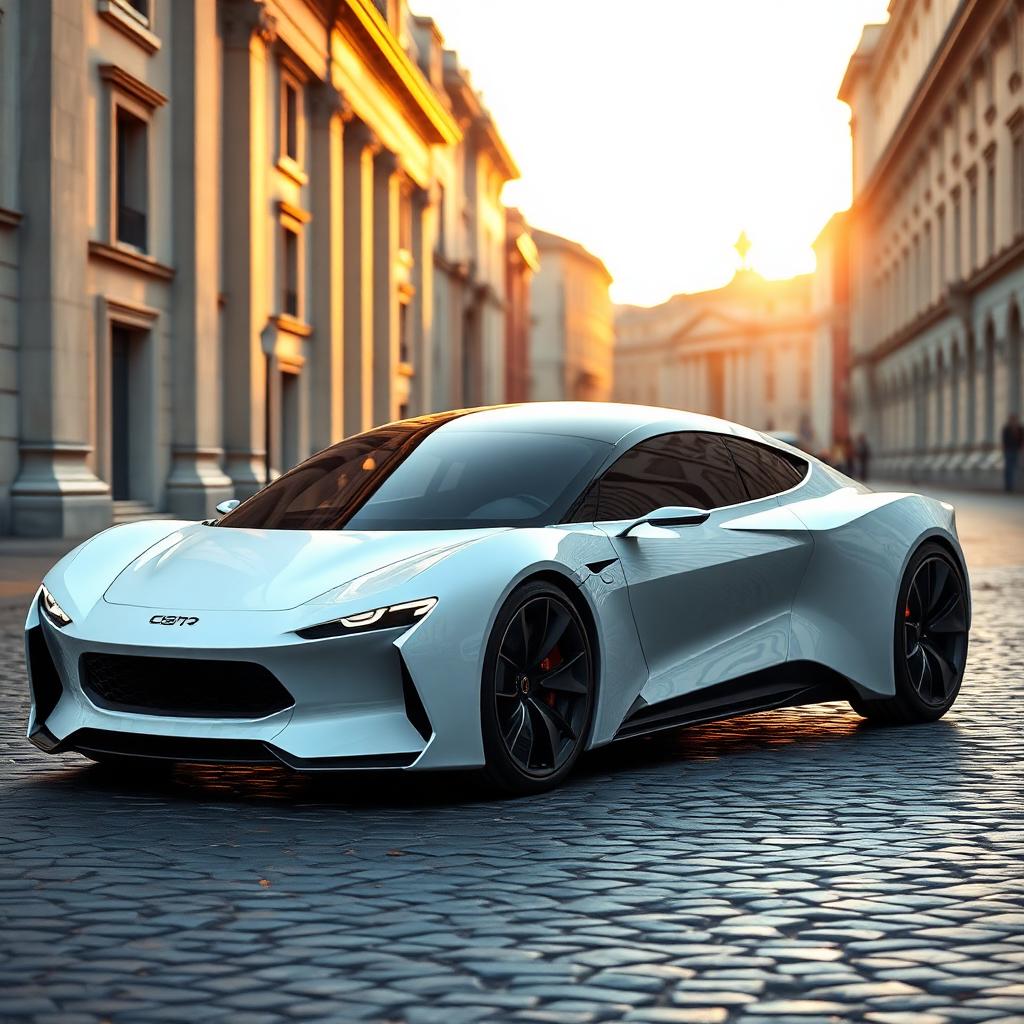
The most talked about aspect of the Luce is the exterior, designed in partnership with Sir Jony Ive and Marc Newson through their creative collective LoveFrom. The result is a sharp departure from Ferrari's muscular design heritage.
The signature element is a glass house body shell that flows seamlessly down past the belt line, turning the cabin into a continuous dome. The proportions are clean, the panel gaps are minimal, and the surface treatment is closer to a piece of industrial design than to a traditional Italian supercar.
Reaction has been polarizing. Long time Ferrari collectors split visibly into two camps on launch day, and Ferrari stock briefly dipped 8 percent in Milan trading before stabilizing as the broader spec sheet circulated. The minimalism is intentional, the company wants the Luce to feel like the start of a new design language, not a continuation of the V12 era.
The Powertrain
Performance is where Ferrari refused to compromise. The Luce uses four independent electric motors, with the rear axle carrying the majority of the torque to preserve a rear biased driving feel.
- Output. 1,050 horsepower combined, 990 Nm of torque.
- 0 to 100 km/h. 2.5 seconds.
- Top speed. 310 km/h (193 mph).
- Battery. 122 kWh, floor mounted, 800 volt architecture.
- Range. 530 km (329 miles) WLTP.
- Charging. DC fast charging supported on the 800 volt system, with peak rates competitive with the latest Porsche Taycan and Lucid Air platforms.
The 800 volt platform is the technical headline. It enables fast charging that keeps long distance touring practical and reduces conductor weight throughout the car, which partially offsets the mass of the large battery pack.
A Five Seat, Four Door Ferrari
This is the first five seat Ferrari in the company's history. The Luce is explicitly aimed at ultra wealthy families and second car buyers rather than at traditional track focused collectors. The rear cabin is sized for two adults plus an occasional fifth occupant, with luggage capacity engineered around the assumption that buyers will use the car for grand touring rather than commuting.
That positioning is deliberate. The traditional V12 buyer base is finite, and Ferrari has explicitly told investors that growth requires expanding the addressable customer set. A five seat electric grand tourer reaches buyers who would never have considered a 296 GTB or SF90.
The Sound Problem, and Ferrari's Answer
The single hardest engineering challenge for an electric Ferrari is acoustic. The brand's identity has been built on the sound of internal combustion for almost 80 years, and silent acceleration is not a Ferrari brand value.
The Luce's answer is a performance acoustic system that does not synthesize fake engine noise. Instead, it amplifies the physical vibrations of the rotating drivetrain components, motors, gearsets, and inverters, into the cabin and outside the car. The result is a mechanical, electric sound that is unmistakably Ferrari but unmistakably not a V12.
Early test drive reports describe it as polarizing but emotionally engaging. It is not trying to fool anyone, and that honesty is part of what makes it work.
Pricing and Availability
The Luce starts at approximately 550,000 euros (roughly $640,000) before options and regional taxes. A well optioned car with Ferrari's Tailor Made personalization program will comfortably cross 700,000 euros.
Customer deliveries begin in the fourth quarter of 2026, with the order book reportedly already closed for the first production year. That sold out launch year is the strongest counter argument to skeptics who questioned whether the Ferrari customer base would accept an electric flagship.
How the Luce Fits in the Lineup
The Luce does not replace any current Ferrari. The V12 powered 12Cilindri continues. The hybrid SF90 and 296 lines continue. The Purosangue four door GT continues. The Luce slots in as a parallel flagship aimed at a different buyer who wants Ferrari engineering in an electric package and is willing to accept the new design language to get it.
That layered approach is how Ferrari intends to bridge the combustion to electric transition. Buyers who want the old experience can still get it. Buyers who want something new have a Ferrari option for the first time.
The LoveFrom Partnership, How It Actually Worked
Ferrari and LoveFrom started informal conversations in 2022, roughly six months after Sir Jony Ive formally launched his post Apple design studio with Marc Newson. The brief I have pieced together from interviews was unusually open. Ferrari did not hand LoveFrom a finished engineering package and ask for body styling. Instead, the two teams co developed the architecture from the proportions outward, which is why the glass house, the floor pack, and the wheelbase all feel resolved as a single object rather than as a body draped over a battery.
LoveFrom drove three decisions that you can see in the finished car. First, the single piece laminated glass canopy that replaces the traditional A pillar, B pillar, and roof seam. Second, the flush door handles that disappear into the body when the car is locked, a detail borrowed from contemporary Apple product design language. Third, the near total elimination of decorative vents, since the electric drivetrain does not need the cooling apertures that defined the 296 and SF90 silhouettes.
Inside the Cabin
The interior is the part of the Luce that test drivers consistently describe as the biggest surprise. Ferrari has historically built tight, driver focused cockpits with limited concession to passengers. The Luce inverts that priority.
- Seating. Four individual seats plus a narrow center fifth position, all upholstered in a new low impact leather alternative developed with an Italian tannery.
- Displays. A single curved 24 inch driver display, a passenger side 10 inch screen, and a roof mounted ambient strip that communicates charge state and driving mode without a dashboard cluster.
- Steering wheel. A new flat top, flat bottom design with capacitive touch controls and a physical Manettino dial carried over from the V12 cars, a deliberate signal to existing customers.
- Audio. A 22 speaker system tuned by an independent acoustic lab, with a dedicated channel for the drivetrain vibration amplifier described earlier.
The cabin materials lean toward Scandinavian restraint rather than Italian flamboyance. That is another LoveFrom influence, and another reason traditional collectors have reacted strongly in both directions.
Battery, Charging, and Real World Range
The 122 kWh pack is the largest Ferrari has ever shipped, and the 800 volt architecture is the same fundamental approach used by the Porsche Taycan, Lucid Air, and the latest Hyundai E GMP cars. In practice that means three things for owners.
Peak DC fast charging sits in the 320 to 350 kW band, which is enough to add roughly 300 km of range in about 15 minutes on a sufficiently powerful charger. Ferrari has also confirmed a partnership with Ionity in Europe and Electrify America in the United States to give Luce owners priority access at flagship sites, plus a home wall box rated at 22 kW for AC charging.
The 530 km WLTP range is realistic at steady motorway speeds. Aggressive driving will pull that closer to 380 km, which is still competitive for the segment. Ferrari has been honest with journalists that the Luce is not a 1,000 km tourer, and that buyers are expected to use the rapid charging network rather than treat the battery as a single shot fuel tank.
How the Luce Compares to Direct Rivals
The Luce does not have a perfect competitor, which is part of the strategic point. The closest analogues are the Porsche Taycan Turbo GT, the Lucid Air Sapphire, and the upcoming Lotus Emeya R, but each leaves a gap that the Luce fills.
- Porsche Taycan Turbo GT. Sharper on a track, lower in price, but smaller cabin and no Ferrari brand cachet.
- Lucid Air Sapphire. Faster in a straight line and more efficient, but built by a young brand without Ferrari's resale history.
- Lotus Emeya R. Closest on philosophy, lighter in some trims, but no comparable dealer network or customer event ecosystem.
The Luce wins on the soft factors that matter most to its target buyer, brand, exclusivity, allocation control, and access to the broader Ferrari ownership ecosystem including factory tours, Corso Pilota driving programs, and Tailor Made personalization.
What This Means for Ferrari's Wider EV Strategy
The Luce is the first car in a planned three vehicle electric portfolio that Ferrari has publicly committed to before 2030. A smaller two seat electric sports car is expected in 2028, and an electric Purosangue successor is on the roadmap for 2029. The Luce is intentionally the most ambitious launch in the sequence, which is a classic Ferrari pattern of leading with the halo product and trickling technology down.
For investors, the more important number is not the Luce sticker price but the gross margin. Ferrari has guided analysts that the Luce will sit above the company's already industry leading 30 percent operating margin once production scales, because the personalization mix on a 550,000 euro car is structurally higher than on a 250,000 euro hybrid.
Manufacturing and Sustainability
The Luce will be built at a new dedicated line inside the Maranello e building, a facility Ferrari completed in 2024 specifically for electrified production. Annual output is capped at roughly 2,000 units, which is consistent with how Ferrari controls supply on every flagship model. The capped volume is also why the year one order book closed so quickly.
On sustainability, Ferrari has committed to carbon neutrality for the Luce's full manufacturing footprint, using on site solar generation, a refurbished hydroelectric supply contract, and verified offsets for the remainder. The battery cells are sourced from a European supplier with a documented recycled content target, and the aluminum body uses a high percentage of secondary aluminum.
What the Luce Means for Ferrari Racing
Ferrari has been careful to separate the Luce program from the Scuderia. Formula 1 remains hybrid through at least 2030 under current regulations, and Ferrari's WEC Hypercar program continues with a twin turbo V6 hybrid. The Luce is a road car decision, not a motorsport pivot.
That said, the 800 volt platform and the four motor torque vectoring control system will almost certainly feed into a future Le Mans Hypercar successor whenever the regulations open the door to a fully electric class. Ferrari is positioning itself to have the road car expertise ready before the racing rules demand it.
The Takeaway
The Ferrari Luce is the most consequential product launch of the company's modern era. A 1,050 horsepower four motor electric grand tourer with a Jony Ive designed glass house body, a five seat four door layout, and a 550,000 euro starting price is a deliberate break from Ferrari tradition. The order book is already sold out for year one, the gross margin is structurally protected, and the broader three car EV roadmap is now visible. The polarizing design is the price of being first, and Ferrari has decided that being first is worth the noise.