
Quick Answer
Put on winter tires when the daily temperature stays around 45 F (7 C) or below. In much of the northern US, that is late October to mid November, before the first snow.
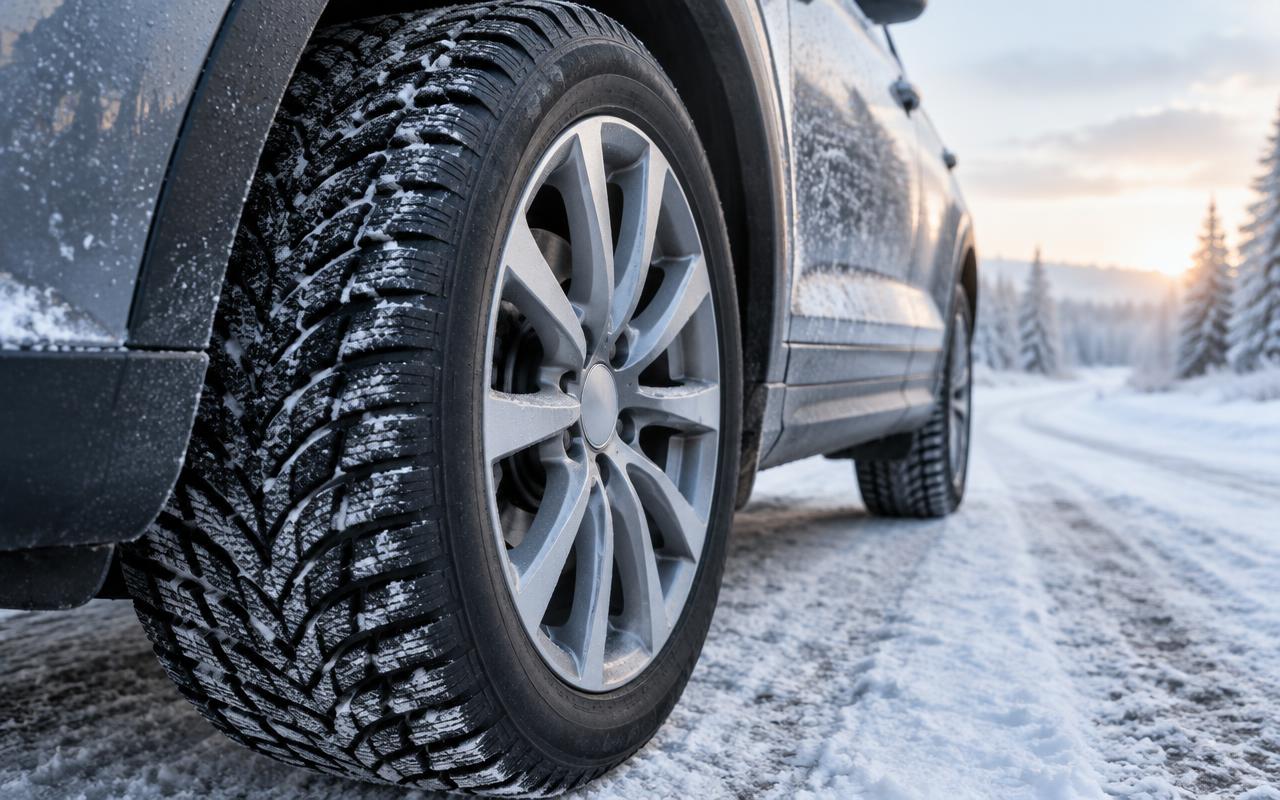
Winter tires use softer rubber and deeper, siped treads that grip in cold, snow and ice. All season tires stiffen in the cold and lose traction.
Take them off in spring once temperatures stay above about 45 F, since warm roads wear soft winter rubber quickly.
Why Does 45 F Matter?
Tire rubber changes with temperature. The rubber in all season and summer tires begins to harden at around 45 F, which reduces grip even on dry pavement.
Winter tires use a compound that stays flexible well below freezing. That flexibility helps the tread conform to the road and grab.
What Makes Winter Tires Different?
- Soft rubber compound: stays pliable in cold weather.
- Deep tread: packs snow, and snow sticks to snow for traction.
- Sipes: thousands of tiny slits that act like extra biting edges on ice.
- Wide grooves: push away slush and water to resist hydroplaning.
Look for the three peak mountain snowflake symbol on the sidewall. It means the tire meets a standard for severe snow performance.
When Should You Book a Tire Change?
Book early. Tire shops get swamped after the first snowfall, and waits can stretch for weeks.
A good plan is to schedule your swap for mid October to early November, depending on your area. Watch the 10 day forecast, and change when lows regularly dip near freezing.
Do You Need Winter Tires if You Have AWD?
All wheel drive helps you accelerate on snow, but it does not help you stop or steer. Braking and turning depend on the grip of your tires.
An AWD car on all season tires can still slide through an icy intersection. Winter tires on any drivetrain improve stopping and cornering in cold conditions.
Are All Weather Tires a Good Alternative?
All weather tires, which also carry the three peak mountain snowflake symbol, are a middle ground. They can stay on year round and handle light to moderate snow better than all seasons.
For regular heavy snow, ice or mountain driving, dedicated winter tires still grip best.
Should You Put Winter Tires on All Four Wheels?
Yes. Always install winter tires in sets of four. Mixing winter tires on one axle with all seasons on the other can make the car unstable and prone to spinning out.
What About Tire Pressure in Winter?
NHTSA notes that as the outside temperature drops, so does tire inflation pressure. Check pressure at least once a month when tires are cold, before you drive.
Use the pressure on the label on the driver's door frame or in your owner's manual, not the maximum number printed on the tire.
Are Studded Tires Legal?
It depends on where you live. Some states allow studs only during set winter months, some restrict them heavily and a few ban them. Check your state's transportation department before buying.
Studless winter tires handle most conditions well and are legal everywhere.
Should You Buy a Second Set of Wheels?
Mounting winter tires on their own steel or alloy wheels makes swapping faster and cheaper each season, and saves your nicer wheels from salt.
The upfront cost is higher, but many drivers save on mounting fees within a few years.
How Should You Store Off Season Tires?
- Clean and dry them before storage.
- Keep them in a cool, dry, dark place away from heaters and motors.
- Store tires on wheels stacked flat, or hang them. Store tires without wheels upright.
- Use tire bags to keep off dust and sunlight.
How Long Do Winter Tires Last?
With seasonal swapping, many sets last four to six winters, depending on mileage and driving. Replace them when tread drops to about 6/32 inch, since winter grip falls sharply with shallow tread.
What Else Should You Do to Get Your Car Winter Ready?
- Test the battery, since cold weather cuts its power.
- Switch to winter washer fluid rated for freezing temperatures.
- Replace worn wiper blades.
- Pack an emergency kit with a blanket, flashlight, ice scraper, snacks and a phone charger.
How Do You Know Your Area's Timing?
Timing varies a lot across the country. A rough guide:
- Northern states and mountain areas: mid to late October.
- Upper Midwest and New England: late October to early November.
- Mid Atlantic and central states: mid to late November.
- Southern states: often not needed, except at higher elevations.
Use local weather rather than the calendar. When nighttime lows stay near freezing and daytime highs are in the 40s, it is time.
How Much Do Winter Tires Cost?
Prices vary by size and brand. Many standard car sizes cost roughly $100 to $250 per tire, while SUV and truck tires often cost more. Mounting and balancing adds a fee each season unless you have a second set of wheels.
Your all season tires rest while the winter set is on, so both sets last longer and the total cost over several years is less than it first appears.
Can You Install Winter Tires Yourself?
If your winter tires are already mounted on their own wheels, you can swap them at home with a jack, jack stands and a torque wrench. Tighten lug nuts to the torque in your owner's manual and recheck them after the first 50 miles.
If the tires need mounting on your existing wheels, a tire shop must do it, since that requires special machines and balancing.
Frequently Asked Questions
Can I drive winter tires in summer?
You can, but they wear fast and handle worse in heat.
Do winter tires help on dry cold roads?
Yes. Below about 45 F they grip better than all seasons even without snow.
Do I need them if I rarely see snow?
If winters are mild, all season or all weather tires may be enough.
Do winter tires lower gas mileage?
Slightly, due to the softer rubber and deeper tread.
The Bottom Line
Install winter tires when temperatures stay around 45 F or below, usually late October to mid November, and book early before the first snow.
Use a full set of four, check pressure monthly as it drops in the cold and switch back in spring.