Quick Answer
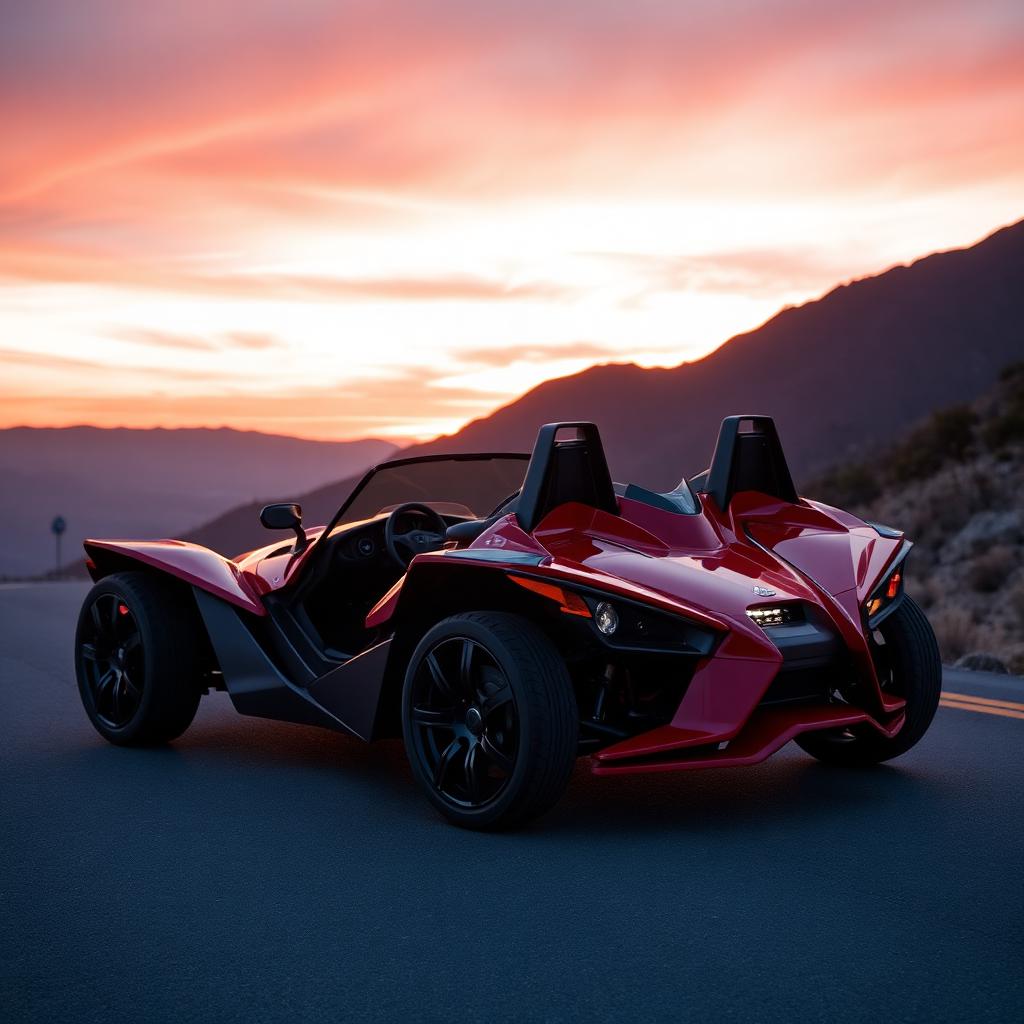
A slingshot car, officially the Polaris Slingshot, is a three wheeled reverse trike with two steered wheels at the front and a single belt driven wheel at the rear. It uses a steering wheel, foot pedals, and bucket seats like a car, but it is legally an autocycle in most places.
It is powered by Polaris's 2.0 litre ProStar four cylinder engine, weighs under 1,650 pounds, and accelerates from 0 to 60 mph in under five seconds. In most US states you only need a standard driver's licence to drive one.
Where the Slingshot Sits in the Vehicle World
The Slingshot is neither a sports car nor a motorcycle. It borrows the open air thrill of a bike and the steering wheel and pedals of a car, then pairs them with a layout you do not see anywhere else on the road.
Polaris launched it in 2014 and has refreshed it several times. The current car uses the in house ProStar 2.0 engine rather than the older General Motors Ecotec, paired with either a five speed manual or a paddle shifted automated manual.
Reverse Trike Engineering
Older three wheelers often put the single wheel at the front, which is twitchy under braking. The Slingshot flips that layout. Two wide track front wheels handle steering and braking, and one rear wheel puts the power down.
That geometry gives it surprisingly stable cornering for a trike, because the wide front contact patch resists the lift and tip that traditional three wheelers suffer in fast corners.
Powertrain and Performance
The ProStar 2.0 is a naturally aspirated four cylinder making around 178 to 203 horsepower depending on trim. Power runs through the gearbox to a carbon fibre reinforced belt, which drives the rear wheel.
Because the curb weight is under 1,650 pounds (around 750 kg), the power to weight ratio is closer to a sports motorcycle than a sports car. Expect 0 to 60 mph in roughly 4.9 seconds on the higher trims.
Daily Driving Reality
The Slingshot is not a daily commuter for most people. There is no roof, no airbags, no climate control, and very little storage. A small lockable trunk behind the seats holds a backpack at best.
In rain you get wet. In cold weather the open cockpit becomes a wind tunnel. Owners typically use it as a weekend toy on dry days, the same way a motorcycle owner uses their bike.
Licensing and Helmet Laws
Because the Slingshot has three wheels, it falls outside the federal safety standards for traditional cars. States have settled this in two ways.
The Autocycle Classification
In most US states and in much of Europe, three wheelers with a steering wheel, seatbelts, and foot pedals are classified as autocycles. An autocycle needs a normal driver's licence, not a motorcycle endorsement.
Helmet Rules
Helmet requirements depend on the state. Some states require helmets for both driver and passenger, some only require them for riders under a certain age, and a few have no helmet rule at all. I would wear one regardless, because the cockpit is open and the windshield is short.
Insurance and Cost of Ownership
Insurance is typically written as a motorcycle policy rather than a car policy, even when the state calls it an autocycle. That can make premiums lower than a sports car of equivalent value, but you should price both options before you buy.
Tyre wear is uneven. The rear tyre takes all the power and wears out faster than the fronts, which is unusual and worth budgeting for.
Who the Slingshot Is For
It is for drivers who want a weekend experience that feels closer to a motorcycle than a roadster, without giving up a steering wheel and an automatic gearbox option. People moving down from a litre class sport bike often find it less intimidating, while people moving up from a Mazda MX-5 find it dramatically more raw.
The takeaway
The Polaris Slingshot is a purpose built reverse trike autocycle that blends car like controls with motorcycle like exposure. It rewards open road weekends, not commutes, and in most places a regular driver's licence is enough to legally enjoy it.
Common Questions About the Slingshot
Is the Slingshot safe?
It uses three point seatbelts, side roll hoops, and a steel frame, which makes it safer than a typical motorcycle. It is still less safe than a modern car because there is no roof, limited airbags, and no traditional crumple structure. Treat it like a sports motorcycle, not a convertible car.
Can two people ride comfortably?
Yes. The cabin has two proper bucket seats side by side with enough shoulder room for most adults. Tall riders may find legroom snug on long trips, but a typical day on back roads is comfortable for two.
What is the fuel economy like?
Expect mid 20s mpg combined when driven gently and high teens when driven hard. It uses regular unleaded fuel and has a roughly 38 litre tank, which is enough for a few hundred kilometres between fill ups.
Is there a heater or air conditioning?
No. The cabin is open to the outside, so cabin climate is simply the outside air plus whatever the engine throws back at you. Owners often add wind deflectors and a taller windshield to take the edge off cold mornings.
How much trunk space is there?
Very little. There is a small lockable storage bin behind the seats that holds a backpack or a couple of helmets, and that is essentially it. Plan trips around what fits in a soft duffel bag, not what would fit in a sedan boot.
Can I drive it in winter?
Mechanically yes, practically no. The open cockpit, narrow rear tyre, and rear wheel drive layout make cold or wet weather more challenging than in a normal car. Most owners winterise the vehicle and bring it back out in spring.
How long does the rear tyre last?
It depends on how you drive, but expect 8,000 to 16,000 km on the rear and noticeably longer on the fronts. Aggressive launches and burnouts cut that drastically. Carry a spare set of plug kits for long trips because the rear tyre is unusual and not every shop stocks it.