Quick Answer
Honda DTC U0416-68 is a network communication code, not a mechanical failure. The U means a CAN bus issue. The 0416 points to invalid data from the Vehicle Stability Assist (VSA) modulator. The 68 sub code is an internal calculation or timeout mismatch between the VSA and the powertrain control module.
The headline cause is almost never a failed VSA module. It is usually low battery voltage, a corroded ground, a dirty wheel speed sensor, or a steering angle sensor that lost its calibration.
What the code is actually telling me
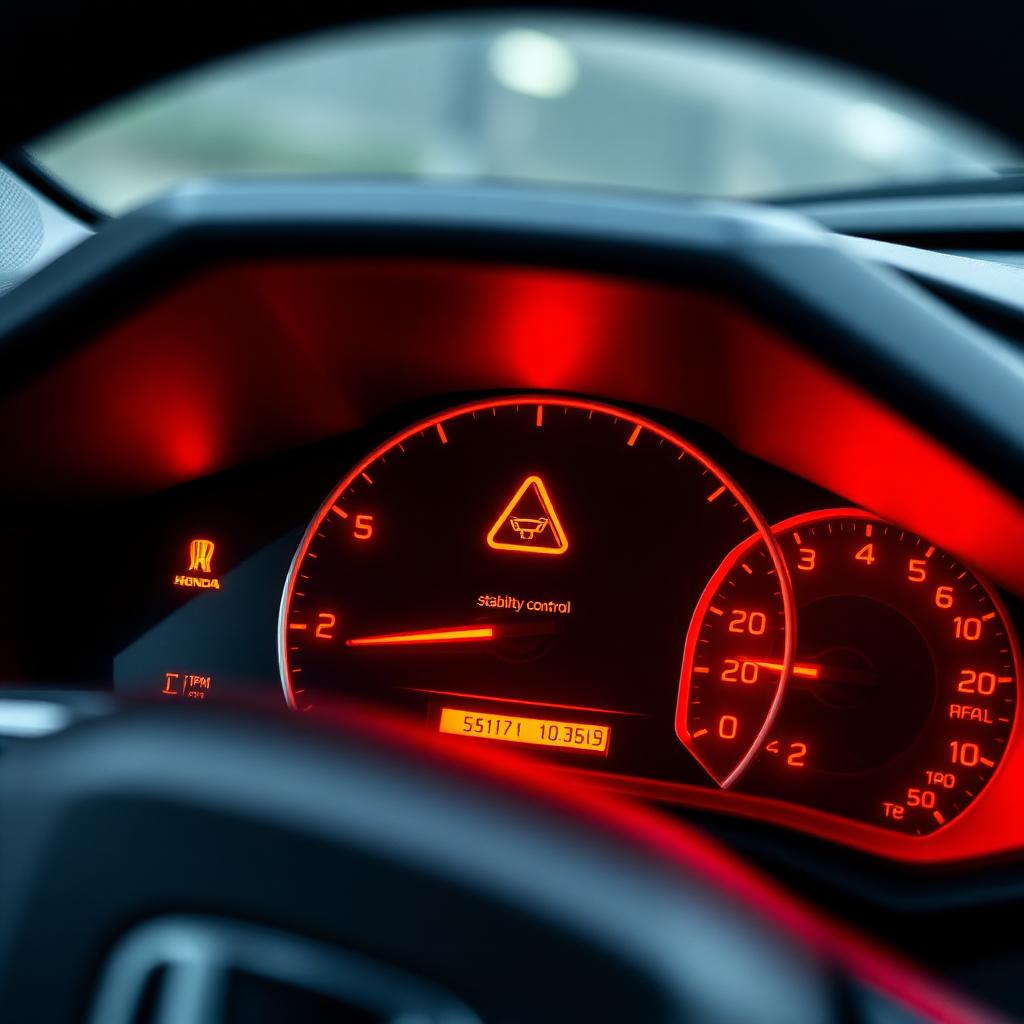
Modern Hondas tie the engine, transmission, ABS, and VSA modules together over a Controller Area Network. The PCM expects a constant data heartbeat from the VSA. When the data is corrupt or arrives too late, the PCM logs U0416-68 and the dashboard lights up with VSA System Failure, Hill Start Assist Problem, or EBD System Problem.
Breaking the code apart:
- U: network communication fault.
- 0416: invalid or missing data from the VSA / ESC modulator.
- -68: Failure Mode Identifier (FMI). Honda uses this sub code for an internal calculation mismatch or timing error.
The four real root causes
Before I touch a parts catalog, I work through these in order:
- Voltage drops. The VSA module is more sensitive to voltage swings than any other module on the car. A weak battery cell, a sulfated terminal, or an alternator regulator that surges between 13.0 and 15.5 V will trip the code.
- Bad grounds. The chassis to engine ground strap and the small ground at the back of the engine head are the usual suspects. Corrosion adds resistance, the VSA reads dirty data, and the PCM logs U0416.
- Wheel speed sensor faults. A failing wheel bearing, a sensor caked with brake dust, or a damaged tone ring all produce erratic speed signals.
- Steering angle sensor not calibrated. After an alignment, a tie rod replacement, or even a battery disconnect, the steering angle sensor needs to be relearned. Without that step the VSA reads a mismatch between steering input and yaw rate.
Diagnostic workflow that actually works
I run these checks in this exact order so I do not chase ghosts.
- Stage 1, battery voltage with engine off: should read 12.6 to 12.8 V. Anything below 12.2 V means a load test, and probably a new battery.
- Stage 2, charging voltage at idle: should read 13.8 to 14.5 V. A reading above 14.8 V points to a failing voltage regulator inside the alternator.
- Stage 3, ground strap continuity: should read essentially 0 ohms. Wire brush the chassis strap and the head ground if there is any resistance.
- Stage 4, live wheel speed scan: drive at a steady 25 mph and watch all four wheel speeds on a bidirectional scanner. They should match within 1 mph. A wheel that lags or jumps is the suspect sensor.
Why the modulator is rarely the answer
A new VSA modulator is $900 to $1,400 in parts plus another $400 to $700 in labor. Honda dealers see customers come in convinced the modulator is bad, but bench testing the removed module almost always shows it is healthy. The module was simply reporting bad data caused by something else upstream.
Before any modulator gets replaced I confirm there are no other low voltage codes (U0100, U0101, U0121) stored as history. If those exist, the real problem is the battery or charging system.
Tire and spare tire pitfalls
The VSA computer compares the rotational speed of all four wheels. Even a small mismatch (front tires worn to 3/32, rear tires at 8/32) creates a circumference difference big enough to trigger a code. A temporary donut spare is the worst offender. If U0416-68 appeared right after a tire change, I check tread depths front to back.
The mandatory relearns
After clearing the code I always run two relearns with a Honda compatible bidirectional scanner (HDS, Autel MaxiSys, Launch X431):
- Steering Angle Sensor Neutral Position. Wheels straight ahead, key on, engine off, run the relearn.
- VSA Sensor Neutral Position. Vehicle on a level surface, run the relearn, then take a short test drive at low speed with gentle steering inputs.
In roughly 80 percent of cases I have seen on Civic, Accord, and CR-V owners forums, those two relearns clear the code permanently once the underlying voltage or sensor issue is fixed.
When it really is the modulator
If voltage is perfect, grounds are clean, all four wheel speeds match, the steering angle relearn completes successfully, and U0416-68 still returns within a few drive cycles, then the modulator is the next candidate. Even then I prefer a remanufactured Honda OEM module over an aftermarket unit, since aftermarket modulators have a high return rate.
Pro tips
- Always clear codes with the scan tool, not by disconnecting the battery. Battery disconnects wipe the steering angle calibration and create more work.
- Photograph the freeze frame data before clearing. The vehicle speed, battery voltage, and temperature at the moment of the fault are gold for diagnosis.
- If the code only appears in cold weather, the battery is the prime suspect. Cold reduces effective cranking amps and exposes weak cells.
The takeaway
Honda DTC U0416-68 is a communication complaint between the PCM and the VSA module, almost always caused by something other than the VSA itself. Check the battery, the charging system, the grounds, and the wheel speed sensors before spending money on hardware. A steering angle and VSA neutral relearn closes the loop in most cases.