Quick Answer
Buckwheat groats are the hulled inner seeds of the buckwheat plant. Despite the name, they are 100% gluten-free and not related to wheat at all.
They are a "pseudocereal," meaning a seed that cooks like a grain. Botanically, they sit in the same family as rhubarb and sorrel.
You eat them like rice. Rinse, simmer 1 cup groats in 2 cups liquid for 10 to 15 minutes, then rest covered for 5 minutes.
What exactly is a "groat"?
The word sounds medieval, but the meaning is simple. A groat is a hulled seed, the heart of the grain after the tough outer husk is removed.
It is the whole inner seed with the bran and germ intact, which is why groats are far more nutrient-dense than processed pearled grains.
The anatomy of buckwheat
- Whole food: the entire inner seed, nothing stripped away.
- Fiber-rich: bran and germ stay on, unlike polished grains.
- Mineral dense: a natural source of magnesium, copper and iron.
Fun fact: the groat is the starting block for everything buckwheat. Grind it for flour, toast it for Kasha.
The big confusion: raw groats vs Kasha
Using the wrong type is the number one reason buckwheat recipes fail. Same plant, very different behaviour in the pan.
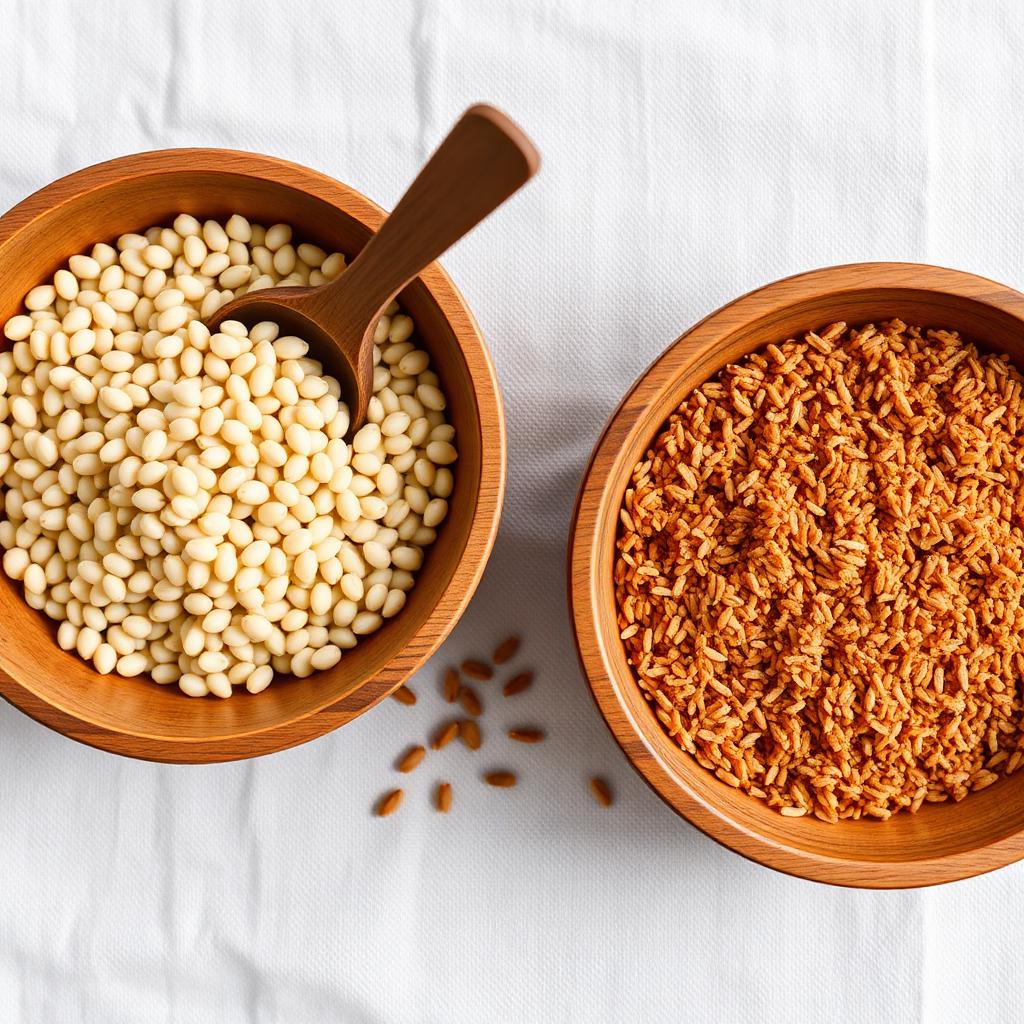
| Property | Raw Groats | Toasted (Kasha) |
|---|---|---|
| Color | Pale green / creamy white | Reddish copper / brown |
| Taste | Neutral, mildly grassy | Bold, smoky, deeply nutty |
| Cooked texture | Soft, slightly sticky, binds well | Firm, separate, fluffy |
| Best for | Porridge, raw cakes, smooth blends | Pilafs, grain salads, hearty sides |
Grocery shortcut: if the bag does not say "raw" or "Kasha," look at the color. Green is raw, brown is roasted.
How to cook buckwheat groats
Cooking groats is faster than brown rice and very forgiving with the absorption method.
Step 1: rinse and drain
Tip the groats into a fine-mesh sieve and rinse under cold water until the water runs clear. This strips the surface starch that causes clumping.
Step 2: the golden ratio
Stick to 1 cup groats to 2 cups liquid. Use a slightly tighter ratio if you like them al dente.
Pro tip: vegetable or chicken broth instead of water adds a serious flavor boost with no extra effort.
Step 3: simmer, do not peek
Bring it to a boil, drop the heat to a low simmer, and cover with a tight lid.
| Type | Liquid ratio | Simmer time | Rest (covered) |
|---|---|---|---|
| Kasha (toasted) | 1 : 2 | 10-12 minutes | 5 minutes |
| Raw groats | 1 : 2 | 15-20 minutes | 5 minutes |
That final 5-minute rest is the difference between fluffy and gummy. Do not skip it.
Avoid the "mush" factor
If your buckwheat turns soggy, the usual culprits are too much water or too long on the heat. For the fluffiest Kasha ever, whisk a raw egg into the dry groats before toasting them in the pan. The egg coats every grain and keeps them perfectly separate.
The flavor pairing cheat sheet
Buckwheat is bold and earthy. It does not hide in the background like white rice, so pair it with ingredients that can match its nutty profile.
| Flavor family | Best pairings |
|---|---|
| Earth and umami | Mushrooms, onions, soy sauce, miso, walnuts, thyme |
| Sweet and spiced | Cinnamon, maple syrup, apples, pears, bananas, dark chocolate |
| Acid and fresh | Lemon juice, dill, parsley, feta, pomegranate seeds |
Golden rule: think of toasted Kasha like a darker grain such as rye or wild rice. It loves fat, so be generous with butter, olive oil, or toasted sesame oil.
Should you stock buckwheat groats?
Buckwheat groats are one of the most underrated staples in a modern pantry. They bridge the comfort of rice with the nutrition of a superfood, all gluten-free and very cheap.
- Versatile: from a soft breakfast porridge to a crunchy salad topper in minutes.
- Fast: ready in 10 to 15 minutes, half the time of brown rice.
- Diet friendly: safe for celiacs, vegans and macro counters alike.
Storage secret: buckwheat is high in healthy fats, so an open bag can go rancid over months. Decant into an airtight glass jar in a cool dark cupboard, or the fridge, and they keep for up to a year.
Frequently Asked Questions
What are buckwheat groats and what else are they called?
They are the hulled seeds of the buckwheat plant. Toasted, they are called Kasha. In many Eastern European cultures they are called Grechka.
"Buckwheat" is the plant. "Buckwheat groats" are the edible seeds after the husk is removed.
Is buckwheat really gluten-free?
Yes. Despite the name, buckwheat contains zero gluten and is safe for celiac disease and gluten sensitivity.
If you are sensitive, look for a "Certified Gluten-Free" label so you know the groats were not processed on shared wheat machinery.
What is the best way to cook them?
The absorption method is the most consistent. 1 part groats to 2 parts water, simmer 10 to 15 minutes, then rest covered for 5 minutes.
If you are out of groats, the closest swaps are steel-cut oats, quinoa or freekeh. Only quinoa is also gluten-free.
Can you eat buckwheat groats raw?
Technically yes, but raw groats are very hard and the enzyme inhibitors can upset digestion.
Better approach: soak them for 6 to 8 hours. Soaked groats are soft enough for smoothies and breakfast bowls without any boiling.
How do you eat buckwheat groats?
- Sweet: hot porridge with fruit and honey.
- Savory: a base for stir-fries or mixed with caramelised onions (Kasha Varnishkes).
- Crunchy: toasted in a dry pan and sprinkled on salads or yogurt as "Buckinis".
Are buckwheat groats healthier than rice or oats?
Buckwheat beats white rice on glycemic index and fiber content, which means steadier energy and better satiety.
Compared to oats, buckwheat is a complete protein with all 9 essential amino acids. Oats have more beta-glucan, but buckwheat has unique antioxidants like rutin which supports heart health.
What are the main nutrition benefits?
Buckwheat is rich in magnesium, copper and manganese. The standout benefits are better blood sugar regulation, improved heart health from its flavonoid content, and long satiety from complex carbs.
Where should I buy them?
For value, buy bulk groats from a health food shop or online. Choose organic if pesticides are a concern.
You will usually find them in the grain aisle at health-focused stores like Whole Foods, or in the international and Eastern European aisle at most large supermarkets.