Quick Answer
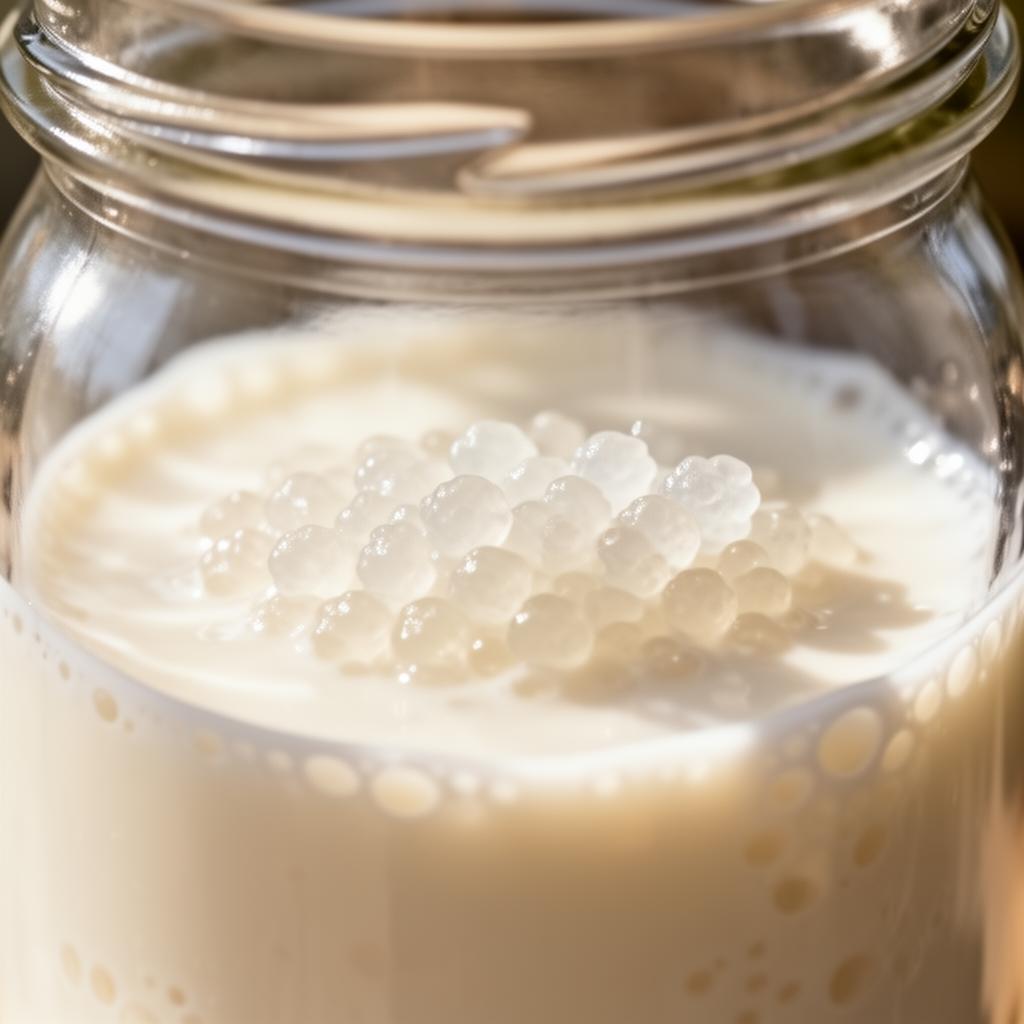
Despite the confusing name, milk kefir grains are not agricultural grains like wheat, oats, or barley. They are actually living, gelatinous, cauliflower-like colonies of yeast and lactic acid bacteria bound together by complex sugars. When placed in animal milk, these "grains" rapidly ferment the liquid, consuming the lactose and transforming the milk into a tangy, highly probiotic, and slightly effervescent super-drink.
Fermented foods are currently dominating the global health and wellness space. From kombucha to sauerkraut, the focus on gut health has led millions of people back to ancient food preservation techniques. Milk kefir is frequently championed as the ultimate probiotic beverage, vastly superior to standard grocery store yogurt.
If you want to make it at home, every recipe tells you to acquire "milk kefir grains." But when you open the package you ordered online, you are not greeted with dry seeds. Instead, you find slippery, rubbery, white clumps sitting in a bit of liquid.
I spend a vast amount of time dissecting the microbiology and chemistry of fermentation. Today, I am taking a deep dive into exactly what these bizarre "grains" actually are, how they behave, the complex symbiosis that keeps them alive, and how they chemically transform regular milk into an absolute nutritional powerhouse.
The legend of the Caucasus Mountains
To understand how milk kefir grains exist, we have to look at one of the most fascinating histories in the culinary world. Milk kefir did not originate in a modern laboratory; it was discovered thousands of years ago by nomadic shepherds living in the remote, high-altitude Caucasus Mountains, a region at the intersection of Europe and Asia.
These shepherds traveled with bags made of animal hides, which they filled with fresh milk. As they rode, the raw milk would slosh around in the leather pouches, reacting with the naturally occurring wild yeasts and bacteria present in the unpasteurized milk and the animal skin. Over time, these microbes began to clump together, forming the very first physical kefir grains. The shepherds realized that by transferring these clumps into a fresh batch of milk, the milk wouldn't spoil. Instead, it turned into a sour, thick, preserved beverage that kept them healthy.
For centuries, the existence of these grains was a fiercely guarded secret by the tribes of the Caucasus. They believed the grains were a gift from the Prophet Muhammad and that sharing them with outsiders would strip the grains of their magical power. It wasn't until the early 20th century, following a bizarre and dramatic espionage plot involving Russian physicians and a female spy named Irina Sakharova, that the grains were finally brought to Moscow, cultivated, and eventually shared with the rest of the world.
What exactly is a SCOBY?
To a microbiologist, a milk kefir grain is formally known as a SCOBY, a Symbiotic Culture of Bacteria and Yeast.
These rubbery little clusters are essentially living apartment buildings for microbes. The "building" itself is made out of a substance called kefiran. Kefiran is a sticky, water-soluble, complex carbohydrate matrix (a polysaccharide) that is physically manufactured and excreted by the bacteria themselves.
Inside this protective, gelatinous matrix, dozens of different strains of beneficial yeast and bacteria live together in complete biological harmony. They are a perfectly balanced ecosystem. The bacteria produce byproducts that the yeast feed on, and the yeast produce vitamins and amino acids that keep the bacteria thriving. They are called "grains" simply because of their visual appearance; when they are small, they look a bit like cooked grains of rice or tiny, wet florets of cauliflower.
The microbial roster: bacteria and fungi
What makes milk kefir so incredibly powerful is its microbial diversity. If you buy standard commercial yogurt from the grocery store, it usually contains two or three specific strains of bacteria (typically Lactobacillus bulgaricus and Streptococcus thermophilus). These provide a mild, temporary digestive benefit as they pass through your system.
Milk kefir grains, on the other hand, are an absolute microbiological jungle. A healthy kefir grain can contain up to 50 or 60 different strains of both bacteria and beneficial yeasts.
- Lactic Acid Bacteria (LAB): These are the dominant forces, including various strains of Lactobacillus, Lactococcus, and Leuconostoc.
- Acetic Acid Bacteria: These provide a sharp, vinegar-like tang to the final drink.
- Yeasts: Crucially, kefir contains powerful yeasts like Saccharomyces kefir and Candida kefir, which help combat pathogenic (bad) yeasts in the human gut.
This massive diversity makes kefir vastly superior at actively colonizing the human gut microbiome, suppressing bad bacteria, and aiding in complex digestion.
The fermentation chemistry
When you drop these living grains into a glass jar filled with fresh animal milk (whether cow, goat, or sheep) and leave it sitting on your kitchen counter at room temperature, a rapid and aggressive biological reaction begins.
- Eating the sugar: The bacteria and yeast wake up and immediately start feeding on the lactose. Lactose is the naturally occurring sugar found in all animal milk.
- Producing acid: As the Lactic Acid Bacteria consume the lactose, they metabolize it and excrete lactic acid as a byproduct.
- The coagulation: As the lactic acid builds up, the pH of the milk begins to drop rapidly, making the environment highly acidic. This sudden acidity causes the casein proteins in the milk to denature, physically unwinding and tangling together. This is what causes the milk to curdle, thicken, and take on the consistency of a drinkable yogurt. It is also what gives kefir its signature sharp, sour flavor.
- Producing carbonation: Simultaneously, the yeast in the grains ferments the remaining sugars into trace amounts of alcohol (usually less than 1%) and carbon dioxide gas. This gives traditional, authentic kefir a very slight, refreshing fizz that you will almost never find in commercial, store-bought kefir (which is usually made from lab-created powders, not real grains).
Why it is safe for (most) lactose intolerance
One of the most remarkable things about milk kefir is its relationship with lactose intolerance. Many people who suffer from severe bloating or digestive distress when drinking a glass of regular milk can drink kefir with absolutely zero issues.
Why? Because the bacteria do the digesting for you. During the 24-hour fermentation process, the microbes consume up to 30% of the lactose in the milk. More importantly, the bacteria themselves produce an enzyme called beta-galactosidase. When you drink the kefir, this enzyme goes to work inside your own digestive tract, actively breaking down whatever remaining lactose is left in the drink.
A step-by-step guide to first fermentation
Making kefir at home is incredibly simple, provided you respect the biology of the grains. They are living organisms, and they need a clean environment and a steady food supply.
- The ratio: Place about 1 tablespoon of active milk kefir grains into a clean glass jar. Pour 2 to 3 cups of fresh, cold milk over them. Whole milk works best because the grains thrive on the higher fat and calcium content. Do not use ultra-pasteurized (UHT) milk, as the extreme heat processing alters the milk proteins too heavily for the grains to process efficiently.
- The cover: Cover the jar with a breathable material like a coffee filter or a tight-weave cloth secured with a rubber band. The yeast needs to off-gas carbon dioxide, but you must keep fruit flies and dust out.
- The wait: Leave the jar on your counter, out of direct sunlight, for roughly 24 hours. The ambient temperature of your kitchen dictates the speed. In a hot summer kitchen, it might ferment in 14 hours; in a freezing winter kitchen, it might take 36 hours.
- The harvest: You will know it is done when the milk has noticeably thickened and you can see pockets of clear yellowish liquid (whey) forming near the bottom of the jar. Using a non-metal strainer (metal can theoretically damage the acidic grains over time, though stainless steel is generally fine), strain the thick liquid into a new bottle.
- The reset: Take the grains caught in the strainer, place them back into your unwashed glass jar, pour fresh milk over them, and the cycle continues indefinitely. With proper care, a single batch of milk kefir grains will outlive you, constantly growing and multiplying so you can share them with friends.