Quick Answer
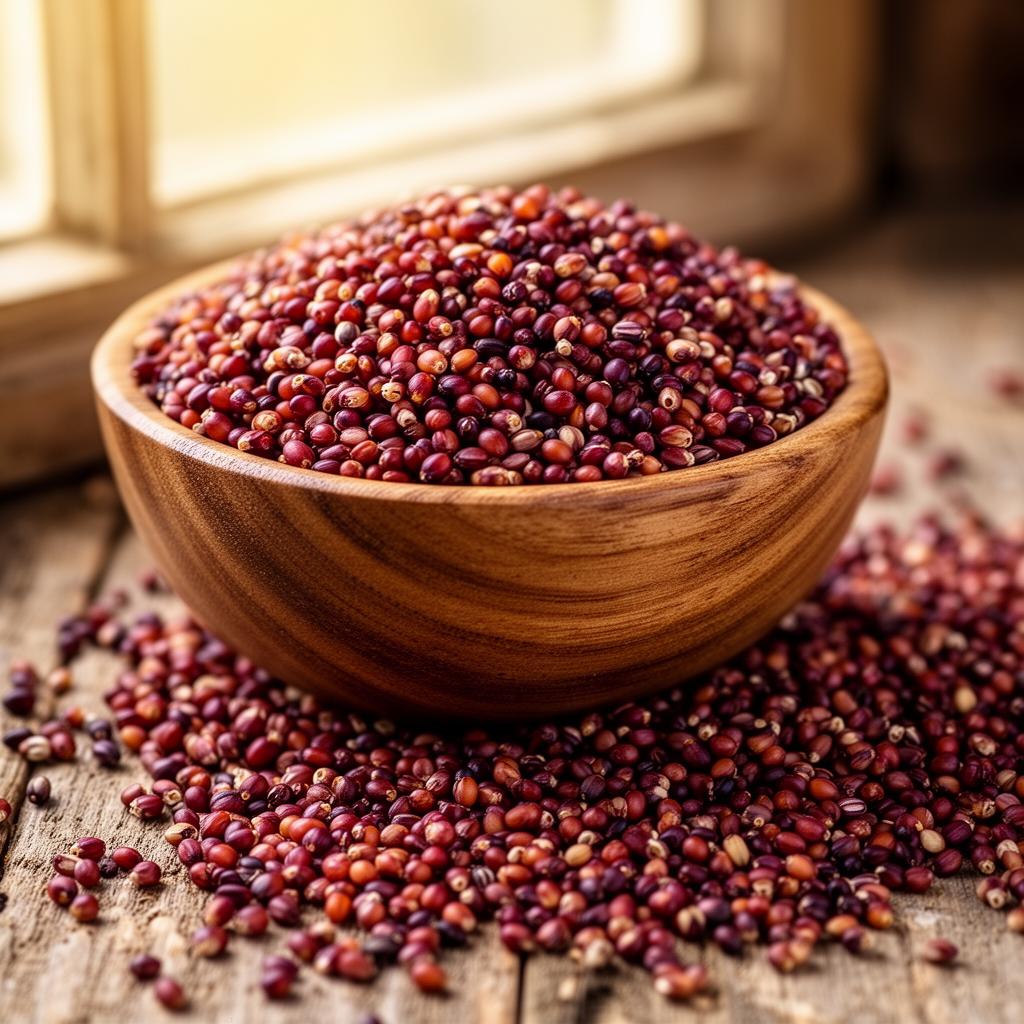
Red sorghum is a highly nutritious, drought-resistant cereal grain that has sustained populations across Africa and Asia for millennia. Unlike modern hybrid wheat, it is naturally gluten-free, dense in complex carbohydrates, and packed with antioxidants. Its dark red color comes from high levels of naturally occurring anthocyanins, making it an incredibly healthy, ancient staple used for everything from traditional flatbreads to modern brewing.
If you have been exploring the gluten-free baking aisle, looking for alternatives to quinoa, or simply trying to diversify the grains in your pantry, you might have stumbled across heavy bags of red sorghum grain. While it is rapidly gaining traction in modern western health food markets, this resilient crop is not a new discovery. It has been a dietary and cultural foundation in Africa, India, and parts of Asia for thousands of years.
I love looking at the agricultural science and historical context behind the food on our plates. Today, I am breaking down the fascinating biology of red sorghum, explaining why it survives in climates where other crops wither and die, and exploring exactly why that vibrant red color makes it one of the healthiest grains you can possibly consume.
The ancient origins and global spread
To understand sorghum, we have to look at its history. Botanical and archaeological evidence traces the domestication of sorghum back to the region of modern-day Sudan and Egypt, somewhere around 8,000 BC. From the African continent, the grain traveled along ancient trade routes to India, and eventually across the Silk Road into China.
For centuries, it was the grain that kept civilizations alive in harsh environments. Because it requires a fraction of the water that wheat or corn needs, it became the default staple crop for semi-arid regions. Today, it remains the fifth most important cereal crop grown in the world, though in places like the United States, it has historically been relegated to animal feed or ethanol production. Only recently has the western culinary world realized the incredible nutritional potential of eating sorghum as a whole grain.
The botanical science of drought resistance
Sorghum is an absolute agricultural marvel. It is what agronomists refer to as a "climate-smart" crop, and its ability to survive drought is tied to some brilliant biological adaptations.
Most traditional cereal grains, like wheat, utilize a standard photosynthetic process. When temperatures soar and water disappears, these plants dry out, fail to produce grain, and die. Sorghum, however, utilizes a highly efficient C4 photosynthetic pathway. This means it can photosynthesize and create energy even when the pores on its leaves are tightly closed to prevent water loss.
Furthermore, the leaves and the stalk of the sorghum plant are covered in a thick, naturally occurring waxy cuticle. This acts like a biological sealant, trapping moisture inside the plant. Most impressively, sorghum has the ability to enter a state of temporary dormancy. If a severe drought hits, the plant does not die; it simply halts its own growth. It will sit dormant in the baking sun for weeks, wait for the rain to finally arrive, and then immediately resume developing its seed heads as if nothing happened.
Why is it red? The science of anthocyanins
Sorghum comes in a wide variety of colors, including white, yellow, brown, and black. But the red variety is particularly special due to its unique chemical makeup.
The deep red hue is entirely natural. It is caused by an incredibly high concentration of specific phytochemicals known as anthocyanins. If that word sounds familiar, it is because anthocyanins are the exact same powerful antioxidant compounds that give blueberries, blackberries, cherries, and red cabbage their vibrant, dark colors.
In the human body, these antioxidants play a critical role in cellular health. Every day, our bodies produce free radicals, unstable, highly reactive molecules generated by everything from digesting food to environmental pollution. If left unchecked, free radicals cause oxidative stress, damaging our cells and DNA, which leads to inflammation and premature aging. The anthocyanins found in the outer bran layer of red sorghum actively hunt down and neutralize these free radicals. Because you typically eat red sorghum as a whole grain (meaning the outer bran layer is left intact), you are consuming a massive dose of these antioxidants directly.
Nutritional profile: macros and micros
Beyond the antioxidants, red sorghum is a nutritional powerhouse that easily outpaces refined white rice or standard pasta.
- Complex carbohydrates: Sorghum is an excellent source of slow-digesting complex carbohydrates. Because it is rich in dietary fiber (both soluble and insoluble), it digests very slowly in the gastrointestinal tract. This prevents sudden spikes in blood sugar, making it a fantastic staple for individuals managing diabetes or insulin resistance.
- Plant-based protein: A single cup of cooked sorghum provides a substantial amount of plant-based protein, helping to keep you satiated for hours.
- Essential minerals: It is incredibly dense in micronutrients. Sorghum is packed with iron, phosphorus, magnesium, and B-vitamins (particularly niacin and thiamin), which are essential for energy metabolism, bone health, and maintaining a healthy nervous system.
The mechanics of gluten-free baking
One of the primary reasons sorghum has exploded in popularity is because it is 100% naturally gluten-free. It belongs to a completely different botanical family than wheat, barley, and rye.
However, cooking and baking with it requires understanding its physical properties. Gluten is a specific protein network found in wheat that acts like an elastic web. When you knead wheat dough, that gluten web traps carbon dioxide gases produced by yeast, allowing the bread to rise and become light and fluffy.
Because sorghum lacks this elastic protein, you cannot simply swap wheat flour for sorghum flour in a standard bread recipe. If you do, you will pull a dense, crumbling brick out of the oven. When baking with milled red sorghum flour, you have to introduce a substitute binder, most commonly xanthan gum, guar gum, or a mixture of tapioca starch, to mimic the elastic, sticky properties of gluten and hold the baked good together.
Global culinary traditions
Around the world, red sorghum is not a health-food trend; it is the foundation of daily meals and historic beverages.
- African porridges and breads: Across the African continent, milled sorghum is fermented to make slightly sour, highly nutritious porridges (like mabele in South Africa) or flatbreads (like the famous, spongy injera in Ethiopia, where it is often mixed with teff).
- Indian flatbreads: In India, sorghum is known as jowar. The flour is mixed with hot water and kneaded into a dough to create jowar roti or bhakri, a dense, unleavened flatbread cooked on a hot iron skillet.
- Chinese baijiu: In China, red sorghum is the primary ingredient used to ferment and distill baijiu, the most heavily consumed clear liquor in the world. The grain provides a distinct, complex, and savory flavor to the alcohol.
How to cook it at home
If you have a bag of whole red sorghum grains, the easiest way to enjoy it is to treat it exactly like brown rice or barley. It has a firm, slightly chewy texture and a mildly sweet, earthy, and nutty flavor that pairs perfectly with roasted vegetables or heavy stews.
To cook it on the stovetop, you will need patience. Because the outer bran layer is so tough, it takes significantly longer to soften than white rice.
- Rinse the grains thoroughly under cold water.
- In a large pot, combine 1 cup of red sorghum with 3 cups of water or chicken broth.
- Bring the pot to a rolling boil, then reduce the heat to a low simmer.
- Cover the pot tightly and let it cook for 50 to 60 minutes.
- Once the grains are tender but still have a slight "pop" when you bite into them, drain any excess liquid and fluff them with a fork.
Alternatively, because sorghum is a grass seed just like corn, you can actually pop it. If you throw a handful of dry red sorghum grains into a hot, dry skillet with a tight-fitting lid, they will heat up and burst, creating tiny, nutrient-dense miniature popcorn that makes an incredible crunchy topping for salads or soups.