Quick Answer
For pure value out of the box, CFMOTO beats Polaris. A UFORCE 1000 XL with a factory winch, roof, and EPS lands about $6,000 under a comparable Ranger Crew XP 1000. For elite suspension tuning, aftermarket depth, and high speed desert performance, Polaris is still ahead. The right answer depends on whether I am buying a workhorse or a sport machine.
CFMOTO is no longer a low tier alternative. It is a credible competitor that wins on price and trim content.
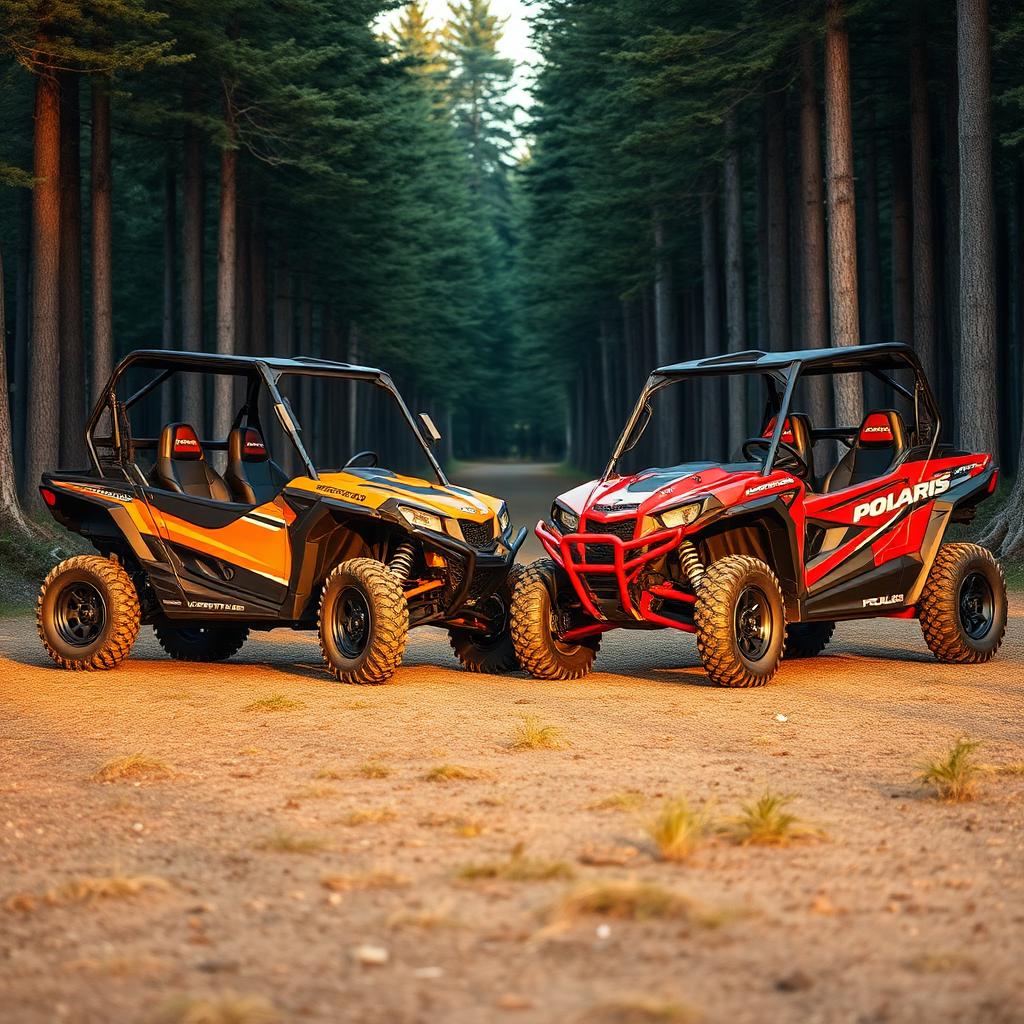
Utility side by side: UFORCE vs Ranger
The CFMOTO UFORCE 1000 XL competes head on with the Polaris Ranger Crew XP 1000. The numbers are tight.
- Price (base): UFORCE about $15,499 vs Ranger about $22,099. CFMOTO wins by roughly $6,600.
- Engine: UFORCE 963cc V-twin at 79 hp. Ranger 999cc ProStar at 82 hp. A 3 hp gap is not noticeable on a job site.
- Factory winch: UFORCE includes a 3,500 lb winch standard. Ranger sells it as an upgrade.
- EPS: Both include electronic power steering.
- Clutch: UFORCE uses a CVTech IBC clutch out of Canada. Many owners report fewer belt slip issues than the proprietary Polaris CVT.
- Cargo bed: Both haul roughly 1,000 lb.
- Towing: Both rated to 2,000 lb.
Sport side by side: ZFORCE vs RZR
This is where the gap between brands becomes more obvious. Polaris has decades of suspension R&D, and the RZR XP 1000 still hits whoops at speeds the ZFORCE struggles to match.
- Polaris RZR XP 1000: Walker Evans or FOX Live Valve suspension, 16 inches of front travel and 18 inches of rear, factory tuned for desert use.
- CFMOTO ZFORCE 950 Sport: KYB shocks, around 11 inches of front travel and 12 inches of rear. Tuned for trail use, not high speed dune jumps.
If I am running Glamis or chasing trophy trucks at Baja, the RZR is the right tool. If I am working forest service roads in Pennsylvania or West Virginia, the ZFORCE is more than enough and saves me thousands.
Where CFMOTO actually wins
Out of the box trim content is a CFMOTO strong point. A factory ZFORCE 950 includes:
- Painted body panels (not bare plastic).
- Half doors with metal latches.
- A rear camera display in the cluster.
- Multiple throttle modes (Eco, Sport, Sand).
- LED headlights and signature DRLs.
To match that loadout on a base Polaris RZR I am writing checks for $3,000 to $5,000 in factory option packages.
Where Polaris wins
- Suspension tuning. Polaris has refined the RZR chassis for fifteen years. The result is composure at speed that no Chinese built UTV currently matches.
- Aftermarket ecosystem. Cages, doors, lights, audio, lift kits, motor work, gear reductions. Polaris has thousands of shops building parts. CFMOTO has dozens.
- Dealer network. Polaris dealers are everywhere in North America. CFMOTO is growing fast but still has dead zones.
- Resale value. A used three year old RZR holds 60 to 70 percent of MSRP. A used CFMOTO holds closer to 45 to 55 percent.
- Parts availability. OEM Polaris parts are stocked locally. CFMOTO parts often ship from a regional warehouse, adding days to a repair.
Reliability reality check
The old narrative that CFMOTO is unreliable is outdated. Recent UFORCE 1000 models share the basic V-twin design with Kawasaki licensed engineering and have been running with low warranty claim rates since 2022. Polaris has had its own well documented headaches (Ranger turf mode failures, RZR voltage regulator burnouts) that I cover in separate posts.
Both brands fail in predictable places. Both brands honor warranty when the failure is real.
Five year cost of ownership
If I assume 200 hours per year of moderate trail use:
- UFORCE 1000 XL: roughly $4,200 in maintenance (belts, oil, diff fluid) plus $1,500 in unexpected repairs. Total five year cost: about $5,700 plus $15,500 acquisition.
- Ranger Crew XP 1000: roughly $4,800 in maintenance plus $1,800 in unexpected repairs. Total five year cost: about $6,600 plus $22,100 acquisition.
CFMOTO saves about $7,500 over five years. That gap closes if I factor in higher resale on the Polaris.
Who should buy what
- Buy CFMOTO if: you need a utility machine fully loaded, you ride trail and farm use, you care about the price tag, and you live near a CFMOTO dealer.
- Buy Polaris if: you want the deepest aftermarket support, you ride high speed desert or dunes, you plan to keep the machine ten years, and resale matters.
Pro tips
- Always test ride before buying. Suspension preference is personal and a showroom walk cannot replace 30 minutes of seat time.
- Check dealer service hours before committing. A great machine at a dealer that has a three week service backlog is a bad deal.
- Verify warranty terms in writing. CFMOTO is currently 1 year base, extendable to 4 years. Polaris is 6 months base, extendable to 4 years through Polaris Protection.
The takeaway
CFMOTO has earned a seat at the table. For utility work and trail riding it is the better value in 2026. For high speed sport use and long term resale, Polaris still owns the segment. Pick the platform that matches how I actually ride, not the badge that has the longer history.