Quick Answer
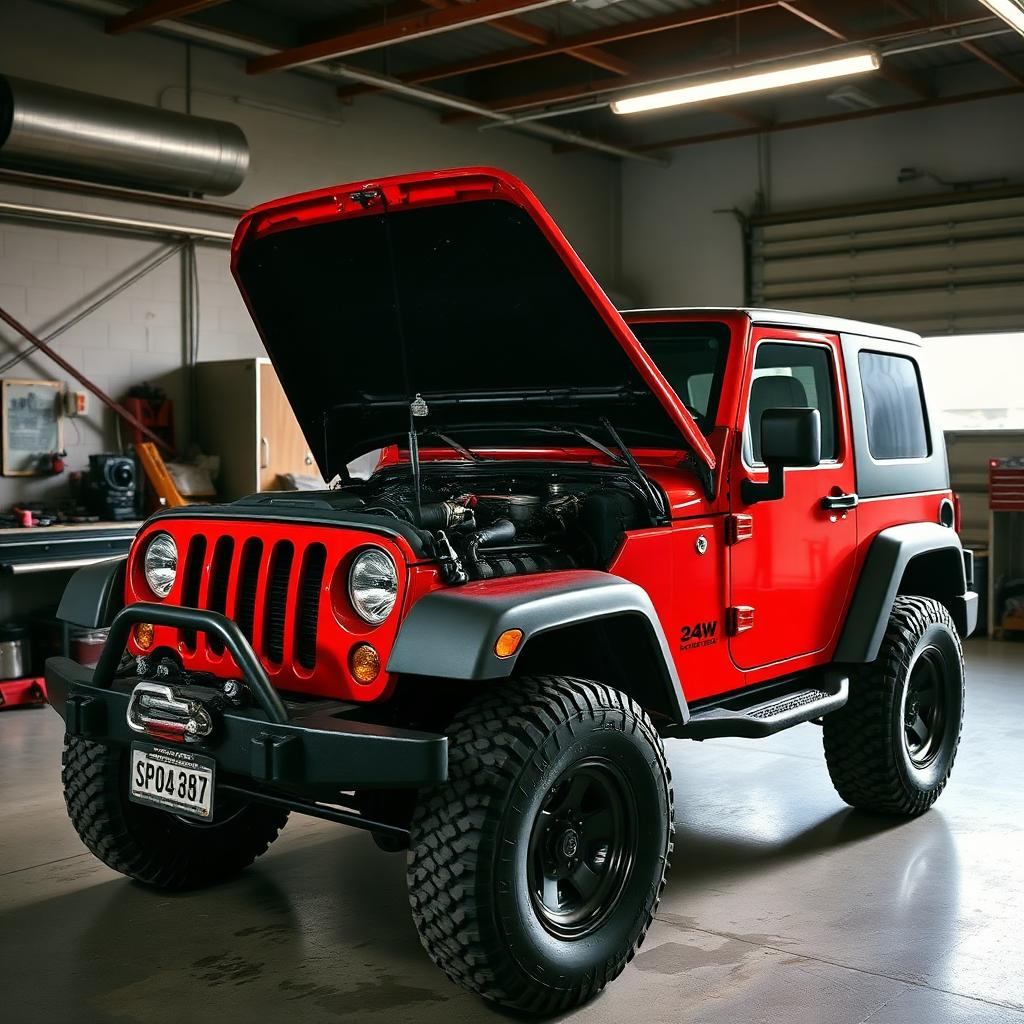
If I add up everything honestly, a clean LS swap into a Jeep Wrangler lands between $7,200 and $15,700 in parts when I do the labor myself. A junkyard 5.3L truck engine plus a 4L60E transmission is the cheap entry point. A 6.0L LQ4 with a 4L80E behind it is the heavy duty route.
The engine itself is rarely the budget killer. The conversion mount kit, wiring harness, radiator, axles, and transfer case adapter are what push the total past five figures.
Picking the right LS engine for a Wrangler
The "LS" label covers a wide family of GM small block V8s, both aluminum car blocks and iron Vortec truck blocks. For a Wrangler that will see mud, rocks, and water crossings, I lean toward the iron truck variants because they shrug off heat and abuse.
- 5.3L LM7, LY5, or LMG: 285 to 320 hp, dirt cheap in salvage yards, and a massive jump over the 4.0L inline six or the 3.6L Pentastar.
- 6.0L LQ4 or LQ9: Big low end torque for towing or sand dunes. Heavier, hungrier on fuel, but the choice if I run 37 inch tires.
- 5.3L L33 aluminum or 5.7L LS1: Saves about 80 to 100 pounds over an iron block and keeps the front suspension behaving more like factory.
Choosing the transmission
For an automatic, the 4L60E is the budget pairing behind a 5.3L. Behind a 6.0L I step up to the stronger 4L80E. The 6L80E is the modern overdrive option but it complicates the wiring.
If I want to keep my factory Jeep manual (AX15 or NV3500), adapter plates exist, but the gearset is not really built for V8 torque and will shear teeth under abuse. Most reliable builds I have seen pair the LS with a GM automatic.
Compatibility by Wrangler generation
The mechanical work is similar across generations. The electrical work is not.
- YJ (1987 to 1995): Easiest. Square headlight chassis, simple wiring, mechanical speedometer. Mount fabrication and a standalone GM harness, and I am done.
- TJ (1997 to 2006): Still friendly. Round headlights, OBD II, electronic speedometer. I will need a gauge interface and stronger axles to survive V8 torque.
- JK (2007 to 2018): Hardest. CAN bus multiplex network ties the PCM, TIPM, instrument cluster, and ABS together. Remove the factory engine ECU and the dashboard lights up like a Christmas tree.
- JL (2018 to present): Possible but uncommon. Even tighter electronics and tighter emissions enforcement in many states.
The JK CAN bus problem
On a JK I cannot just delete the factory engine computer. The TIPM and instrument cluster expect constant chatter from the original PCM. Without it the AC dies, the gauges go blank, traction control faults, and the cruise control will not arm.
Companies like Novak Conversions, Bruiser, and RPM Extreme sell a dual computer wiring harness with a translation module. The new GM ECU runs the engine, and a piggyback module feeds the original Jeep network the data it expects. That single component is usually $1,200 to $2,200 and it is non negotiable on a JK.
True cost breakdown
Here is how the budget realistically falls when I do the wrench turning myself:
- Engine and transmission from a yard: $1,500 to $4,500
- Conversion kit (mounts, radiator, headers, fuel lines, accessory drive clearance): $2,500 to $4,500
- Standalone or dual CAN bus harness with ECU programming: $1,200 to $2,200
- Driveshaft work and transfer case adapter: $800 to $1,500
- Upgraded axles (Dana 44 or Ford 8.8 swap): $1,200 to $3,000
Total DIY range: roughly $7,200 to $15,700. Paying a shop to do the install on top doubles that number quickly. A reputable turnkey LS swap shop will quote between $25,000 and $40,000 once labor, fluids, tuning, and break in are included.
Axles are not optional
The single most common failure I see on a fresh LS Wrangler is the stock Dana 30 front or Dana 35 rear axle exploding the first time the driver gets enthusiastic with the throttle. Factory Wrangler axles were built around 190 lb ft of torque. A 5.3L makes nearly double that. Plan for a Dana 44 or Ford 8.8 swap in the same build window.
Cooling and fuel system
An LS makes a lot more heat than a 4.0L. A factory radiator will not keep up. Most conversion kits include a high capacity aluminum crossflow radiator and a pair of electric fans. On the fuel side, the LS needs roughly 58 psi of constant pressure, which means a returnless inline pump upgrade if I am running the YJ or TJ tank.
Pro tips from the build community
- Buy a complete engine, not a long block. The accessories, harness stub, and sensors save weeks of sourcing.
- Take photos of every connector on the donor vehicle before pulling the engine.
- Budget another 15 percent on top of your parts total for the small stuff (hose clamps, AN fittings, an extra exhaust hanger, a new starter bolt).
- If the build will see any road use, get the ECU tuned for the actual cam, headers, and gear ratio. A generic tune will run lean.
The takeaway
An LS swap turns a Wrangler into one of the most capable trail rigs on the planet, but the engine is the cheap part. The real budget goes into the wiring, the axles, and the cooling system. For a YJ or TJ I plan on $8,000 to $12,000 of parts. For a JK with its CAN bus complications I plan on $12,000 to $16,000 before any custom touches. Knowing those numbers up front is the difference between a finished Jeep in the driveway and a stripped chassis collecting dust.