Quick Answer
A 30 amp RV outlet (the NEMA TT-30R) is a 120 volt single phase circuit, not a 240 volt circuit like a clothes dryer. I run 10 AWG copper from a single pole 30 amp breaker in the main panel, with the black wire on the hot terminal, the white on neutral, and the bare or green wire on ground. Anything else and I am about to fry an RV.
That single mistake (wiring it on a double pole 240 volt breaker) is the most common DIY error and it instantly kills the RV converter, microwave, and TV.
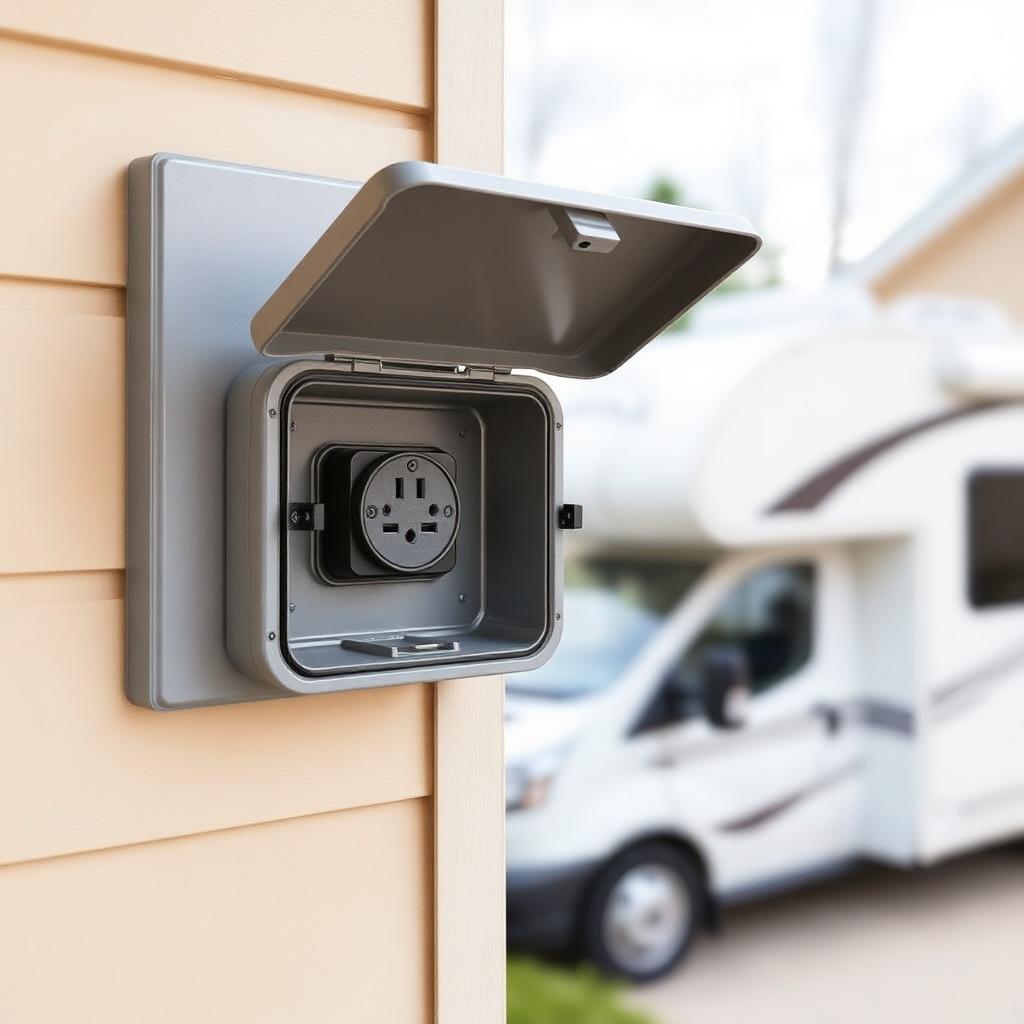
What the TT-30R outlet actually looks like
The TT-30R has three asymmetrical slots:
- A round slot at the top for the ground.
- A wider angled slot on the left for the neutral (white).
- A narrower angled slot on the right for the hot (black).
That third hole is what fools people into thinking it is a 240 volt outlet. It is not. There is one hot leg, one neutral, and one ground.
Materials I gather before opening the panel
- A single pole 30 amp breaker that matches my panel brand (Square D QO, Siemens, Eaton, etc.).
- 10 AWG copper wire. Indoor garage run: 10/2 NM-B (Romex). Outdoor run: three individual THHN conductors inside liquid tight PVC conduit.
- A NEMA 3R weatherproof enclosure box rated for outdoor use, with a hinged cover.
- A TT-30R receptacle (Leviton 7313 or equivalent).
- A non contact voltage tester and a basic multimeter.
Step by step wiring sequence
Safety first. An energized panel can kill. Shut off the main breaker, then verify with a non contact tester that the bus bars are dead before removing the dead front cover. If I am uncomfortable working in the panel, I hire a licensed electrician for the panel terminations only.
- Mount the box. I anchor the weatherproof enclosure to the exterior wall or a pressure treated post within reach of the RV shore cord. About 12 to 18 inches off the ground is comfortable.
- Run the conduit. Pull the 10 AWG conductors from the panel through PVC conduit to the back of the outdoor box. Leave 8 inches of slack and strip the outer jacket.
- Land the receptacle. Bare or green to the green screw. White to the silver screw (wider slot). Black to the brass screw (narrower slot). Torque the screws to spec, usually 12 to 14 in-lb.
- Land the panel side. Green to the ground bus. White to the neutral bus. Black to the load side of the new 30 amp single pole breaker. Snap the breaker onto an open slot.
- Restore power. Replace the dead front, flip the main back on, then flip the new breaker.
Multimeter verification
I never plug a real RV in until I have confirmed the voltages with a meter:
- Hot to neutral: 110 to 125 V AC. This is the live circuit.
- Hot to ground: 110 to 125 V AC. Confirms ground bond.
- Neutral to ground: 0 V AC (a few millivolts is fine). Anything higher means a wiring fault.
If hot to neutral reads 240 V, the breaker is wrong (it is a double pole breaker, not single pole). Shut it down immediately.
Why a GFCI is not required but is smart
The 2020 and 2023 NEC editions added GFCI protection requirements for many outdoor receptacles. RV receptacles are a gray area depending on jurisdiction, but a GFCI 30 amp breaker (Square D QO130GFI or similar) is cheap insurance against a damp shore cord becoming a shock hazard. I install one whenever the receptacle is outdoors.
Common mistakes to avoid
- Using a double pole 30 amp breaker. This puts 240 V at the outlet and destroys the RV.
- Reusing an old 30 amp dryer outlet (NEMA 10-30 or 14-30). Those are 240 V devices. The face is different and the wiring is different.
- Undersized wire. 12 AWG cannot carry 30 amps safely over any meaningful distance.
- Skipping the weatherproof in use cover. A cover plate that closes only when the cord is unplugged is not code in most areas.
- Sharing the neutral with another circuit. A dedicated home run is required.
Sizing wire for long runs
10 AWG is the minimum for 30 amps, but voltage drop matters for long runs. Over 75 feet I bump up to 8 AWG copper to keep the voltage at the outlet within 3 percent of nominal. A weak voltage drop is rough on AC compressors and battery converters.
Pro tips
- Label the breaker clearly inside the panel ("RV 30A 120V"). The next person to open the panel will thank me.
- Buy a $10 RV outlet tester before any real RV goes near the receptacle. It checks hot, neutral, ground, and reverse polarity in one plug.
- Keep an RV surge protector on the shore cord. Even a perfect outlet cannot protect against utility brownouts.
The takeaway
Wiring a 30 amp RV outlet is a one afternoon project, but the rules are tight: 120 volts only, single pole 30 amp breaker, 10 AWG copper, NEMA TT-30R receptacle in a weatherproof box. Get the breaker type right and the rest is straightforward. Get it wrong and I will be writing a check to replace half the electronics in the RV.