Quick Answer
To prepare for a multi-day power outage, plan for three days without power: one gallon of water per person per day, food that needs no cooking, battery light in every room and a way to charge a phone that does not depend on the wall.
An unopened fridge holds safe temperatures for about four hours. A full freezer holds roughly 48 hours, a half-full freezer about 24. Those numbers drive almost every food decision you make during an outage.
The single most useful purchase is a mid-size power bank kept charged year round, because communication matters more than comfort.
Water Comes First
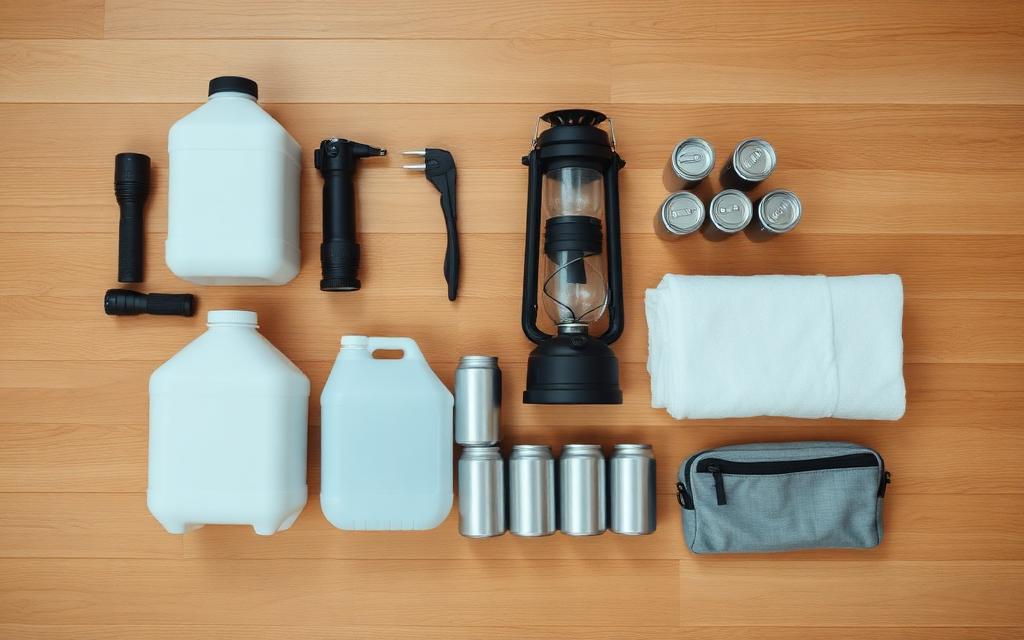
Standard advice is one gallon per person per day for drinking and basic sanitation, and a three day supply as the minimum. For a family of four that is twelve gallons, which is bulkier than most people picture until they stack it.
If your water supply depends on an electric pump, as many rural properties do, the tap stops when the power does. That case needs more storage, not less. Filling the bathtub and spare containers when an outage looks likely gives you flushing water, which is the volume people forget.
Light Without Candles
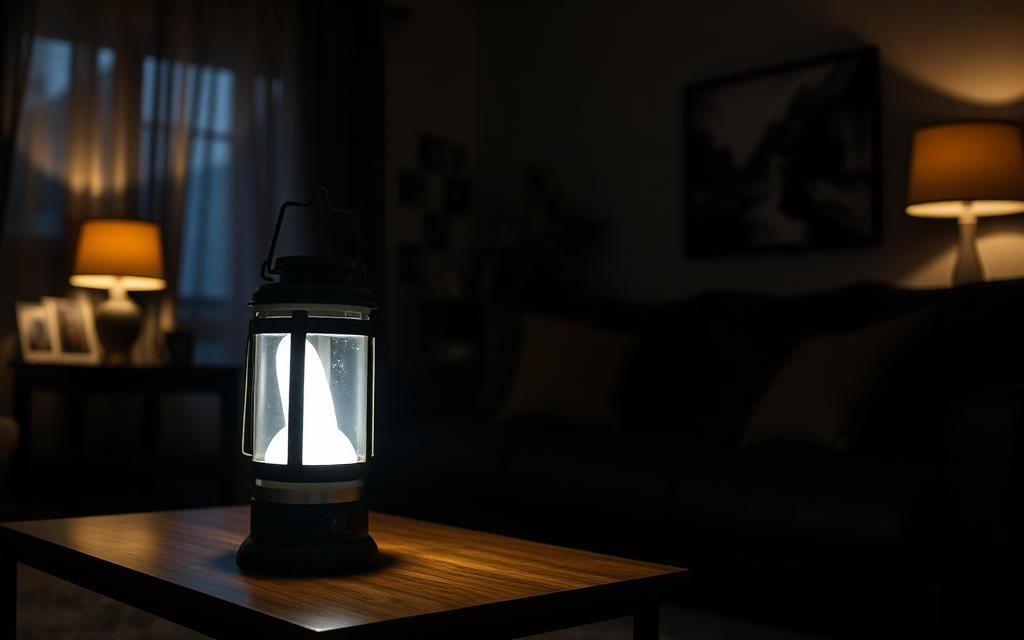
Battery lanterns beat candles on every measure that matters: they do not start fires, they do not go out in a draught, and they light a room rather than a face.
- One lantern per occupied room, plus one for the bathroom.
- A headlamp per adult, which frees both hands for cooking, repairs or carrying a child.
- A small torch in each bedside drawer, because outages begin at inconvenient hours.
- One spare set of batteries per device, stored with the devices rather than in a drawer elsewhere.
The Food Safety Clock
Once the power stops, your fridge and freezer become timers. Keeping the doors closed is the whole strategy, because every opening costs you cold air you cannot replace.
| Appliance | Safe window if unopened | What to do next |
|---|---|---|
| Refrigerator | About 4 hours | Move key items to a cooler with ice |
| Full freezer | About 48 hours | Keep closed, check for ice crystals later |
| Half-full freezer | About 24 hours | Consolidate items together to hold cold |
| Cooler with ice | As long as ice remains | Top up ice, keep out of sunlight |
When power returns, judge by temperature rather than smell or appearance. Perishable food held above 40F for more than two hours goes in the bin. Frozen food that still contains ice crystals or is at 40F or below can generally be refrozen, with some loss of quality.
An appliance thermometer left in the fridge and another in the freezer turns all of this from guesswork into a reading, which is worth the few dollars they cost.
Food That Needs No Power
Build a shelf that requires no cooking, no refrigeration and ideally no can opener you have to find in the dark.
- Tinned fish, beans and vegetables with ring pulls.
- Nut butter, crackers, dried fruit and nuts for calorie density without preparation.
- Shelf-stable milk or milk powder, which solves breakfast for children.
- Instant coffee, because morale is a real category.
- Pet food, which is the most commonly forgotten item in the whole plan.
Rotate the shelf twice a year rather than letting it become an archaeological layer at the back of a cupboard.
Keeping Phones Alive
Communication is the difference between an inconvenience and a crisis. A 20,000 mAh power bank will typically recharge a modern phone three to four times, which covers a three day outage for one person if usage is disciplined.
Discipline means low power mode from the first hour, screen brightness down, background refresh off and no video. Text messages get through on congested networks when calls do not, so text first.
A car is also a charger. Running the engine for fifteen minutes in a well ventilated outdoor space tops up devices, but never idle a vehicle in an attached garage.
Heat and Cold
In cold weather, close off unused rooms and gather the household into one space. Layered clothing, sleeping bags and blankets over curtains do more than any single heater. Never use a gas oven, charcoal grill or camping stove indoors for heat, since carbon monoxide from those sources kills people every winter.
In hot weather the risk runs the other way. Move to the lowest floor, close blinds against direct sun, drink more than feels necessary and know where the nearest cooling center or air conditioned public building is before you need it.
A battery or hardwired carbon monoxide alarm is not optional if you have any fuel-burning appliance or a generator on the property.
Generators, If You Have One
Generators solve real problems and create new ones. Run them outdoors only, at least twenty feet from windows and doors, never in a garage even with the door open. Never plug a generator directly into a wall socket, which can backfeed the grid and endanger line workers.
Store fuel safely and know your runtime per gallon before an emergency, not during one. Test the unit twice a year so the first pull of the season is not also the first pull in three years.
A Simple Two Hour Preparation Plan
Most households can get from unprepared to reasonably ready in a single afternoon.
- Buy water, or fill and store food-grade containers.
- Buy or check three lanterns and one headlamp per adult, plus spare batteries.
- Stock a no-cook food shelf for three days, including pet food.
- Charge a power bank and set a calendar reminder to top it up quarterly.
- Put a thermometer in the fridge and the freezer.
- Write your utility's outage number on paper and stick it inside a kitchen cupboard.
- Keep some cash on hand, since card terminals and ATMs go down with the grid.
Frequently Asked Questions
How long does food last in the fridge without power?
About four hours if the door stays closed, according to FoodSafety.gov guidance.
How much water should you store?
One gallon per person per day, with a three day supply as the minimum.
Can you refreeze thawed food?
Yes if it still has ice crystals or is at 40F or below. Otherwise discard it.
Is it safe to run a generator in the garage?
No, not even with the door open. Generators run outdoors, well away from windows and doors.
What is the most forgotten outage supply?
Pet food, cash and a manual can opener, in roughly that order.
Should you unplug appliances during an outage?
Unplug sensitive electronics to protect them from the surge when power returns, and leave one light switched on so you know when it does.