Quick Answer
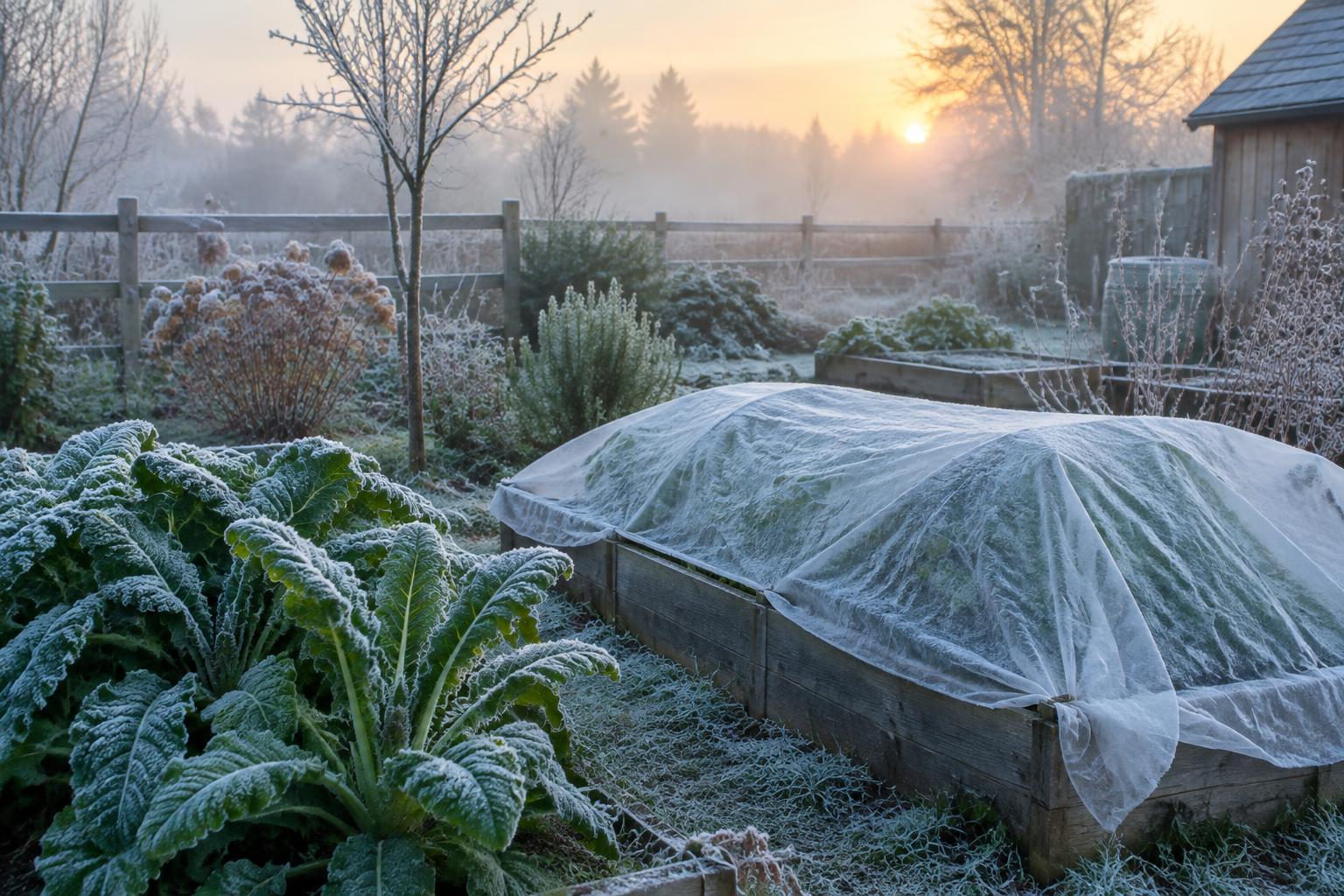
To protect plants from the first frost, cover them in the late afternoon with fabric row cover, old sheets, or blankets that reach the ground, and remove the covers the next morning once temperatures rise. Water the soil beforehand, since moist soil releases heat overnight.
The plants that need protection are the tender ones: tomatoes, peppers, cucumbers, squash, basil, and beans. Hardy crops like kale, cabbage, carrots, and spinach can stay uncovered.
A single covered night often buys you two to four more weeks of harvest, because the first frost is usually followed by a long stretch of mild weather.
Know the Difference Between a Frost and a Freeze
A light frost happens at 32 to 36 F and damages only the most tender foliage. A hard frost or light freeze at 28 to 32 F kills most warm-season crops. A hard freeze below 28 F ends the season for almost everything except the toughest greens and roots.
Frost can form even when the official air temperature reads 35 or 36 F, because thermometers sit five feet above the ground while cold air pools at plant level on clear, calm nights.
Watch for the classic frost setup: a clear sky, little or no wind, and a dew point near or below freezing. Clouds and wind both prevent frost.
Which Plants Need Covering and Which Do Not
Cover these: tomatoes, peppers, eggplant, cucumbers, zucchini and other squash, pumpkins still ripening, beans, basil, and tender annual flowers like marigolds and zinnias.
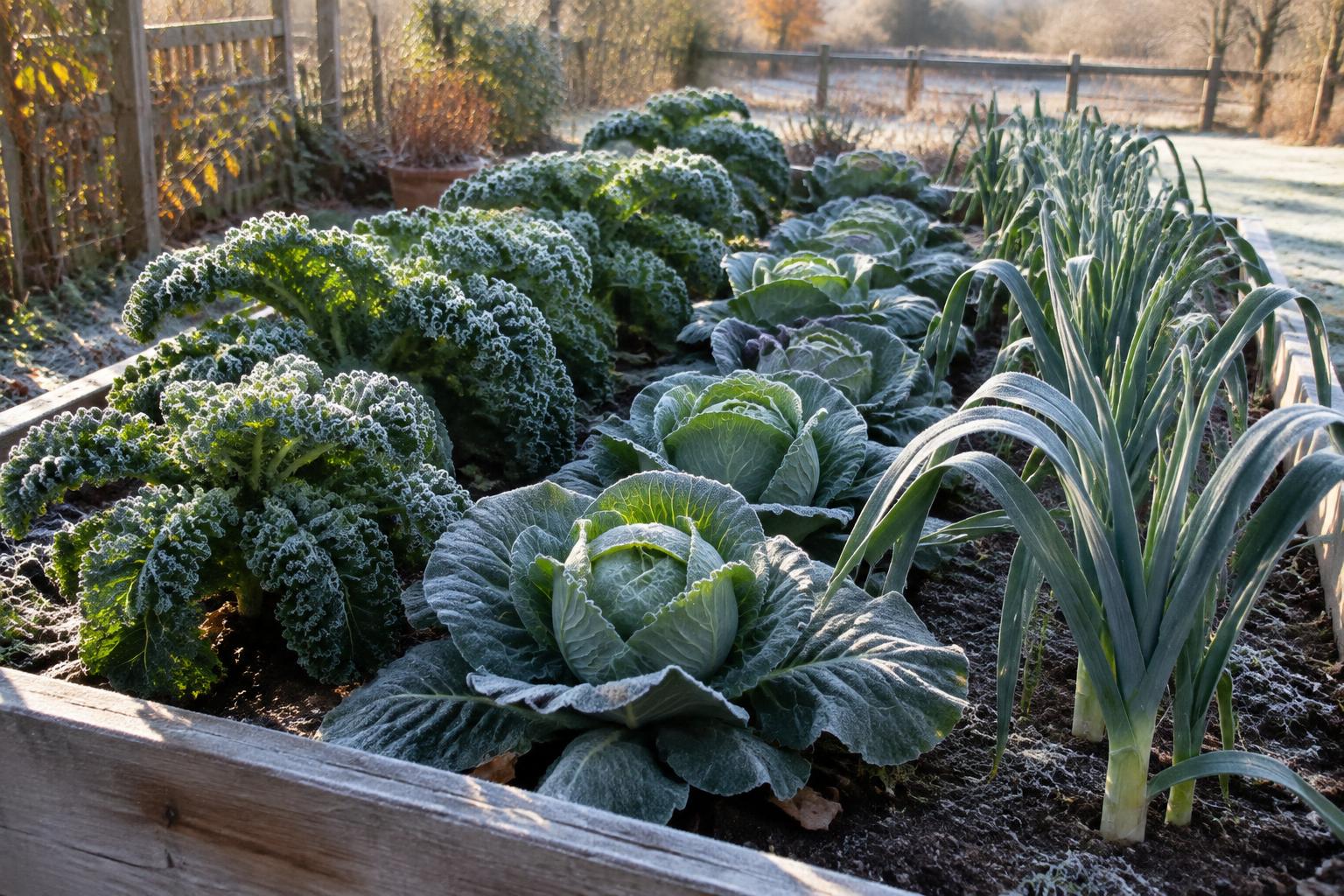
Leave these uncovered: kale, collards, cabbage, Brussels sprouts, broccoli, carrots, parsnips, beets, spinach, lettuce, and most herbs like parsley, thyme, and sage. These tolerate light frost and many taste better after it.
Potted plants are the exception to every rule. Roots in pots freeze far faster than roots in the ground, so move containers into a garage or against the house even if the plant itself is cold-hardy.
How to Cover Plants the Right Way
The cover works by trapping heat radiating from the soil, so it must reach all the way to the ground and be anchored with stones, bricks, or soil. A cover that stops halfway lets the warmth escape like an open chimney.
Use fabric, not bare plastic. Plastic touching leaves conducts the cold straight into them and causes worse damage than no cover at all. If plastic is your only option, prop it up on stakes or hoops so it never touches the foliage.
Cover in late afternoon while the soil still holds the day's warmth, not after dark when the heat is already gone. Remove covers in the morning once temperatures climb above about 40 F so plants do not overheat or stay damp.
Tricks That Add a Few Extra Degrees
- Water the soil in the afternoon. Wet soil stores far more heat than dry soil and releases it slowly overnight.
- String old-style incandescent holiday lights through shrubs or under covers. The small amount of heat they give off can hold the air under a cover above freezing.
- Place jugs of warm water next to plants under the cover. They act like thermal batteries.
- Mulch heavily around the base of perennials and root crops to protect crowns and roots.
- Harvest what you can. Green tomatoes picked before the frost will ripen indoors on a windowsill; frostbitten ones will not.
What to Do After a Frost
Do not rush out at dawn to prune blackened leaves. Wait until the sun thaws the plant, because frozen tissue tears if you handle it.
For perennials, leave the damaged top growth in place until spring. It insulates the crown against deeper cold later in winter.
Check root crops before assuming the worst. Carrots, beets, and turnips under mulch usually survive a frost that flattened everything above ground.
How Long Can You Stretch the Season?
With fabric row cover alone, most gardeners can protect tender crops through the first two or three frosts, typically gaining two to four weeks. Adding a second layer or a low tunnel on top stretches that further.
Eventually the effort stops paying off. Once nights regularly drop into the mid 20s and daylight falls below ten hours, warm-season crops stop ripening fruit even if the plants survive. That is the point to pick everything, pull the plants, and compost them.
Think of frost protection as a bridge, not a permanent shelter. The goal is to carry plants through the first cold snap into the mild spell that almost always follows.
Frequently Asked Questions
At what temperature should I cover my plants?
Cover tender plants whenever the forecast calls for 36 F or lower on a clear, calm night. Frost can form a few degrees above the official freezing point.
Can I use a bed sheet to cover plants?
Yes. Sheets, light blankets, and burlap all work well. Avoid heavy blankets on delicate plants and never let plastic touch the leaves.
Will one frost kill my whole garden?
No. It kills tender warm-season crops, but hardy vegetables and most perennials sail through. That is why experienced gardeners cover only a few plants and let the rest take the frost.
Does spraying plants with water before frost help?
It helps only as soil watering. Wetting the leaves themselves offers no protection and can encourage disease.
Bottom Line
Watch for clear, calm nights with forecasts near freezing, water the soil, and cover tender plants with fabric that reaches the ground before sunset. One well-timed cover can keep tomatoes and peppers producing weeks past your neighborhood's first frost.