Quick Answer
To compost fall leaves the right way, shred them first, then mix them with nitrogen-rich green material like grass clippings or kitchen scraps at roughly three parts leaves to one part greens by volume. Keep the pile as damp as a wrung-out sponge and turn it every few weeks.
Leaves alone will eventually break down into leaf mold, but a pile of nothing but whole leaves can sit for two years. Shredding and adding nitrogen cuts that to a few months.
If you do nothing else, at least run the lawn mower over your leaf piles. Shredded leaves break down up to ten times faster than whole ones.
Why Leaves Are Brown Gold
In composting terms, fall leaves are a carbon-rich brown material. They provide the energy source for the microbes that drive decomposition, but they contain very little nitrogen, which is why a pure leaf pile crawls along so slowly.
The ideal compost pile has a carbon-to-nitrogen ratio of about 30 to 1. Leaves run around 60 to 1 on their own, so you balance them with green materials like fresh grass clippings, vegetable scraps, or coffee grounds, which are nitrogen-rich.
By volume, a practical recipe is about three parts shredded leaves to one part greens. You do not need to measure precisely; if the pile is not heating up, add more greens.
Shred First, Always
Whole leaves mat together into soggy, airless layers that can sit unchanged for years. Shredding multiplies the surface area microbes can attack and keeps the pile fluffy enough for air to move through it.
The easiest shredder is your lawn mower. Rake leaves into rows and mow over them with the bagger attached, which shreds and collects in one pass. A string trimmer inside a garbage can works for smaller batches.
Shredded leaves also make an excellent free mulch for garden beds, so shred more than you need for the compost pile.
Building the Pile
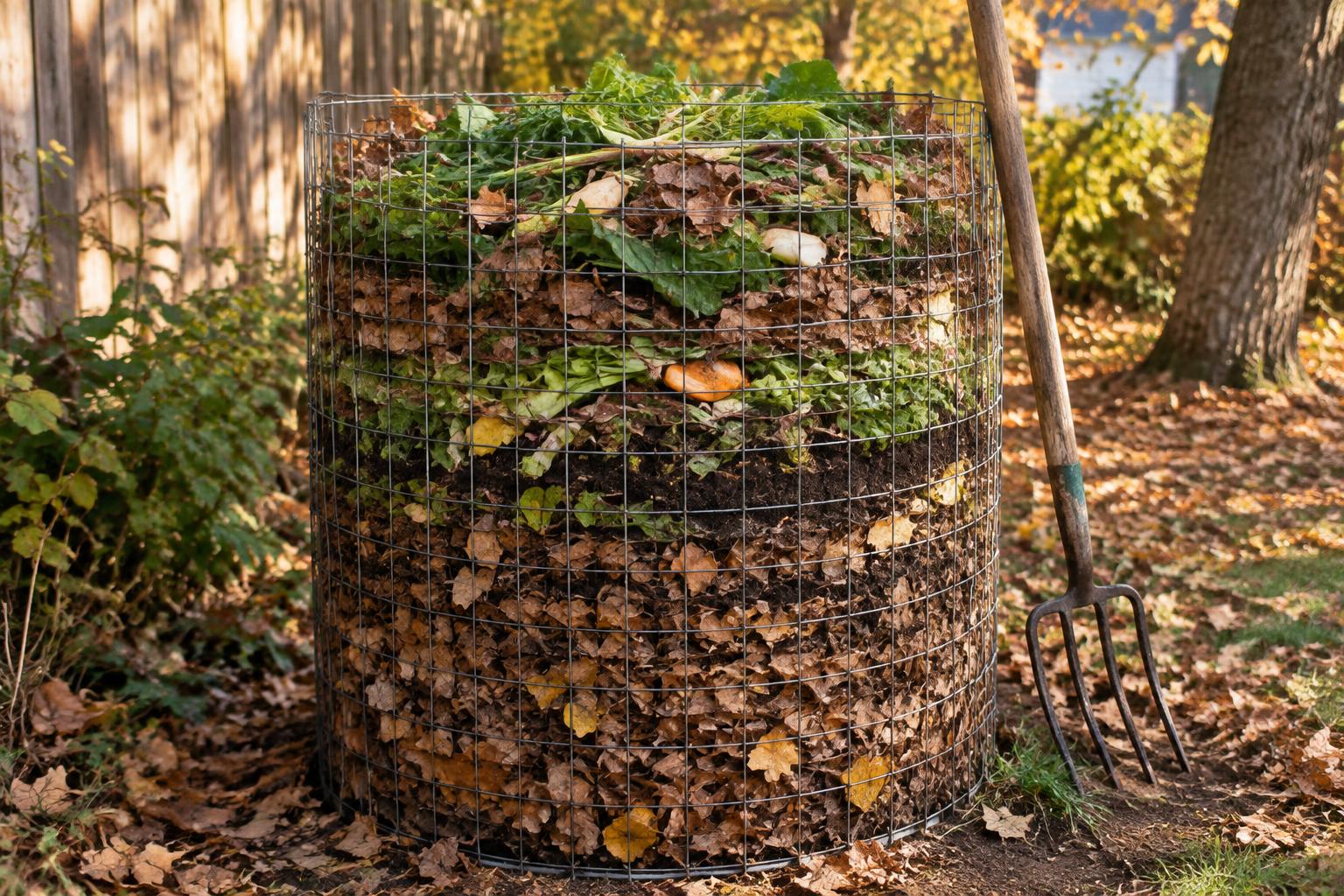
Start with a 4 to 6 inch layer of shredded leaves, add a thinner layer of greens, and sprinkle on a shovelful of finished compost or garden soil to introduce microbes. Repeat the layers until the pile is at least 3 feet tall and wide, the minimum size that holds enough heat to compost actively.
Water each layer as you build. The pile should feel like a wrung-out sponge: damp but not dripping. Dry piles stop working, and soggy piles go anaerobic and smell.
A simple wire bin keeps everything tidy, but a free-standing heap works just as well if you keep it contained to one spot.
Keeping It Cooking Through Fall and Winter
Turn the pile with a pitchfork every two to four weeks, moving outer material to the hot center. Each turning reintroduces oxygen and can restart the heating process.
In cold climates the pile will slow or stop once winter sets in. That is normal. Keep adding material, and decomposition resumes on its own in spring.
If the pile smells like ammonia, you have too much nitrogen: mix in more leaves. If it smells rotten, it is too wet or compacted: turn it and add dry shredded leaves.
The Lazy Alternative: Leaf Mold
If hot composting sounds like too much work, make leaf mold instead. Pile shredded leaves (or stuff them into perforated trash bags), wet them, and wait. No turning, no mixing, no greens required.
Leaf mold takes one to two years to finish, but the result is a superb soil conditioner that improves moisture retention and soil structure. It is the secret ingredient behind many prize-winning gardens.
You can also skip the pile entirely and mulch-mow a thin layer of leaves directly into the lawn. Research from several universities shows this feeds the grass and does not cause thatch.
Leaves to Avoid
- Black walnut leaves contain juglone, which can harm sensitive plants like tomatoes. Compost them hot and long, or leave them out.
- Diseased leaves from plants with fungal problems should go to municipal compost, not your home pile, unless your pile gets genuinely hot.
- Leaves from treated lawns with recent herbicide applications can carry residues into your compost.
Using Your Finished Leaf Compost
Finished compost is dark, crumbly, and smells like a forest floor, with no recognizable leaves left. Screen out any stubborn bits and toss them back into the next pile.
Work one to two inches into vegetable beds in spring, use it as a top dressing around perennials, or blend it into potting mixes at about one part compost to three parts soil. Leaf compost improves both sandy and clay soils, which is rare among amendments.
Any surplus shredded leaves that never made it into the pile still earn their keep as mulch. A three inch layer around shrubs and over empty beds suppresses weeds, holds moisture, and feeds earthworms all winter.
Frequently Asked Questions
How long does it take to compost fall leaves?
A shredded, balanced, turned pile can finish in 3 to 6 months. Whole leaves left alone can take 2 years or more.
Can I compost leaves without adding anything else?
Yes, but slowly. Pure leaves become leaf mold in one to two years rather than rich compost in months.
Do oak leaves make compost too acidic?
Not meaningfully. Oak leaves are slightly acidic when fresh, but finished compost ends up close to neutral regardless of the leaves you use.
Should I compost leaves or leave them on the lawn?
Both work. A thin layer mowed into the lawn feeds the grass; collect the excess for the compost pile or use it as garden mulch.
Bottom Line
Shred your leaves, mix three parts leaves with one part green material, keep the pile moist, and turn it occasionally. Do that this fall and you will have free, rich compost ready for next spring's garden instead of bags at the curb.