Quick Answer
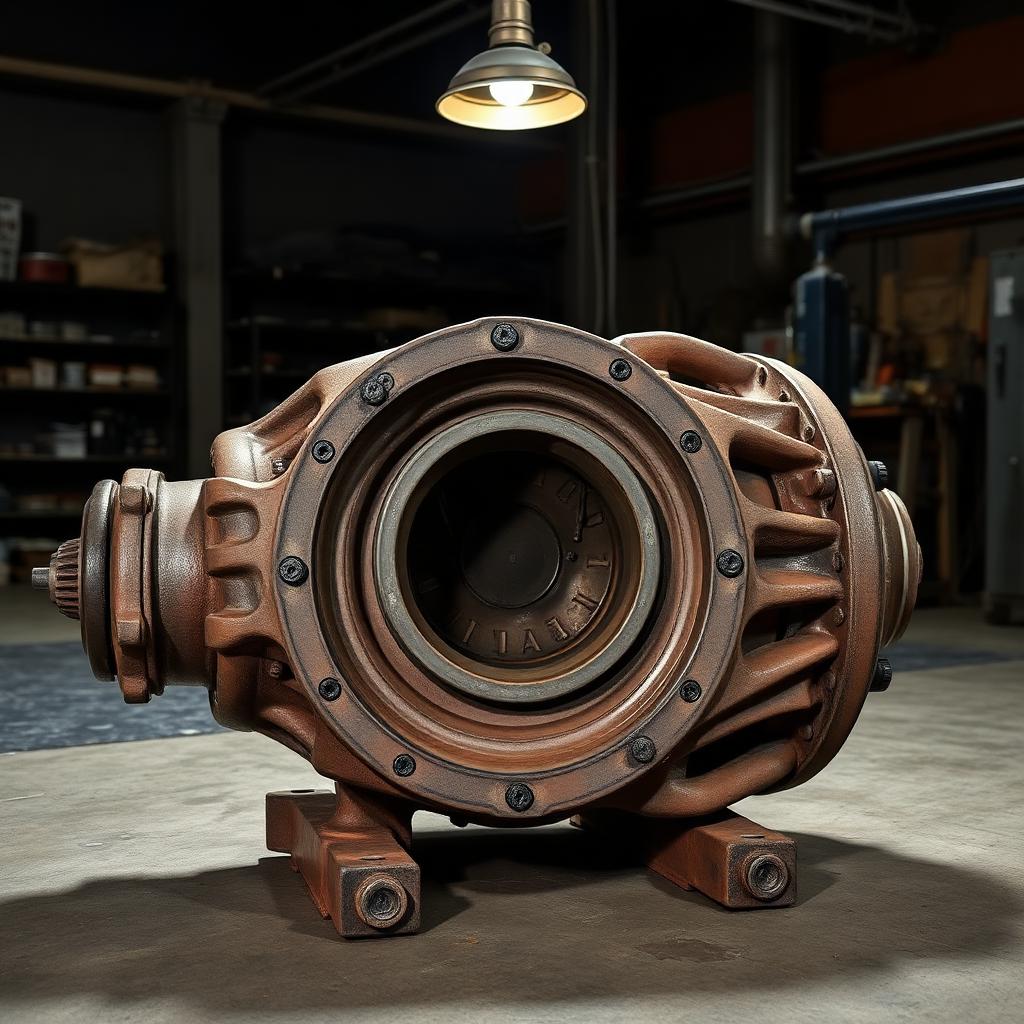
To identify a Dana axle, find the Bill of Materials (BOM) number stamped on the rear face of the axle tube near the differential, then look up that number in Dana's free Expert Lookup tool. If the BOM is unreadable, the pumpkin shape gives it away: Dana 30 is a small round oval, Dana 44 is a flat hexagon with straight sides, Dana 60 is a massive asymmetric octagon, Dana 70 is even larger with thick webbing.
Shape narrows the family. The BOM number nails the exact ring gear ratio, spline count, and original vehicle.
The BOM number is the ground truth
Dana stamps a six digit BOM number followed by a dash and a sub number on every axle. The format looks like 605432-1 or 706081-1. It is stamped directly into the steel of the axle tube, usually on the rear passenger side near where the tube meets the differential pumpkin.
Wipe the tube clean with brake cleaner and a wire brush. The stamp is shallow and 30 years of road grime hide it well. Once I can read the six digits, I go to Dana's free Expert Web Lookup at danaaftermarket.com and enter the number. The site returns:
- Original vehicle application (year, make, model).
- Ring gear ratio (3.55, 3.73, 4.10, 4.56, etc.).
- Carrier style (open, Trac-Lok, ELocker, Detroit Locker).
- Inner shaft spline count.
- Ring gear diameter.
Visual ID by pumpkin shape
If the BOM is gone (cut, welded over, or buried under undercoating), the differential housing shape is the next best clue:
- Dana 30: small round oval, about 7.12 inch ring gear. Bolts on the cover are usually 10. Found in the Jeep Cherokee XJ, Wrangler TJ front, and JK front non-Rubicon.
- Dana 44: flat sided hexagon, 8.5 inch ring gear, 10 cover bolts. Found in Wrangler Rubicon front and rear, JK Rubicon, Ford Bronco, classic Chevy K10 front.
- Dana 60: massive asymmetric octagon, 9.75 inch ring gear, 10 cover bolts. Found in Ford F-250 and F-350 Super Duty fronts and rears, Ram 2500 fronts on older trucks, Chevy K20 fronts.
- Dana 70: like a Dana 60 but bigger and heavier, with thick webbing on the housing. 10.5 inch ring gear. Found in heavy duty dual rear wheel commercial trucks.
- Dana 80: even larger, 11.25 inch ring gear, used in F-350 and F-450 dually trucks.
Casting marks on the housing
Dana casts the axle model number directly into the housing during the foundry pour. Look at the lower webbing near the differential cover. Most Dana axles have a raised 30, 44, 60, 70, or 80 cast into the metal. This is the single fastest visual confirmation when I am scrounging a salvage yard.
Spline count and shaft check
If I can pull an axle shaft, the spline count gives away a lot:
- Dana 30: 27 spline.
- Dana 44: 30 spline (some early 44s are 19 or 27 spline, but modern Wrangler and Bronco use 30).
- Dana 60: 30 or 35 spline depending on year.
- Dana 70: 32 or 35 spline.
I count the splines with a sharpie mark on every fifth tooth to avoid miscounting.
Quick capacity reference
This is the chart I keep in my head when planning a tire and lift package:
- Dana 30: safe to 33 inch tires, marginal at 35s without chromoly shafts.
- Dana 44: safe to 35s, comfortable at 37s with upgraded shafts.
- Dana 60: safe to 37s, comfortable at 40s.
- Dana 70 and 80: 42 inch and bigger custom builds.
The differential cover is a clue, not a verdict
Some Wrangler builders swap aftermarket covers (ARB, Mopar Rubicon, Yukon Hardcore) that change the visible shape. If the cover is aftermarket, the casting marks under the cover and the BOM stamp on the tube are still accurate.
Telling a 44HD from a stock 44
The Dana 44HD (heavy duty) lives in the rear of newer Wrangler JK and JL Sport models. It looks like a regular 44 but has thicker tubes (3 inch instead of 2.5 inch) and bigger axle shafts (32 spline instead of 30). The BOM lookup confirms it instantly. Visually I measure the tube diameter at the spring perch.
Identifying a Super 60 or Dana 60 Front HP versus LP
Front Dana 60s come in High Pinion (HP) and Low Pinion (LP) versions. HP has the pinion gear above the centerline of the axle, which improves driveshaft angles on lifted trucks. LP has the pinion below the centerline. Look at the position of the pinion yoke relative to the cover: above means HP, below means LP. HP fronts command a serious premium in the build community.
Pro tips
- Photograph the BOM stamp the day I bring an axle home. Rust does not stop after I pull it out of the donor truck.
- If buying an axle online, demand a clear photo of the BOM stamp. Sellers who refuse usually have something to hide.
- The Dana Expert tool is free and accurate. There is no reason to guess.
- A junkyard Dana 44 from a 1980s K10 is not the same animal as a 2014 Wrangler Rubicon Dana 44, even though both say 44. The BOM tells me which.
The takeaway
The BOM number stamped on the axle tube is the only sure way to identify a Dana axle. The pumpkin shape, the casting marks, and the spline count narrow it to a family. Once I have the BOM, Dana's lookup tool gives me everything else: vehicle, ratio, carrier, splines. That ten minutes of cleaning and reading saves me from buying gears for the wrong housing.