Quick Answer
To check the oil level in a car, park on level ground, wait at least 5 to 10 minutes after shutting the engine off, then pull the dipstick, wipe it clean, reinsert it fully, pull it out again, and read the oil line. It should sit between the minimum and maximum marks on the dipstick.
If the level is at or below the minimum, top up with the grade of oil specified in your owner's manual until it reads near the maximum mark. Never run the engine below the minimum line.
Why the Oil Level Matters
Engine oil forms a microscopic film between fast moving metal parts, carries heat away from the bearings, and traps combustion byproducts in suspension. If the level drops too low, the pump can suck air, the film breaks, and metal touches metal at thousands of RPM. That kind of damage is permanent and expensive.
Hot Engine or Cold Engine?
For almost every modern engine, the gold standard is to check after the engine has been off for 5 to 10 minutes. That window lets the oil that was circulating through the top of the engine drain back to the pan so you get a true volume reading.
A few exotic engines with dry sump systems must be checked with the engine running and warm. Always defer to the owner's manual if it gives a specific procedure.
Step by Step
- Park level. A slope tilts the oil pan and skews the reading. A flat driveway or garage floor is fine.
- Let it settle. Wait at least 5 to 10 minutes after shut down so the hot oil drains down.
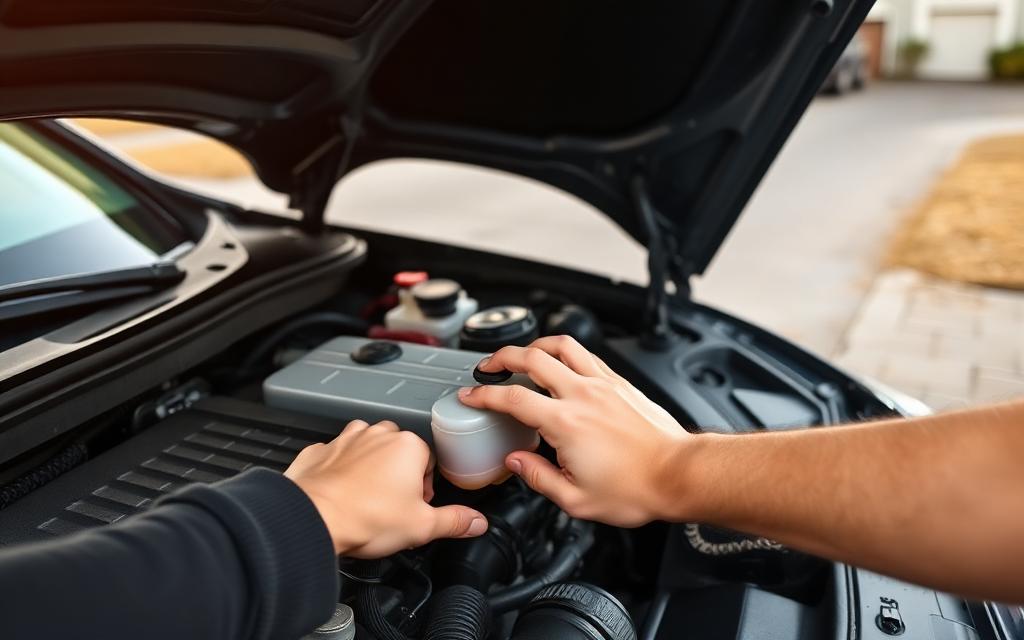
- Find the dipstick. Open the hood and look for a brightly coloured (often yellow or orange) ring labelled with an oil can icon.
- First wipe. Pull the dipstick all the way out. Wipe it completely clean with a paper towel or lint free rag.
- Reseat fully. Push the clean dipstick back into the tube until it is fully seated. If you do not push it all the way in you will get a low reading.
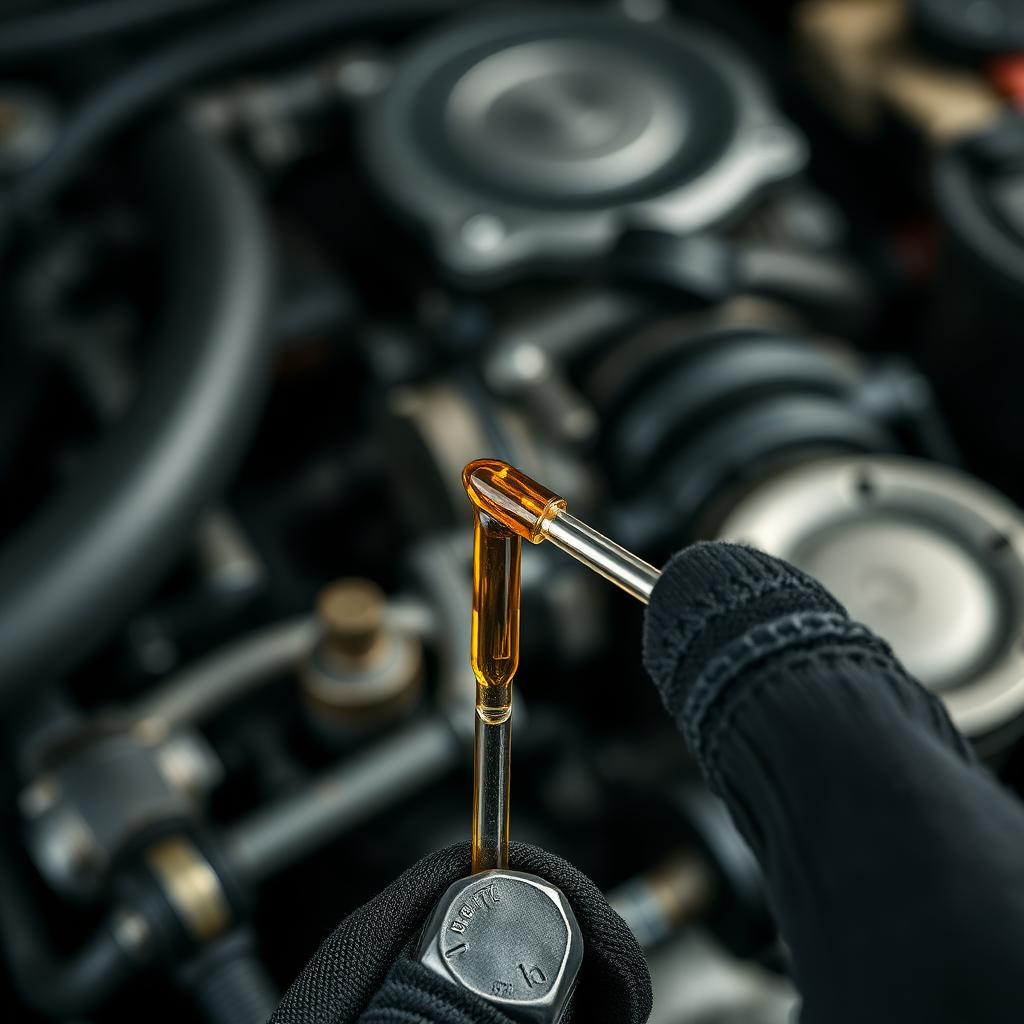
- Read carefully. Pull it out smoothly and look at the tip. The oil line should sit between the two marks, dots, or cross hatch zone.
Electronic Oil Level Sensors
Many newer cars (especially European brands) have replaced the dipstick with an electronic oil level reading in the infotainment menu. The same rules apply: level ground, engine off for a few minutes, and the menu will tell you exactly how many millilitres or quarts you need to add.
If the system shows a warning, do not drive on it. Stop and add the correct grade of oil before you continue.
What the Oil Should Look Like
Healthy oil is amber, translucent, and smooth on the dipstick. As it ages it darkens, which is normal. Worry if you see milky or chocolate coloured oil (possible coolant leak), gritty texture (metal contamination), or a strong burnt smell.
Topping Up Safely
Use the exact grade printed in the owner's manual, for example 0W-20 or 5W-30. Pour in small increments (about 200 to 300 ml at a time), wait a minute, and re check. Overfilling is just as bad as underfilling because it causes foaming and pressure spikes that can blow seals.
How Often to Check
I check the oil once a month on every car I own and again before any long road trip. Modern engines burn or weep a small amount of oil between services and it is easier to catch a slow loss with a quick check than to be surprised by a low oil warning on the motorway.
The takeaway
Park level, wait a few minutes after shut down, wipe and reseat the dipstick, then read the line between the min and max marks. Top up only with the grade in your manual, in small amounts at a time, and never let the level fall below the minimum line.
Common Questions About Checking Oil
Can I check the oil with the engine warm?
Yes, as long as you have shut the engine off and waited at least 5 to 10 minutes for the oil to drain back to the pan. Checking immediately after shut down or with the engine running gives a falsely low reading.
What if the oil looks black?
Modern oils darken quickly as they pick up combustion byproducts. Colour alone is not a reliable health indicator. Watch the level, the change interval, and any milky or gritty texture instead.
Is overfilling really a problem?
Yes. Overfilled oil can be whipped into foam by the crankshaft, which collapses the lubrication film and increases pressure on seals. Stay below the maximum line.
What if my car has no dipstick?
Use the electronic oil level menu in the infotainment system. Park on level ground, run the check from a cold engine, and follow the prompts. If a top up is needed, the menu will usually tell you how much to add.
Practical Tips and Common Mistakes
Most of the value in this kind of routine comes from doing the boring steps consistently rather than chasing the perfect product. Buy a quality core kit, store it where you will actually use it, and put a reminder on your phone so the schedule does not slip. A weekend habit, even a short one, will keep your car ahead of the curve.
The most common mistake I see is rushing. Five extra minutes spent doing each step carefully almost always saves a redo or a much larger repair down the line. Take your time, follow the manufacturer instructions for your specific vehicle, and do not be afraid to stop and look up a question before you continue. There is no shame in pausing to confirm a torque spec or a service interval.
Keep a simple log in your phone with the date, mileage, and what was done. When the next service comes around or you go to sell the car, that history is worth real money and removes any guesswork about what is due. A photo of the dipstick, the brake pad, or the new battery sticker takes seconds and answers a future question in one tap.
Finally, do not assume more is better. Overfilling fluids, over scrubbing surfaces, and over tightening fasteners all cause their own problems. Follow the spec, stop when the job is done, and move on. The same rule applies to upgrades: pick the part that actually solves your problem rather than the most expensive option on the shelf.
Build a small kit you can keep in the car: a digital tyre gauge, a microfibre towel, a quart of the correct oil, a torch, jumper cables or a lithium jump pack, and a quality torque wrench at home. None of these are exotic, but together they cover most roadside surprises and let you handle routine work with confidence.
The last habit worth building is paying attention. New noises, new smells, new vibrations, and new warning lights all mean something. Catching them early almost always turns a major problem into a minor one. A car that gets a few minutes of attention every week rarely surprises you with a major bill.